Accesso ai dati dei veicoli
The Data Act Opened the Door, but Behind It Every OEM Built a Different Room
An exclusive analysis of CARUSO's Connected Vehicle Field Test 5.0 reveals a fragmented landscape of datasets and business conditions, despite the entry into force of the Data Act
An exclusive analysis of CARUSO's Connected Vehicle Field Test 5.0 reveals a fragmented landscape of datasets and business conditions, despite the entry into force of the Data Act
Few topics have generated as much discussion within the European automotive aftermarket over the last decade as access to vehicle data. While debates around repair information, diagnostics and telematics have been ongoing for years, the arrival of connected vehicles has fundamentally changed the scale of the challenge. Modern vehicles continuously generate vast amounts of information that can support predictive maintenance, roadside assistance, fleet management, insurance services, remote diagnostics and entirely new business models. The question has never been whether these data exist, but rather who can access them, under which conditions, and at what cost.
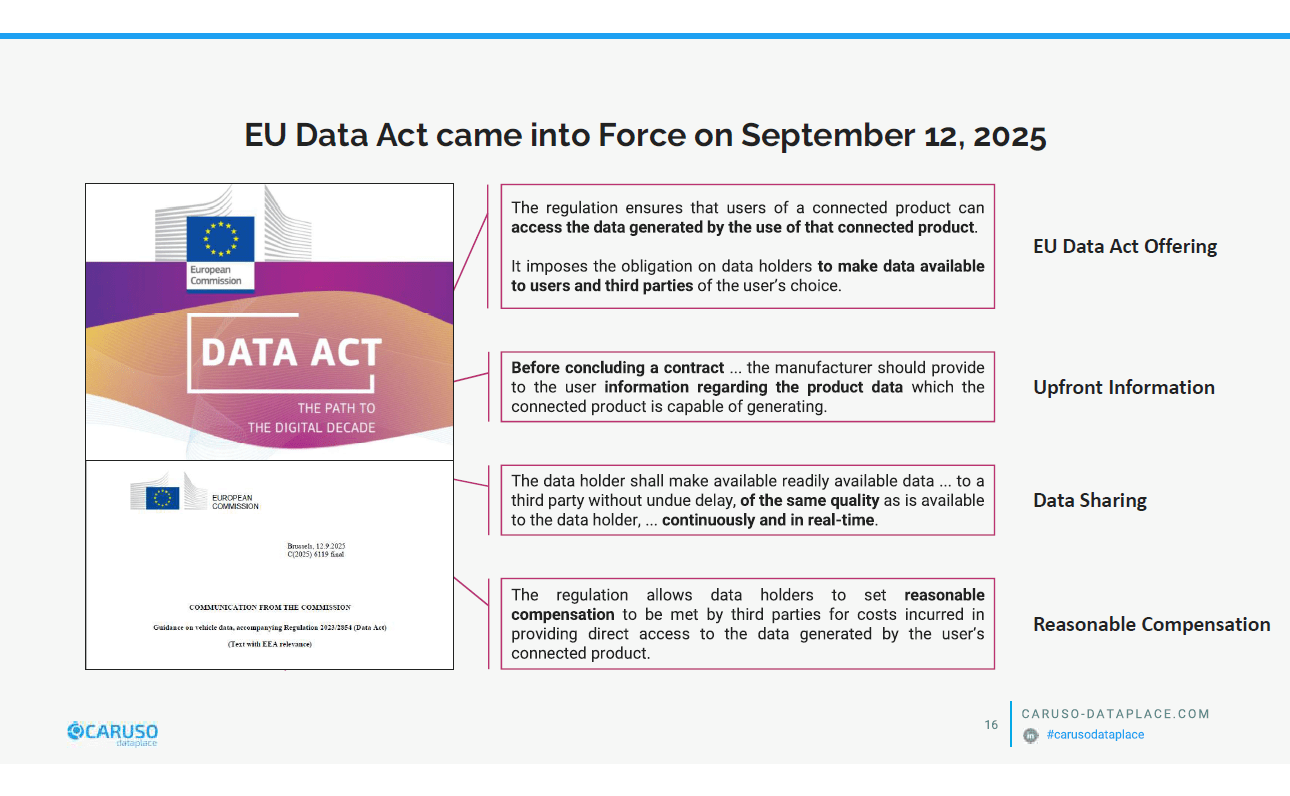
The entry into force of the European Data Act on 12 September 2025 marked a significant milestone in this evolution. For the first time, a comprehensive European regulatory framework established the right of users of connected products – including vehicles – to access the data generated by those products and to authorize third parties to use that data on their behalf. For many stakeholders across the independent aftermarket, the legislation was seen as a potentially transformative step towards a more open and competitive connected vehicle ecosystem. Yet a crucial question remained unanswered: how are vehicle manufacturers actually implementing the Data Act in practice?
📊
This content is part of SICURAUTO.it’s 6th Aftermarket Report, titled: “The Aftermarket in the Era of European Regulations: Opportunities, Constraints and New Specializations”.
THE CARUSO CONNECTED VEHICLE FIELD TEST 5.0 INVESTIGATED THE REAL CHANGES
To explore this issue, SICURAUTO.it obtained early access to the results of the latest Connected Vehicle Field Test (CVFT 5.0) conducted by CARUSO, one of Europe’s leading neutral automotive data platforms for connected cars. We were also invited to participate in a dedicated webinar during which Jens Knodel, Platform Director at CARUSO, presented the methodology, findings and conclusions of the study in detail.
For SICURAUTO.it, the relevance of this work extends far beyond a simple market survey. The themes investigated by the field test – connected vehicle data, interoperability, access rights, business sustainability and regulatory implementation – are closely aligned with several of the strategic topics that will be explored in the 6th Aftermarket Report. More importantly, the study provides one of the first opportunities to observe how the principles established by the Data Act are translating into operational reality across the European automotive industry.
The results suggest that the regulation is already producing tangible effects. More vehicle manufacturers are sharing data than before the Data Act entered into force, and new mechanisms for data access are emerging across the market. At the same time, however, the implementation landscape remains highly fragmented. While the legal framework may be common across Europe, the practical experience of accessing vehicle data still varies significantly depending on the manufacturer involved.
In many respects, the findings can be summarized by a simple observation: the Data Act has opened the door to connected vehicle data, but behind that door every manufacturer has built a different room.
CARUSO AND THE EVOLUTION OF CONNECTED VEHICLE FIELD TESTS
Founded in 2017, CARUSO was created to address one of the most persistent barriers to the development of data-driven automotive services: fragmentation. The company operates as a neutral data platform that aggregates, harmonizes and distributes vehicle-generated data from multiple manufacturers through a standardized interface. By translating different OEM-specific formats, naming conventions and data structures into a common model, CARUSO aims to simplify the development of multi-brand connected services across Europe. Today, the platform reports access to data from numerous vehicle manufacturers and claims coverage of more than 90% of connected vehicles in Europe. Its customer base spans several sectors, including insurance, fleet management, roadside assistance, charging services and, increasingly, the independent aftermarket.
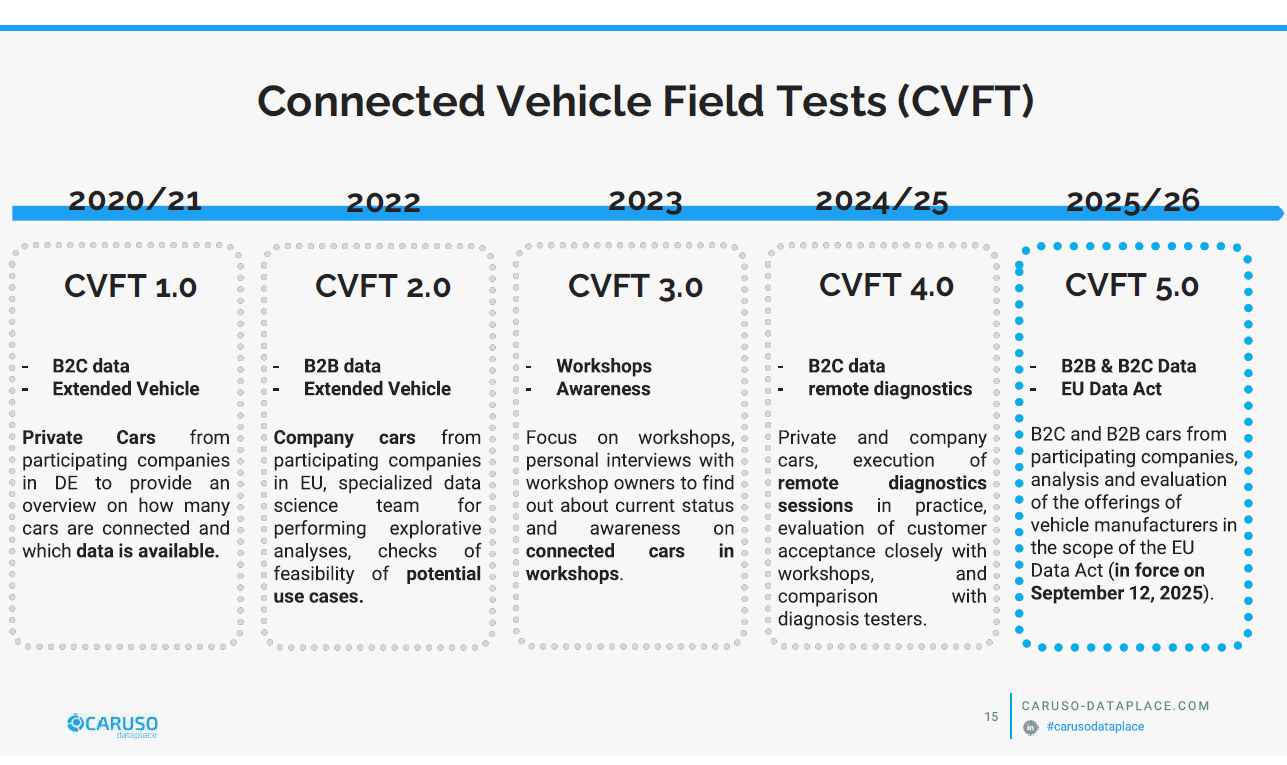
The Connected Vehicle Field Tests have accompanied the development of this ecosystem over the last several years. Each edition focused on a specific aspect of the connected vehicle data market. Earlier studies evaluated vehicle onboarding procedures, data provisioning processes and access mechanisms for privately owned vehicles. Subsequent editions expanded the scope to business applications, workshop-related use cases and remote diagnostics.
FROM REGULATORY PRINCIPLES TO MARKET REALITY
The Data Act introduces several obligations that directly affect also connected vehicles. Users are entitled to access the data generated through the use of their vehicles and may authorize third parties to receive that information on their behalf. Manufacturers are required to provide transparency regarding the data generated by connected products, while data made available to users should be delivered with a quality equivalent to that used internally by the data holder (OEM). The regulation also allows manufacturers to request reasonable FRAND compensation (Fair, Reasonable, And Non-Discriminatory) when data are shared with third parties for commercial purpose.
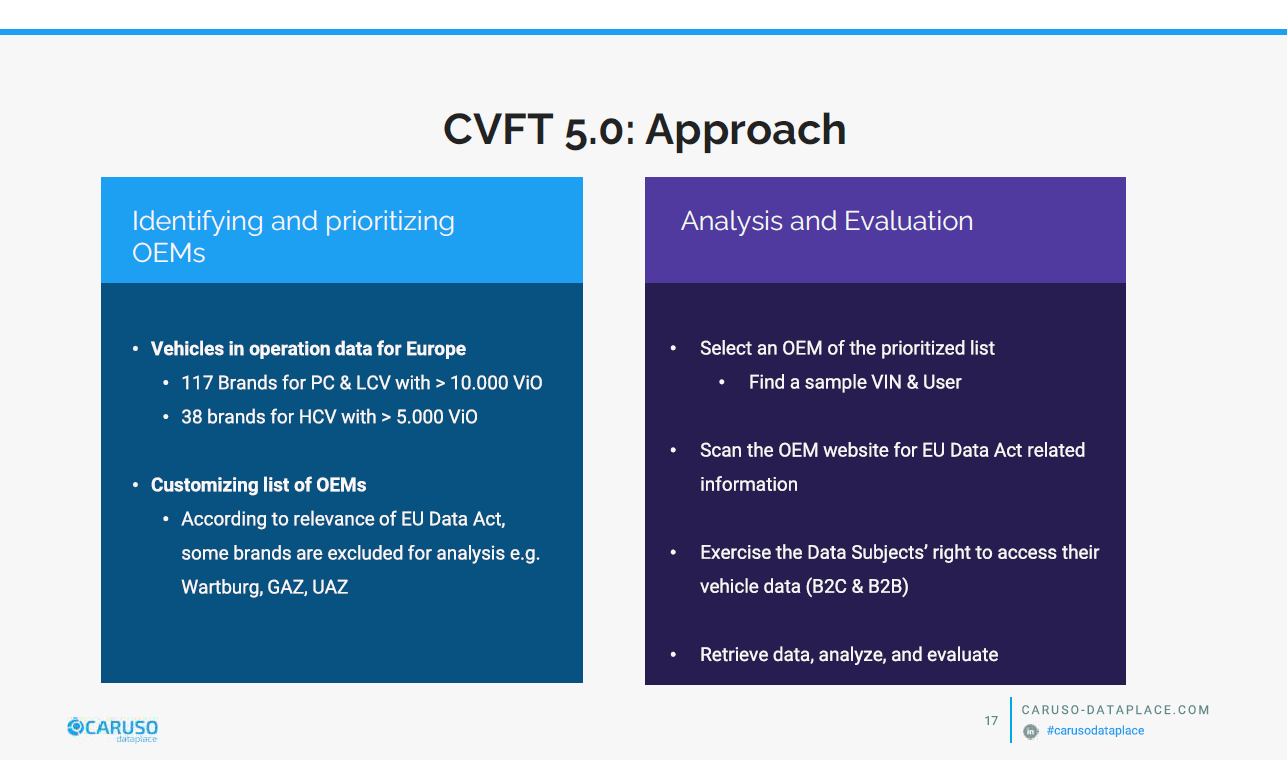
While these principles appear straightforward, their practical implementation is considerably more complex. According to Jens Knodel, CARUSO’s objective was not to assess theoretical compliance, but to verify how these rights and obligations function under real-world conditions. To achieve this, the company carried out an analysis of the European vehicle market before selecting manufacturers for detailed evaluation. The initial screening identified approximately 170 passenger car and light commercial vehicle brands with more than 10,000 vehicles in operation, alongside 38 heavy commercial vehicle brands with more than 5,000 vehicles in operation. Although the heavy commercial vehicle segment remains under evaluation, passenger cars and light commercial vehicles became the primary focus of the study.
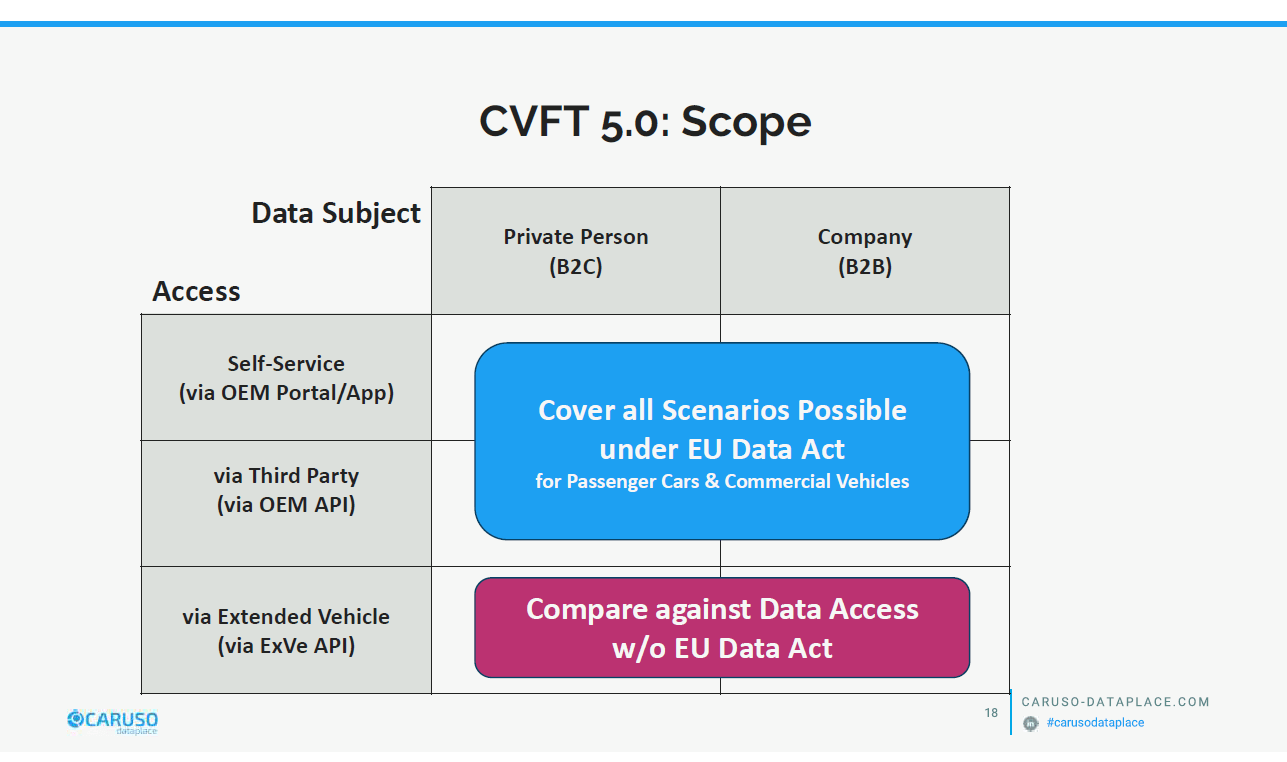
For each selected manufacturer, CARUSO sought access to actual vehicles and worked with real users willing to exercise the rights established by the Data Act. The process involved examining publicly available information, navigating registration procedures, requesting data access through official channels and evaluating the information eventually received. Rather than analysing policy documents, OEM statements or theoretical compliance frameworks, CARUSO attempted to exercise Data Act rights under real-world conditions. The study therefore reflects the practical experience that users and service providers may encounter when trying to obtain vehicle-generated data through the mechanisms established by the regulation.
In many respects, CVFT 5.0 resembles a market audit more than a traditional technical test, providing a snapshot of how different manufacturers are interpreting and implementing the same regulatory framework.
THE CONNECTED CARS MARKET IS STILL IN TRANSITION
One of the most interesting insights presented during the webinar concerns the speed and consistency of adoption across manufacturers. Contrary to what might be expected from a regulation that is already in force, implementation remains uneven. According to CARUSO, some manufacturers were early adopters and launched technical solutions shortly after the Data Act became applicable. However, these early implementations were often affected by technical challenges, procedural changes and ongoing adjustments. Knodel described situations where access processes evolved almost weekly as manufacturers refined their solutions.
Alongside these early adopters, CARUSO identified a second group of manufacturers that announced compliance roadmaps extending into 2026. These “late followers” acknowledge the requirements of the regulation but have not yet fully implemented operational solutions.
A third category includes manufacturers that have not yet establish a functional Data Act offering. While CARUSO expects the number of such “non-movers” to decline over time, their existence illustrates that the market is still far from a stable equilibrium. For this reason, the company plans to continue its evaluation until the end of 2026 in order to monitor progress and measure how quickly adoption gaps are closing.
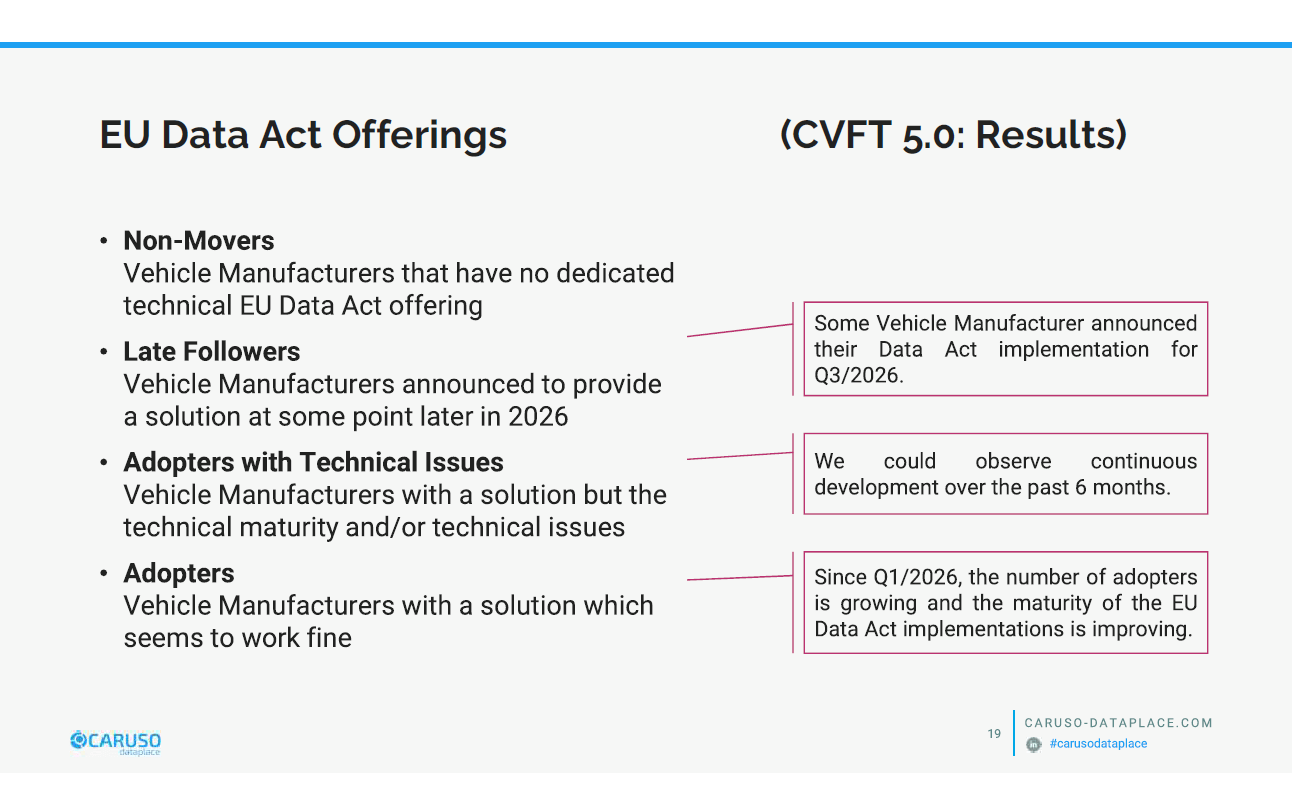
The existence of these different groups highlights an important reality. Compliance with the Data Act should not be viewed as a binary condition. Instead, manufacturers currently occupy different positions along a maturity curve that ranges from early implementation to full operational readiness.
TRANSPARENCY BEFORE ACCESS
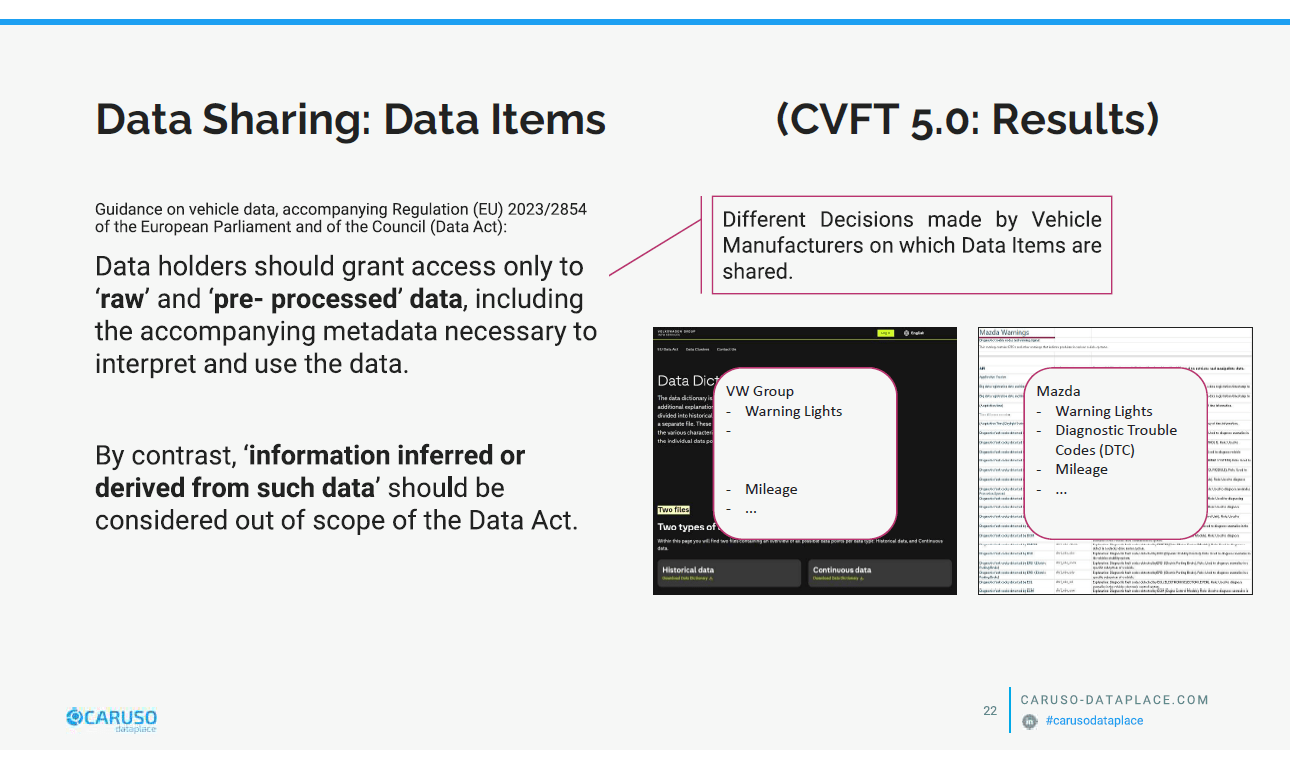
One of the first areas analysed by CARUSO concerns what the Data Act describes as “upfront information“. Before users can exercise their rights, they must understand what data are available and how those data can be accessed. The field test revealed considerable variation in this area.
Some manufacturers provide dedicated portals and detailed data catalogues describing available datasets, formats and access procedures. Others offer only limited information, often requiring users to complete registration processes before gaining visibility into the available data. Particularly noteworthy is the lack of consistency regarding information about update frequency, latency and technical delivery mechanisms. In many cases, users and service providers cannot easily determine how frequently specific data are updated or how quickly information becomes available after being generated by the vehicle.
For organisations seeking to develop data-driven services, this lack of transparency represents a significant challenge. Before investing in new applications, providers need a clear understanding of the data that can be accessed, the quality of those data and the conditions under which they can be used. The findings therefore suggest that transparency remains an important area for further development. The existence of access rights alone does not automatically create a functioning market if stakeholders struggle to understand what is actually available.
DIFFERENT DATA, DIFFERENT INTERPRETATIONS
If transparency represents the first challenge identified by the field test, the actual content of the data being shared may prove even more significant. One of the most revealing findings presented by CARUSO concerns the differences observed between manufacturers regarding which data elements fall within the scope of Data Act sharing obligations. While many stakeholders tend to assume that a common regulatory framework should naturally lead to a common set of accessible information, the reality appears considerably more complex.
According to the results presented, manufacturers are currently applying different interpretations of the regulation when determining which vehicle-generated data should be made available to users and authorized third parties. A particularly illustrative example concerns Diagnostic Trouble Codes (DTCs). In some cases, DTCs are included among the data shared under Data Act provisions. In others, they are not.
The field test does not seek to determine which interpretation is legally correct. Rather, it highlights the fact that different manufacturers currently apply different interpretations of the same regulatory framework, leading to materially different outcomes for service providers.
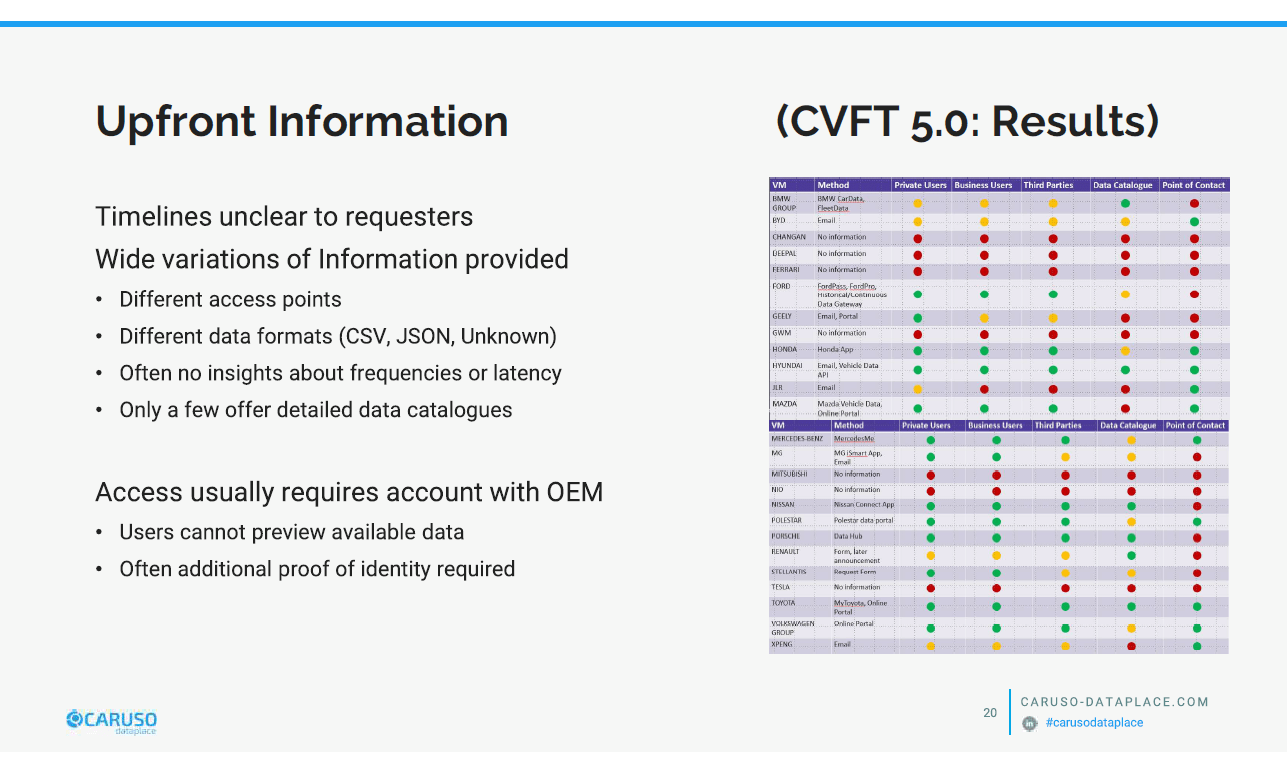
To understand why, it is necessary to look at the distinction established by the regulation itself. The Data Act differentiates between raw data, pre-processed data and information that is inferred or derived from those data. While raw and pre-processed information generally fall within the scope of mandatory sharing, derived information may not. The challenge is that the boundary between these categories is not always interpreted in the same way.
From a workshop perspective, this distinction is far from academic. A warning light simply indicates that a fault condition exists somewhere within the vehicle. A Diagnostic Trouble Code, by contrast, provides a significantly more precise indication of the nature of the problem and often represents the starting point for an efficient diagnostic workflow. For independent workshops, remote diagnostic providers and fleet maintenance operators, the availability or absence of DTC information can therefore have a substantial impact on the value that can be extracted from connected vehicle data.
More broadly, the field test highlights a growing challenge for the entire industry. The Data Act has created a legal framework for access, but it has not yet created a common understanding of what access should practically include.
THE MISSING FOUNDATION FOR SCALABLE SERVICES
This issue leads directly to one of the recurring themes emphasized by Jens Knodel throughout the presentation: the need for a Minimum Viable Data Set. The concept is relatively simple but potentially transformative. In the same way that modern digital ecosystems rely on common standards to ensure interoperability, the connected vehicle market would benefit from a baseline dataset consistently available across manufacturers. Such a dataset would not need to be exhaustive, nor would it prevent individual OEMs from offering additional data or proprietary services. Its purpose would be to establish a reliable common foundation upon which market participants could build scalable applications.
The absence of such a foundation creates significant challenges for service providers. A fleet operator managing thousands of vehicles across multiple brands cannot realistically develop a different workflow for each manufacturer. Similarly, an insurer, roadside assistance provider or independent workshop network requires a degree of consistency in order to deploy services efficiently at scale.
Without a common baseline, every new integration becomes a separate project, every new OEM introduces additional complexity and every business case becomes more difficult to scale. This is why the concept of a Minimum Viable Data Set extends beyond technical considerations. It is fundamentally a market issue.
ACCESS IS MEANINGLESS WITHOUT USABILITY
Another important finding emerging from the field test concerns the way in which data are delivered once access has been granted. At first glance, this may appear to be a purely technical issue. In reality, delivery mechanisms can determine whether a specific business model is sustainable or not.
The Data Act encourages continuous and real-time access wherever technically feasible. This distinction is particularly relevant for emerging use cases such as predictive maintenance, First Notification of Service Need (FNOS), roadside assistance and advanced fleet management services. While all of these applications depend on vehicle data, their effectiveness often depends on receiving that information at the right moment rather than simply receiving it eventually.
According to CARUSO Field Test 5.0, data may be delivered through downloadable files, email-based processes, web portals, application programming interfaces (APIs), push mechanisms or streaming architectures. From a regulatory perspective, all of these approaches may satisfy the requirement to provide access. From an operational perspective, however, the differences are substantial.
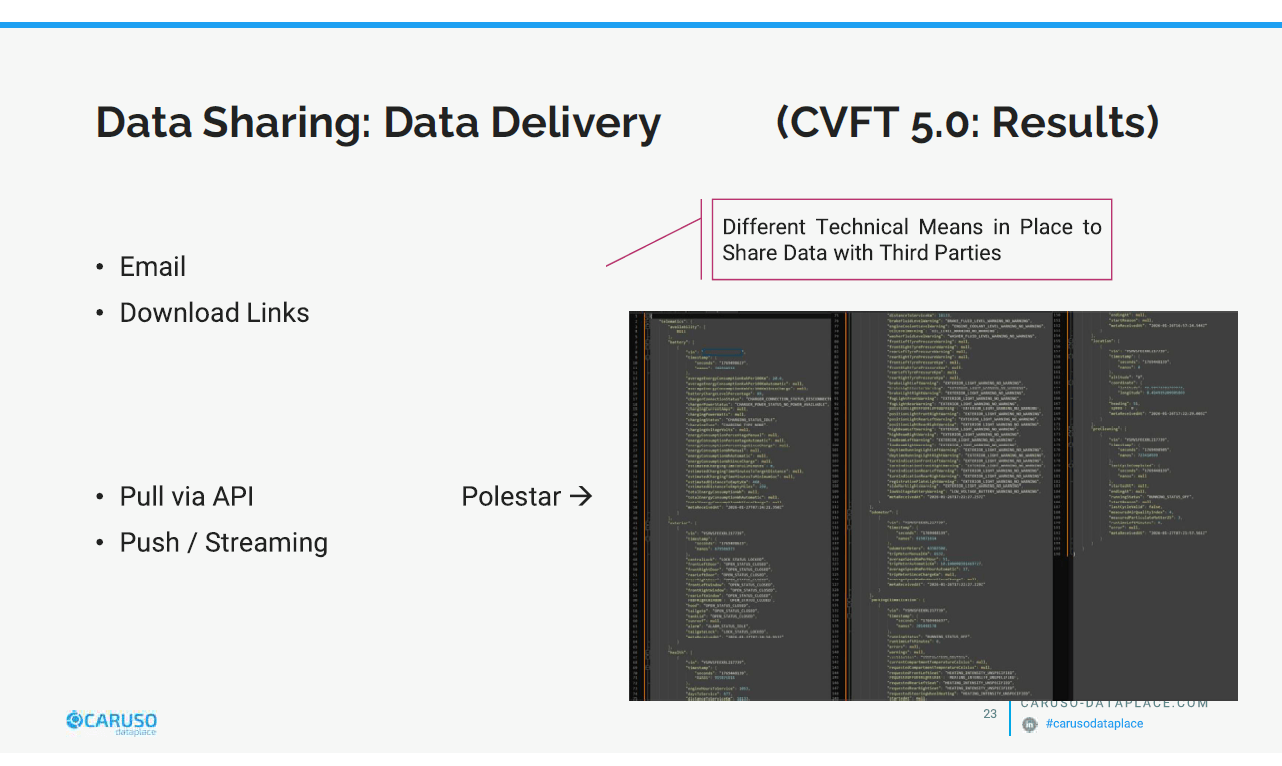
Consider predictive maintenance. The value of predictive maintenance lies in identifying emerging issues before they result in vehicle downtime. Such use cases depend on timely information and frequent updates. Data delivered / available days after they are generated may have little operational value.
This is why CARUSO repeatedly highlighted data quality and update frequency as critical factors throughout the webinar. In this context, data quality should not be understood solely as accuracy. Update frequency, latency, completeness and consistency across brands are equally important dimensions when assessing whether connected vehicle data can support scalable business applications. A connected vehicle ecosystem should not be evaluated solely on the basis of whether data can be obtained. It must also be assessed according to whether the available data are sufficiently current, complete and reliable to support real-world applications.
For aftermarket professionals, this distinction is particularly important. The next generation of service models will increasingly depend on data-driven decision making. If the underlying data infrastructure fails to provide adequate quality or responsiveness, the resulting services may struggle to deliver the expected value.
WHEN COMPLIANCE MEETS ECONOMICS
Technical implementation is only one side of the equation. Even if data become widely available and technically accessible, connected vehicle services will only flourish if they can be supported by sustainable business models. This is where one of the most sensitive findings of the field test emerges. The Data Act allows data holders to request reasonable compensation (FRAND) when sharing data with third parties that use those data for commercial purposes. While the principle itself is widely accepted, its practical implementation remains open to interpretation.
According to CARUSO’s findings, pricing structures currently vary considerably across manufacturers. During the presentation of the Field Test 5.0, Jens Knodel indicated that the observed range extends from zero euros to approximately 30 euros per activated vehicle per month.
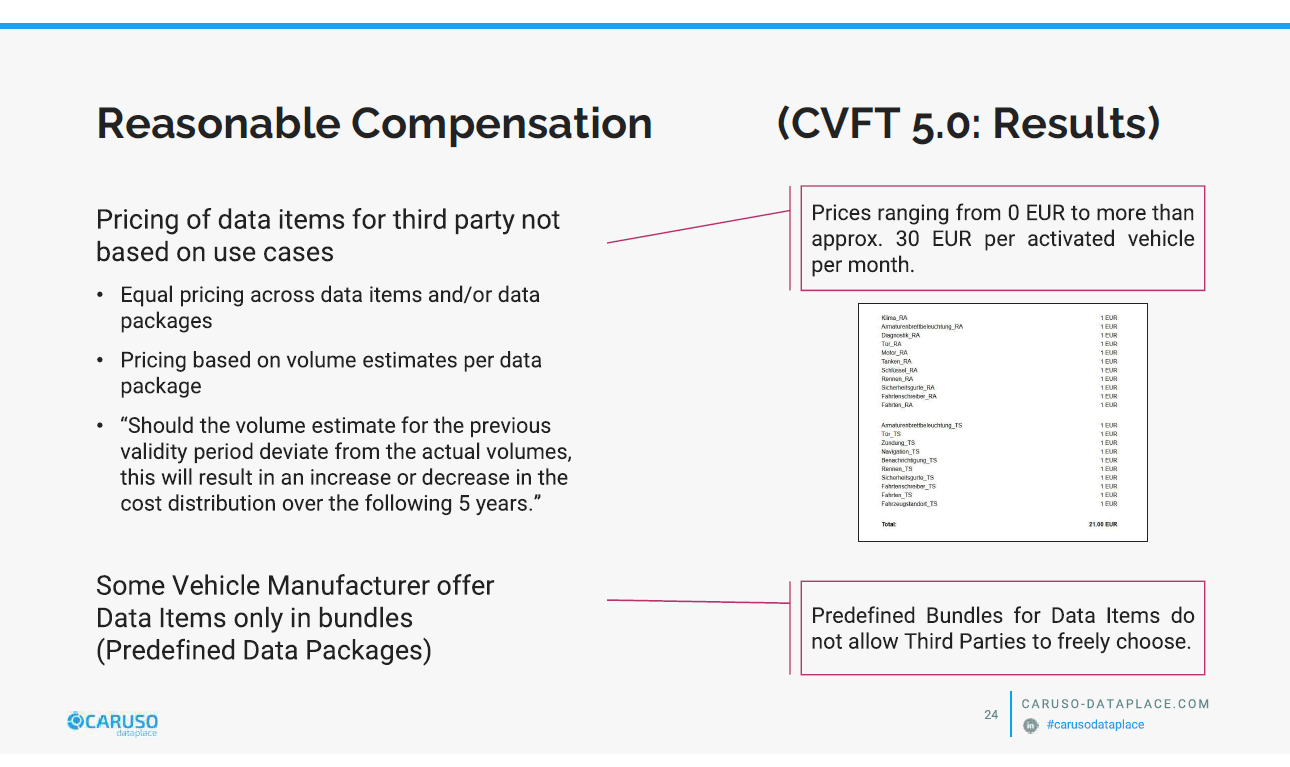
Such variation inevitably raises questions. During the webinar, CARUSO noted that from the perspective of a service provider operating across multiple brands, it becomes increasingly difficult to explain why access to the data of one vehicle should cost substantially more than access to the data of another vehicle delivering a comparable service outcome. For a service provider operating across multiple brands, identical services may face dramatically different cost structures depending on the manufacturer involved. This can create challenges not only for profitability but also for market adoption.
A connected service that appears economically attractive when data access costs are negligible may become difficult to justify when data acquisition costs increase significantly. The issue becomes even more relevant when considering large fleets. A difference of a few euros per vehicle per month can translate into substantial annual cost variations when thousands of vehicles are involved. It is therefore unsurprising that the concept of “reasonable compensation” has become one of the most actively debated aspects of the Data Act. The European Commission is already working on guidance intended to clarify how this principle should be interpreted. Such guidance may prove crucial for the future development of the market. As several stakeholders have observed, once technical barriers begin to diminish, commercial conditions may become the primary factor determining whether connected vehicle services can scale successfully.
WHAT CVFT 5.0 MEANS FOR THE INDEPENDENT AFTERMARKET
Viewed from the perspective of the independent aftermarket, the findings of the field test are both encouraging and cautionary. The encouraging aspect is clear. Compared with the situation that existed before the Data Act, access to vehicle-generated data is improving. More manufacturers are making data available, more access mechanisms are emerging and the overall direction of travel appears positive.
For workshops, diagnostic specialists, roadside assistance providers, fleet operators and technology companies, this creates opportunities that were difficult to imagine only a few years ago. At the same time, the study demonstrates that the industry is still navigating a transitional phase. Differences in available datasets, technical architectures, update frequencies and commercial conditions continue to create barriers to the widespread deployment of cross-brand services. The situation can perhaps be summarized in a simple observation.
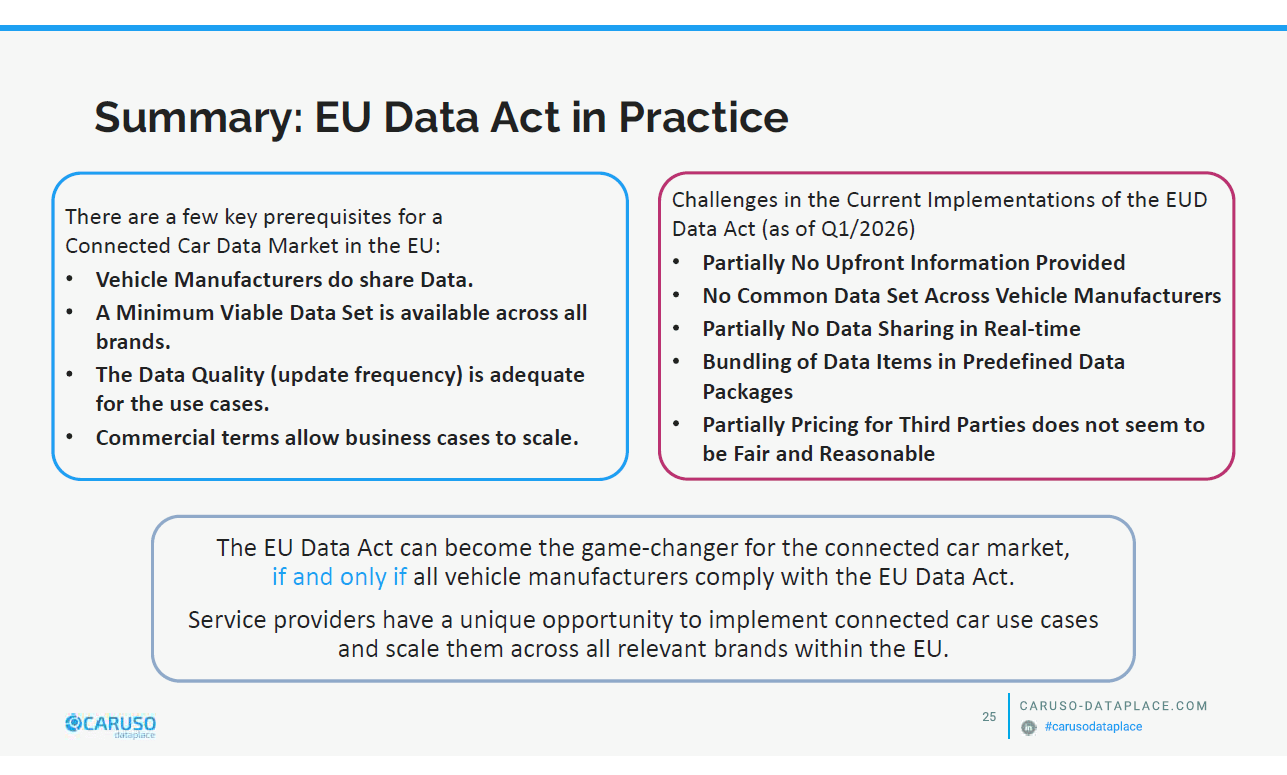
The Data Act has largely resolved the question of whether connected vehicle data should be accessible. It has not yet resolved how that accessibility should be implemented in a way that enables a truly interoperable European market. For aftermarket professionals, this distinction is crucial.
Perhaps the most important conclusion emerging from CARUSO’s work is that Europe has entered a new stage in the evolution of vehicle data. The focus is shifting towards harmonization, interoperability, quality and economic sustainability. In other words, the conversation is moving from legal entitlement to industrial execution. This transition is likely to define the connected vehicle landscape for the remainder of the decade.
Once again, for SICURAUTO.it’s point of view: the Data Act opened the door, but behind it every OEM built a different room. Let’s see how, when and if the European Commission will update the “Guidance on vehicle data, accompanying the Data Act” to make the independent aftermarket surviving the connected vehicles era.