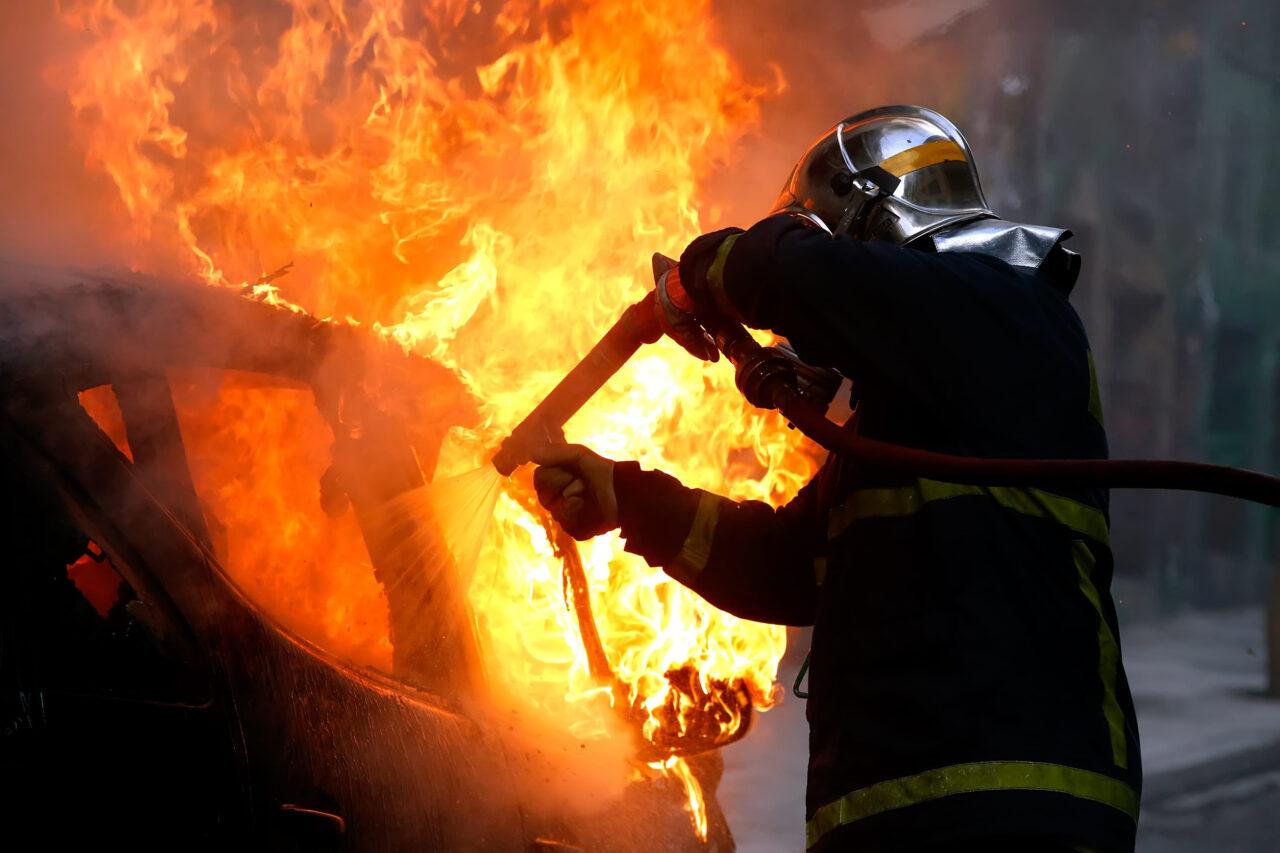
 Incendio veicolo
Lithium Battery Fires in the Workshop: The Risk Is Not Limited to Electric Cars
Not just electric cars: battery-powered tools, e-bikes and charging systems are increasing the potential sources of fire inside workshops. EMME Antincendio explains how to tackle an issue that is still often underestimated
Not just electric cars: battery-powered tools, e-bikes and charging systems are increasing the potential sources of fire inside workshops. EMME Antincendio explains how to tackle an issue that is still often underestimated
When it comes to lithium battery fires, people almost automatically think of electric cars. In reality, the risk is much more widespread and affects numerous daily activities within workshops and body shops: from battery-powered tools to e-bikes, from portable devices to charging systems. An increasingly pervasive presence that is changing the risk profile of car repair businesses and calls for greater attention in safety assessment, space organization and staff training.
To better understand which scenarios are the most critical, which mistakes are made most frequently and how technical and regulatory approaches to the issue are evolving, SICURAUTO.it interviewed EMME Antincendio, a company specializing in the design and implementation of fire prevention and fire risk management solutions. A clear message emerges from their answers: the issue concerns not only electric vehicles and the new fire Class L introduced by the ISO 3941:2026 standard, but the entire ecosystem of lithium batteries present in workshops. Dealing with it correctly means protecting people, facilities, operations and the company’s business continuity.
📊
This content is part of SICURAUTO.it’s 6th Aftermarket Report, titled: “The Aftermarket in the Era of European Regulations: Opportunities, Constraints and New Specializations”.
In recent years there has been increasing talk of lithium battery fires: in a workshop setting, how much has the risk actually increased and in which situations does it arise most often?
In recent years, it is not only attention to the issue that has increased: actual exposure to risk has grown, both because of the greater presence of electric vehicles, batteries being handled and charging systems in workshops and because of the increasingly widespread use, in everyday operations, of tools, equipment and devices powered by lithium batteries.
The situations in which this risk arises most frequently are quite recognizable. The first is when crashed or impact-damaged vehicles enter the workshop, because mechanical damage to the battery pack can create unstable conditions that may not appear immediately. Another delicate moment is charging, a phase in which any anomalies or critical issues can emerge more clearly.
Handling removed batteries, damaged batteries and the temporary storage of vehicles or battery packs also require attention, because the phenomenon can evolve over time and does not always become evident straight away. Today it is fair to say that workshops are increasingly often faced with potentially critical situations that require greater awareness and a more structured approach than in the past.
What are the most critical scenarios for a workshop today: crashed vehicle, damaged battery, charging, storage?
The most delicate situation is probably that of a crashed or impact-damaged vehicle, because mechanical damage can compromise the battery pack and cause instability that may not be immediate. In these cases, the problem is not only what is visible when the vehicle arrives, but also what can develop in the following hours.
More specifically, a highly critical scenario involves a damaged, deformed, overheated or otherwise “suspect” battery. When warning signs are present, the safety margin narrows and the battery must be treated as a potentially unstable element, to be isolated, monitored and managed with defined procedures (in this in-depth article we explain the correct procedures for working on electrified vehicles in the workshop, ed.).
Charging is also a sensitive phase, because any defects, previous damage or anomalies may surface precisely during this activity. It should not necessarily be considered the most dangerous moment of all, but it is certainly a phase that requires control, attention and adequate environmental conditions.
Finally, storage becomes critical, especially when it involves previously used batteries. Temporarily storing a battery in good condition is one thing; handling a battery that is suspect, damaged or taken from a crashed vehicle is another matter entirely. In summary, the workshop must pay particular attention to four stages: vehicle intake (especially after an accident), battery handling, charging and temporary storage.
In addition to electric vehicles, there are more and more battery-powered devices (tools, scooters, battery packs) in workshops: how significant is this “widespread” risk?
Very significant, because the risk associated with lithium batteries does not arise only when an electric vehicle enters the workshop, but also from the increasingly widespread presence of devices and equipment that use the same technology.
Tools, scooters, e-bikes, battery packs, jump starters, portable devices and batteries on charge are now part of day-to-day operations at many aftermarket businesses, and this makes the risk more widespread, more frequent and often less visible. The key point is precisely this: the problem does not only concern large vehicle battery packs, but also the daily presence of numerous lithium-powered devices which, taken together, increase the number of potential risk points within the workshop.
The most critical situations therefore do not only involve crashed or damaged electric vehicles, but also the daily handling of removed batteries, battery packs on charge, overheated devices or work tools in constant use within the work environment.
This is why we speak of “widespread” risk: it is not always concentrated in a single serious and visible event, but is distributed across several operational situations which, if underestimated, can lead to critical conditions. This is also what makes the issue more delicate today than in the past: the risk is not confined to a single vehicle, but cuts across all workshop activities.
Is the fire risk related to batteries underestimated by aftermarket operators today? If so, what are the most frequent mistakes?
Yes, the fire risk associated with lithium batteries is still underestimated in the aftermarket sector, both by workshop operators and, in some cases, by the fire safety professionals called upon to draw up or update the risk assessment. The most frequent mistake is to focus almost exclusively on the vehicle, without also taking into account all the lithium-powered tools and work equipment used daily in the workshop. These devices are now part of normal operations, but are often not given due consideration in the overall risk assessment.
Another critical aspect concerns batteries that have been involved in impacts, accidents or damage, which may present unstable conditions that are not immediately visible and therefore require specific handling methods. That said, in recent years the fire prevention sector has been paying greater attention to this issue, but it is still essential today to raise awareness, provide specific training and update risk assessments within workshops.
Can you explain in simple terms what happens during thermal runaway and why these fires are more difficult to manage than traditional ones (+ risk of re-ignition even after hours or days)?
When we talk about thermal runaway, we refer to an uncontrolled reaction inside the battery, in which the overheating of one or more cells can rapidly spread to the rest of the battery pack, generating heat, smoke, gas and fire. The real difficulty, however, lies not only in the initial ignition, but above all in managing the event over time. In fact, with lithium battery fires the key issue is containment: unlike traditional fires, the risk can persist even after an initial phase of apparent extinguishment, with possible re-ignition even hours later.
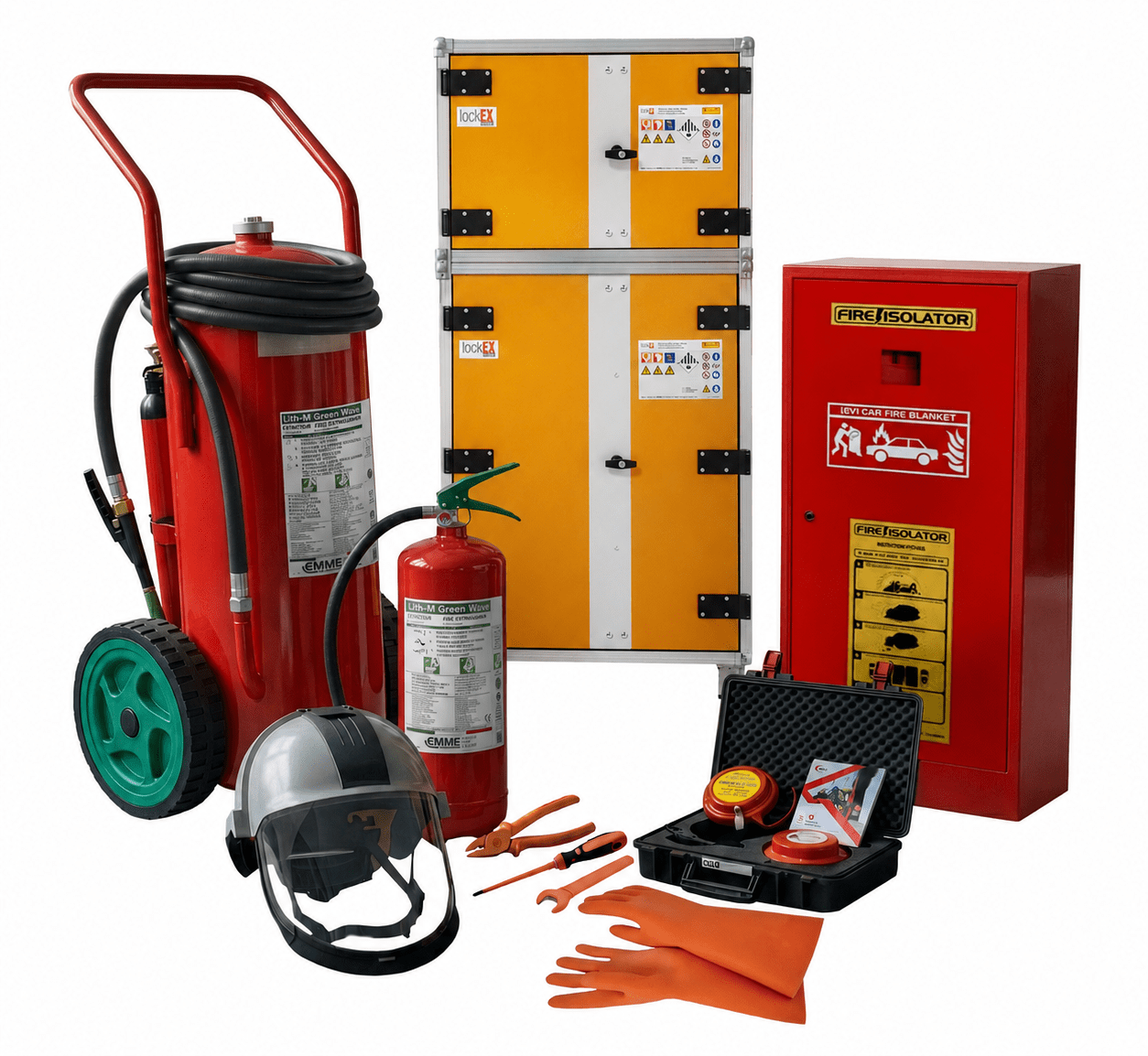
For this reason, the tools normally used on conventional fires are not always sufficient. A specific approach is needed, based on equipment, systems and procedures designed to contain the phenomenon until it is fully extinguished and to limit the spread of the fire. It is precisely with this in mind that EMME Antincendio has developed an ecosystem of solutions dedicated to lithium battery risk, which includes containment systems such as the Fire Isolator, dedicated fire extinguishers tested on lithium batteries, cabinets for safe charging and storage, and protective equipment for operators.
The risk of re-ignition also makes the post-event phase essential: the vehicle or battery must often be isolated and monitored for an adequate period to ensure that no new unstable conditions develop.
The ISO 3941:2026 standard introduces Fire Class L for lithium batteries: what does this classification involve from a technical standpoint?
ISO 3941:2026 introduces Class L as a fire class covering fires involving lithium batteries. This classification does not constitute an officially recognized category in the European regulatory system. From a technical point of view, however, it is a significant development because it specifically recognizes a phenomenon that, until now, was often interpreted through traditional classes not designed to fully describe its characteristics.
The ISO standard is primarily a descriptive and technical tool. Its aim is to provide a useful terminology reference for analyzing events related to lithium-ion batteries and for fostering a shared understanding among designers, emergency responders, safety managers and users. However, it is not a product standard, nor does it introduce certification schemes for fire extinguishers.
Does the introduction of Class L currently entail concrete obligations, or are we still in a regulatory transition phase?
As mentioned, the ISO standard is not recognized in the regulatory system; therefore we are still in the middle of a regulatory transition phase. It is thus essential to clearly distinguish between the classifications proposed at ISO level and those provided for by the European and national regulatory framework, since this difference has operational and legal implications for manufacturers, distributors and users of firefighting equipment.
Class L was designed to identify the phenomenon known as thermal runaway, the exothermic electrochemical reaction described above. This process does not necessarily coincide with a fire in the traditional sense of the term, which involves the combustion of external materials. In cases of thermal runaway, heat generation can continue even after the application of a conventional extinguishing agent. Similar situations are known in the HazMat (Hazardous Materials) field, where managing the chemical reaction takes priority over extinguishing the flames. For this reason, labelling a fire extinguisher as suitable for “Class L” without proper certification can create a false sense of security among users.
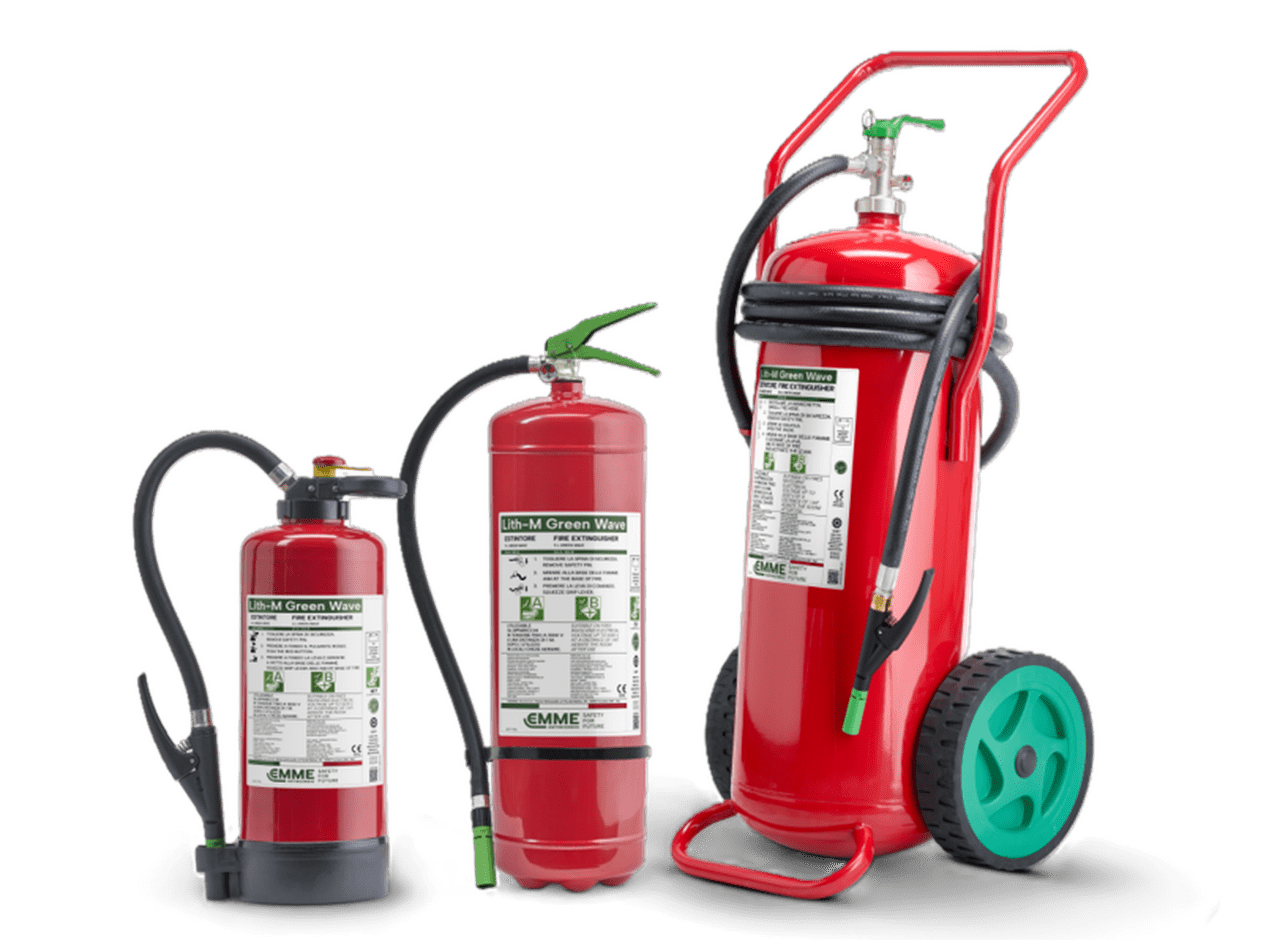
In this sense, we are in a transition phase that does not allow for simplifications. The new standard is important because it recognizes the problem more clearly, but the real challenge remains turning this recognition into implementation criteria, technical choices and truly appropriate operating practices. This is where NTA 8133:2021 + A1:2025 comes in, developed in the Netherlands as a technical reference to evaluate the effectiveness of fire extinguishers on fires caused by lithium batteries. For EMME, this reference specifically concerns the 9-liter fire extinguishers of the Lith-M Green Wave line, tested to this standard for this type of risk.
What is the first action a mechanic should take when they notice smoke or overheating from a battery pack?
It would be wrong to give a generic answer that applies to every situation, because the management of an anomaly involving a lithium battery depends on the specific context of the workshop, the type of battery involved, the surrounding environment and the level of risk present. For this reason, it is essential that each workshop has a procedure defined by the fire safety professional in charge of the risk assessment. The procedure must establish how to manage all operational phases, from the entry of the vehicle or battery into the workshop through to any emergency response.
In general, when signs such as smoke, overheating or obvious anomalies occur, it is important to avoid improvised interventions and follow only the procedures provided for that specific operating context. In fact, lithium battery risk management requires preparation, training and dedicated procedures, because not all situations can be handled in the same way.
In which cases does it make sense to attempt an immediate intervention, and in which is it more appropriate to evacuate and call the emergency services?
Here again, there is no single answer that applies to all situations, because each intervention depends on the specific context of the workshop, the type of battery involved, the extent of the event and the procedures defined by the fire safety professional who advises the facility.
It is important to avoid generic indications that could be incorrect or misleading if applied to different contexts. The management of an incipient lithium battery fire must in fact be included in the risk assessment and operating procedures of the workshop.
In general, intervention by non-specialized personnel should be limited exclusively to incipient fires, and only if there are adequate safety conditions, suitable tools and specific training. When, on the other hand, the event escalates rapidly, with dense smoke, significant heat build-up, risk of spread or uncontrollable conditions, the right choice is to evacuate the area and call the emergency services.

Are there any significant differences in terms of management between a small battery fire (e.g. a power tool) and an electric vehicle fire?
Yes, there are very significant differences, especially in terms of event management, the amount of energy involved and the type of intervention required. A fire involving a smaller battery, such as those found in tools or portable devices, still requires specific attention, but can be managed more effectively with fire extinguishers designed and tested for lithium battery fires, provided it is in the early stages and under adequate safety conditions.
This is where EMME’s Lith-M Green Wave range comes in, available in different sizes from 2 to 150 liters. Specifically, the 9-liter Lith-M Green Wave fire extinguishers, as mentioned above, are tested to NTA 8133:2021 + A1:2025 for this type of risk.
In the case of an electric vehicle, on the other hand, the complexity increases significantly, because large battery packs, very high amounts of energy and a greater risk of propagation and re-ignition come into play. In these situations, it is not a matter of immediate extinguishment, but above all of containing the event and safely managing the entire scene.
For this reason, the management of a fire on an electric vehicle requires more structured systems, dedicated procedures and tools designed to limit the spread of the fire and also support the phases following the event, such as monitoring and isolation of the vehicle involved.
What are the most dangerous mistakes an operator can make in the first few minutes?
One of the most dangerous mistakes is tackling an incipient fire involving lithium batteries without specific risk training. In fact, there is often a tendency to apply procedures and behaviors suited to traditional fires even to scenarios that have completely different dynamics.
Underestimating the first warning signs, improvising an intervention or using inadequate tools can increase the level of risk and make the event more difficult to manage. For this reason, it is essential that operators acquire specific skills in handling lithium batteries, in the correct operating procedures and in the limits of what can be done safely.
It is precisely with this objective that EMME Fire Academy has developed a dedicated training course on managing lithium battery fire risk, designed to help companies and operators understand real-life scenarios, operational challenges, correct procedures and the use of dedicated equipment. Today, standard fire safety training is not always sufficient to deal with this type of risk. A more specialized and up-to-date approach is needed, built on the real operational dynamics that workshops and aftermarket environments have to manage on a daily basis.
Equipment such as dedicated fire extinguishers or fire blankets is certainly useful, but in which cases is it really effective and when does it make sense to simply call the fire brigade?
Solutions such as dedicated fire extinguishers and containment systems are now important tools in managing lithium battery fire risk, but it is essential to understand that their use must take place within correct procedures and in the presence of trained personnel. In general, these tools are especially effective in tackling incipient fires, i.e. in the initial stages of the event, when conditions still allow for a controlled and safe intervention.
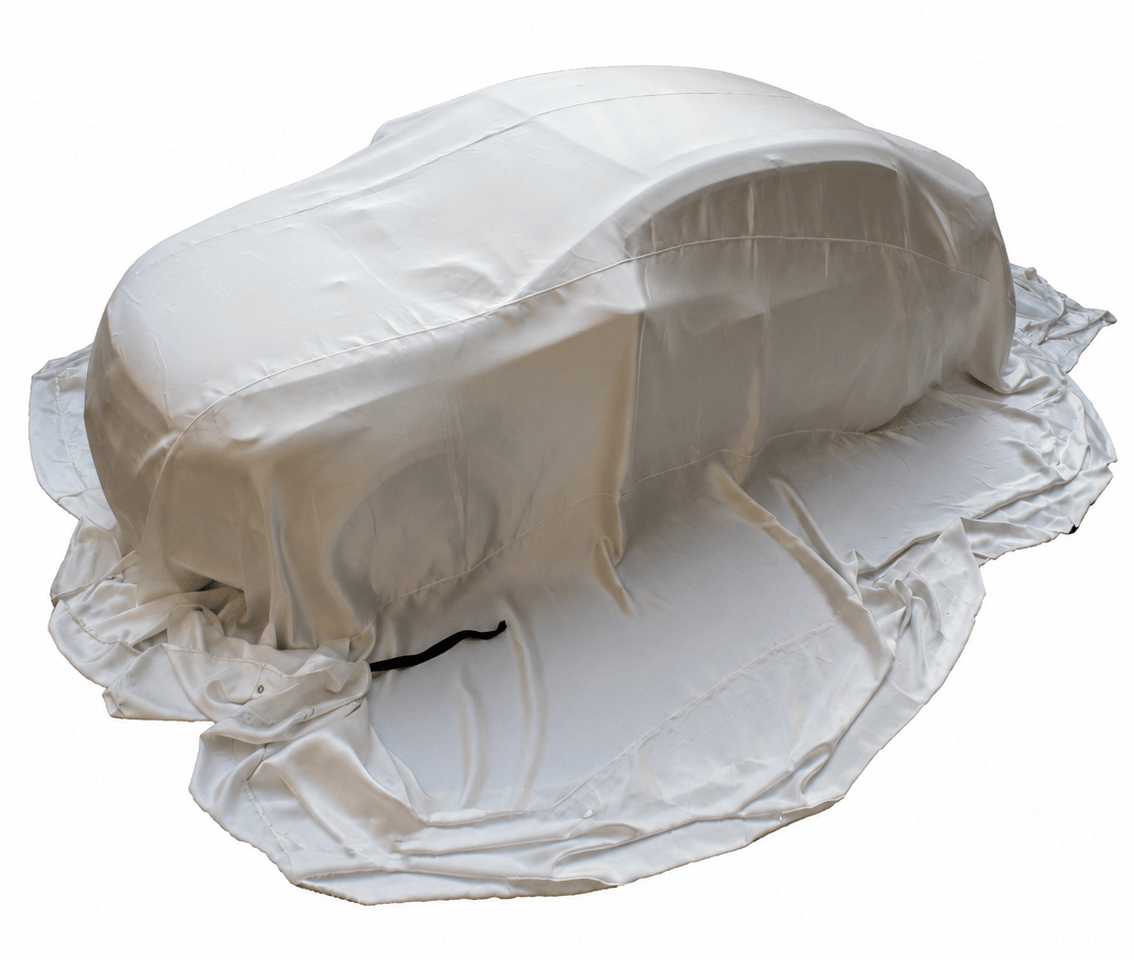
Dedicated fire extinguishers for lithium batteries can support the containment of the phenomenon in the early stages, while systems such as Fire Isolator blankets are designed to help contain the fire, limit the spread of flames and manage the vehicle involved in a more controlled way.
When, on the other hand, the event has already escalated, with intense heat build-up, heavy smoke, risk of spread or uncontrollable conditions, the response must necessarily be handed over to qualified personnel and the fire brigade. For this reason, it is essential that operators know how to distinguish an incipient fire from a situation that has already escalated, and that they receive specific training on the correct use of equipment and on emergency procedures for lithium batteries.
Highly toxic gases, such as hydrofluoric acid, can be released during a battery fire: how real is this risk in the workshop? How can workers protect themselves?
The risk associated with the release of toxic gases during a lithium battery fire is real and represents one of the most delicate aspects of managing these events. In fact, the phenomenon can release highly hazardous substances, including hydrofluoric acid, which makes exposure to fumes and gases a highly critical factor for operators in the workshop.
For this reason, the issue of protection cannot be addressed superficially. The first form of protection is always a correct risk assessment by the fire safety professional, who must define operating procedures, emergency management methods and levels of protection appropriate to that specific context.
Another fundamental aspect is the containment of the event. Specific systems designed for lithium battery fires can help limit the spread of the fire and contribute to a more controlled management of the fumes and gases developed during the event. In the presence of significant development of smoke or toxic gases, the safest solution for non-specialized personnel remains the evacuation of the area and the intervention of qualified personnel. This is also why today it is becoming increasingly important to combine technical devices with specific training on the risk of lithium batteries and on the correct emergency procedures.
Is having effective tools enough to manage risk or do we need a broader system made up of procedures, organization of spaces and training?
No, simply having effective tools is not enough. Managing the risk associated with lithium batteries requires a broader and more structured approach, which must start with a correct risk assessment by the fire safety professional and then translate into operating procedures, organization of spaces, staff training and choice of appropriate equipment. Today, the issue is not only about the presence of a fire extinguisher or a containment system, but about the workshop’s ability to correctly manage all operational phases: charging, handling, storage, management of damaged batteries and emergency response.
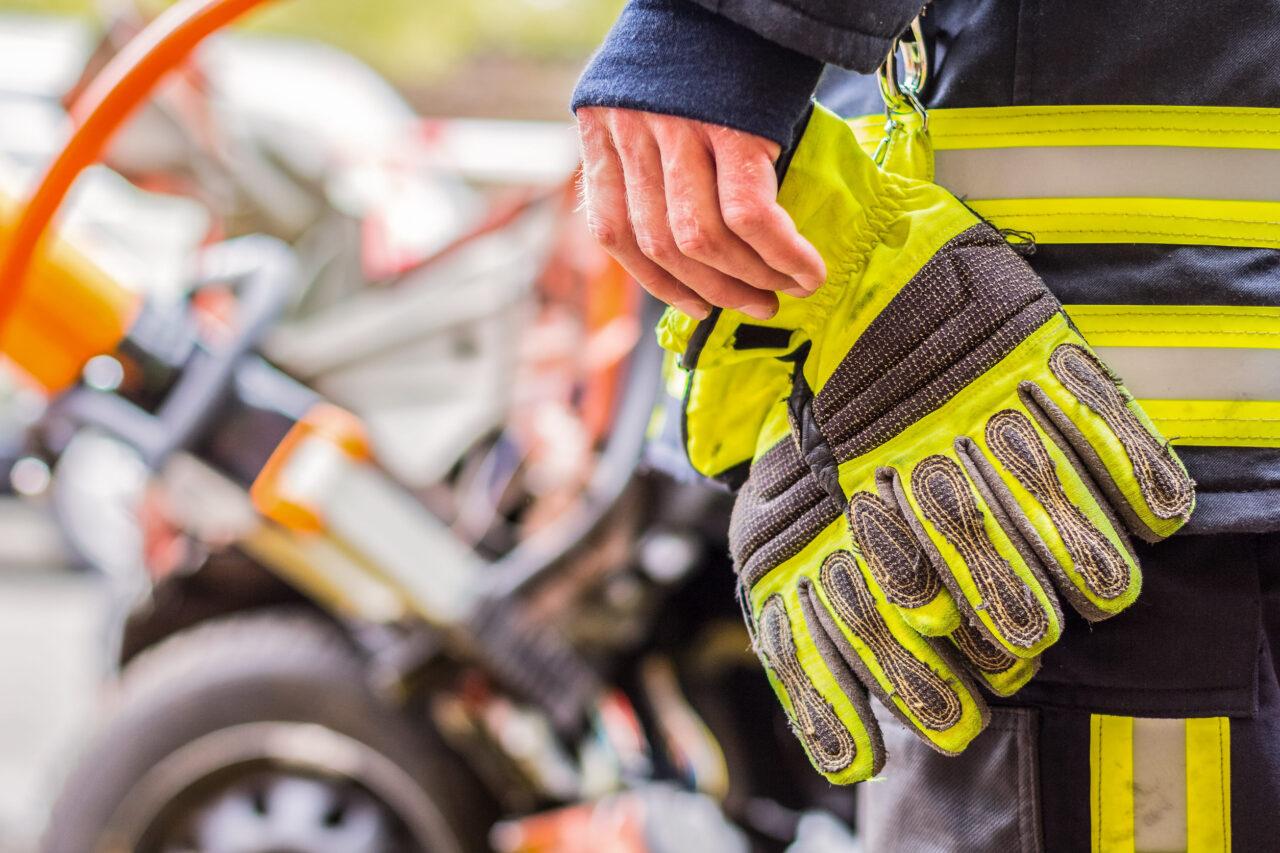
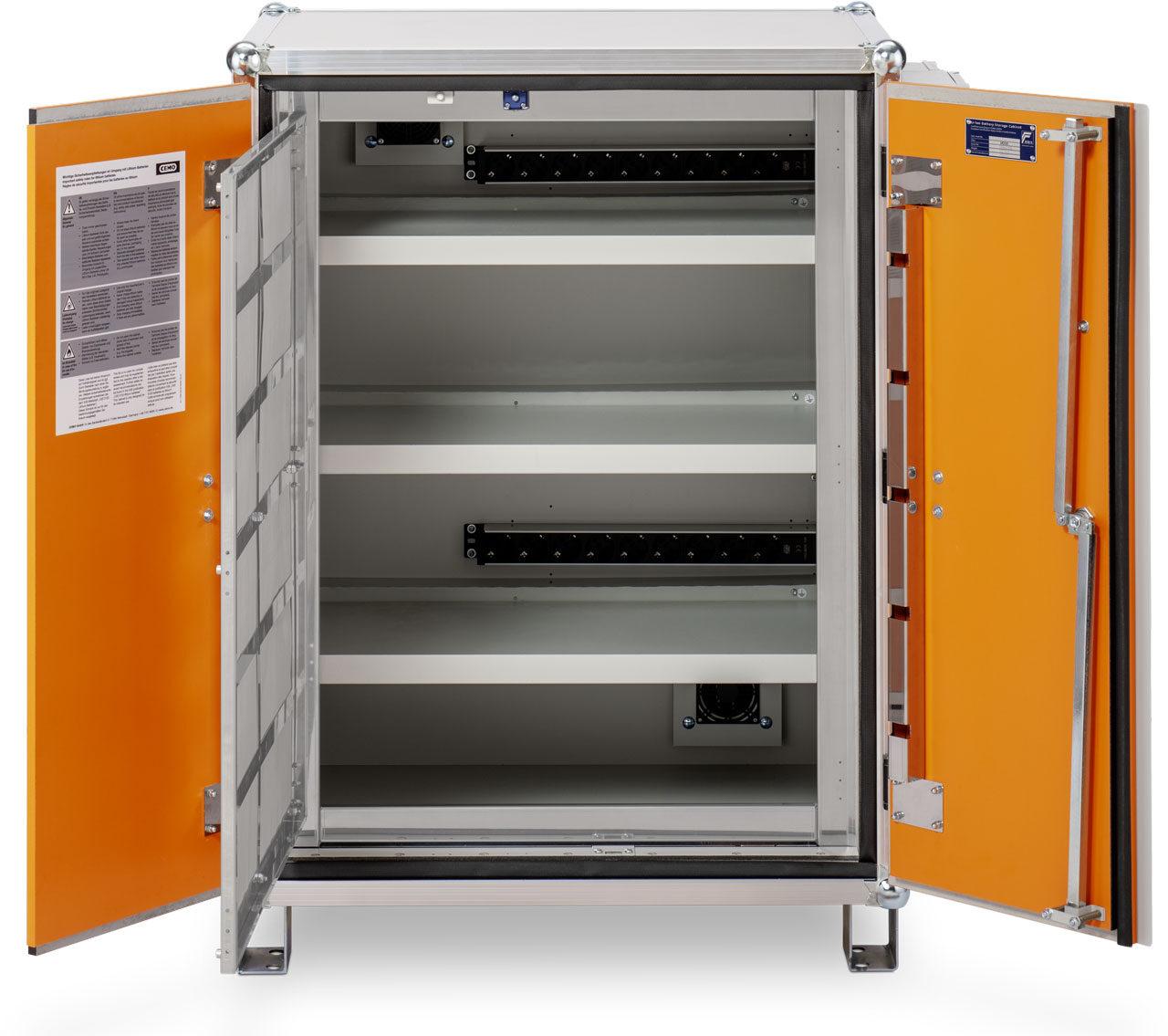
In this context, dedicated solutions for charging and safely storing batteries also become central, such as CEMO cabinets, designed to contain and manage risk in the workplace. Likewise, personal protection plays a key role: operators working on electric vehicles or lithium batteries must have access to PPE suitable for electrical risk, such as the PENTA line, especially during isolation, handling or work on potentially critical components.

If a workshop owner wanted to start managing this risk seriously today, what are the first practical steps to take?
The first practical step is to involve the fire safety professional who advises the workshop and update the risk assessment to specifically cover lithium batteries, electric vehicles and equipment powered by this technology. It is essential that the assessment takes into account not only the vehicles, but also the workshop’s daily activities: charging, storage, battery handling, power tools and the management of any batteries that are damaged or have been involved in impacts and accidents.
Another important step is to verify that the professional in charge is up to date on the new operational needs and on the equipment available today for risk containment, from charging and storage management to containment systems and protective equipment for operators. At the same time, it is important that the owner also develops greater awareness of the issue, because lithium battery risk management cannot be treated merely as a technical formality, but requires concrete attention to space organization, operating procedures and staff training.
At EMME, we are seeing growing interest in this topic from fire safety professionals, partly thanks to the awareness-raising program developed with Prevenzione Incendi Italia.
Looking ahead to the next 3-5 years, do you think this will become a standard requirement for all workshops?
If the automotive industry continues on the electrification journey already underway, we believe that lithium battery risk management will progressively become an increasingly standard requirement within workshops and aftermarket environments.
The growing presence of electric vehicles, charging systems, tools and devices powered by lithium batteries will inevitably lead to greater attention to procedures, training, organization of spaces and specific safeguards for risk management.
At the same time, the fire prevention sector is also evolving rapidly on this issue. Professionals, companies and operators are updating approaches, skills and risk assessment to respond to operational needs that until a few years ago were marginal and that today are becoming increasingly central.
For this reason, we believe that in the coming years we will no longer talk about “additional” measures, but about elements that are increasingly integrated into the normal management of a modern workshop, in terms of both safety and the technical preparedness of operators.