Diagnosi auto Launch Italy
Years of Data and Millions of Cases: How LAUNCH Develops AI for Diagnostics Across Europe, the US and China
Behind artificial intelligence applied to diagnostics lie not just algorithms, but also years of data collection, experience in the field and technical knowledge. LAUNCH outlines its global strategy across China, the USA and Europe
Behind artificial intelligence applied to diagnostics lie not just algorithms, but also years of data collection, experience in the field and technical knowledge. LAUNCH outlines its global strategy across China, the USA and Europe
When it comes to artificial intelligence applied to automotive diagnostics, the risk is stopping at the slogans or promises of a technology that seems destined to revolutionise the way workshops operate. This is why we wanted to take a closer look at the claim “AI Empowers, Forward Together“ presented by LAUNCH in China, trying to understand not only what features will actually reach European workshops, but above all what lies behind it: how long the data feeding these systems has been collected, what the current size of the available information assets is, how the differences between markets are managed and what role Europe and the United States play in the development of a technology that many tend to consider exclusively Chinese.
The interview reveals a more nuanced picture than expected: an ecosystem built on over ten years of data collection, tens of millions of diagnostic records from multiple continents and a development that involves not only China and the United States, but also Europe, with Italy actively engaged in the project. The result is a vision of AI that does not aim to replace the technician, but to help them find their way more quickly through fault codes, procedures, wiring diagrams, solved cases and technical information, reducing time and complexity in diagnostic processes.
To better understand how LAUNCH is developing this new generation of tools, we asked the company a series of direct questions. Here are LAUNCH Italy’s answers.
📊
This content is part of SICURAUTO.it’s 6th Aftermarket Report, titled: “The Aftermarket in the Era of European Regulations: Opportunities, Constraints and New Specializations”.
During the recent LAUNCH event in China, a new vision of AI-supported diagnostics was presented. In concrete terms, which functions are already operational and available in your diagnostic tools today, and which still represent a direction for future development?
LAUNCH is working on a new generation of diagnostics in which artificial intelligence is not seen as a mere add-on function, but as a genuine ecosystem to support workshop operations. The European version of the AI features will probably be presented to the public towards the end of this year. We are integrating several platforms that are often consulted separately today: DTC (Diagnostic Trouble Code) diagnosis, known and unknown fault cases, technical information, guided procedures, wiring diagrams and verification tests on components.
The goal is very concrete: to help the technician move more quickly from the fault code to the possible cause, and from the possible cause to practical verification on the vehicle. The system will be able to suggest diagnostic paths, highlight potentially involved components and automatically link the most useful technical information to the specific anomaly detected. What was presented in China therefore represents LAUNCH’s strategic vision; for Europe we are working on a concrete, localised version, designed for the needs of European workshops and for the vehicle parc in our market.
When you talk about “AI applied to diagnostics”, are you mainly referring to pattern recognition and suggestion systems based on historical cases, or do you also use generative artificial intelligence and advanced machine learning models? What is the system’s actual level of autonomy today?
When we talk about AI applied to diagnostics, we are not referring to a single technology, but to a set of tools that work together to support the technician. An important part concerns the analysis of diagnostic patterns: in other words, the comparison between DTCs (Diagnostic Trouble Codes), symptoms, detected parameters and similar cases already present in databases. This allows the system to suggest possible causes, priority checks and diagnostic paths that better match the problem encountered.
Much of our current work is focused on developing a machine learning system capable of processing the inputs from the diagnostic process and the repair experience collected in the field. The goal is to ensure that the system can progressively learn from real cases, correlating fault codes, symptoms, technical procedures, wiring diagrams, component tests and the solutions applied. In this sense, AI should not be seen only as an advanced database, but as an intelligent interface between the diagnostic tool and the entire ecosystem of technical information needed by the workshop.
However, the level of autonomy must be interpreted correctly. We are not talking about a system that makes decisions independently or that replaces the professional. Rather, we are talking about a decision support system: AI can analyse, sort, correlate and suggest, while the final diagnosis, the physical verification on the vehicle and the choice of repair remain the responsibility of the technician (for more on AI-related legal liability, see our interview with Prof. Al Mureden and the article on the AI Act produced with DEKRA – Ed.).
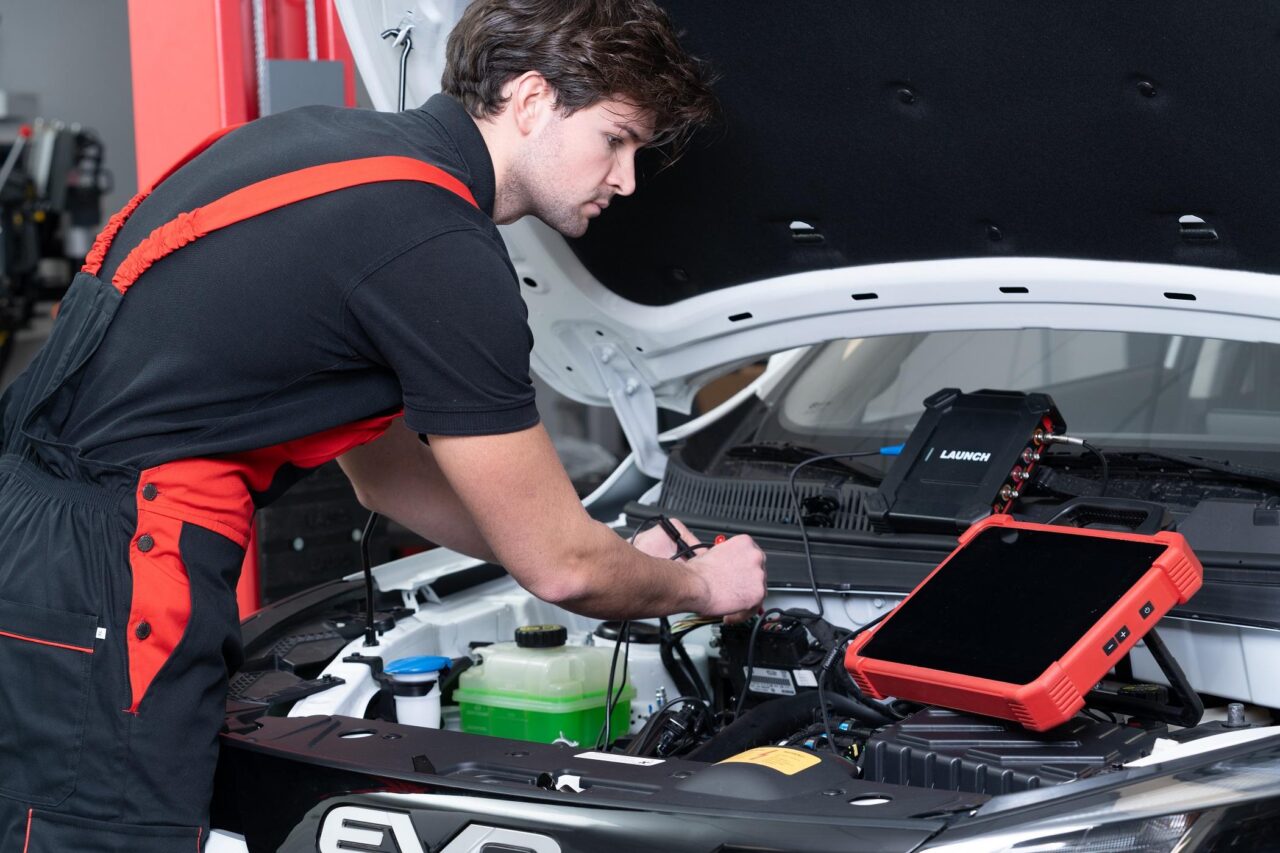
How long has LAUNCH been collecting and centralising diagnostic data from the tools used in workshops? Did the database originate with the X-431 platform, or was it built up progressively with the cloud developments of recent years?
The LAUNCH diagnostic database is the result of a progressive evolution that began with the spread of the X-431 platform and has grown over time thanks to the development of connected tools, cloud services and online functions. According to the company, the structured collection of data used to feed the AI ecosystem has been underway since 2015.
An important aspect is that, from a technical point of view, we are not just talking about the most recent tools. Potentially all LAUNCH diagnostic instruments, even those of previous generations, can transmit data relating to the interaction between the instrument and the vehicle when they are connected to the network. This means that each diagnostic session can contribute, in line with the procedures set out by the platforms and applicable regulations, to building an extremely large body of information.
We are talking about a very large installed base, with hundreds of thousands of LAUNCH instruments used worldwide. This makes it possible to collect information from very different contexts of use: different markets, different types of vehicles, recurring faults, less frequent anomalies and real repair cases faced daily by workshops. The database, therefore, did not start out as an isolated project linked exclusively to artificial intelligence, but as a natural consequence of the evolution of connected diagnostics. First, the X-431 platform created a global diagnostic base; then the cloud evolution made it possible to organise, centralise and progressively leverage this data.
Can you share some orders of magnitude for the data available today? For example: number of diagnostic cases recorded, number of vehicles analysed, average volume of data collected daily.
At the moment, we prefer not to communicate specific figures on diagnostic cases, vehicles analysed or daily volumes of data, because this information needs to be validated and contextualised globally. However, we can share an order of magnitude on the potential of the platform: LAUNCH has tens of millions of diagnostic records from all over the world. Each network-connected instrument can generate data related to the interaction between the diagnostic tool and the vehicle, including for example diagnostic sessions, fault codes detected, systems queried, functions used and information related to the analysis process.
During a diagnostic session with a connected instrument, the interaction between instrument and vehicle can generate information at a very high frequency, potentially as often as every second. Of course, this data must then be collected, filtered, normalised and processed in compliance with applicable regulations. The real value, therefore, is not only in the amount of data, but in the ability to transform it into useful knowledge for the workshop: correlating DTCs, symptoms, parameters, systems involved, technical procedures and solved cases, so as to make AI increasingly effective in suggesting concrete diagnostic paths.
What is the geographical distribution of your diagnostic database today? In particular, how much weight do data from the Chinese market (and therefore more specific to vehicles in that market) carry compared with those collected in Europe?
The LAUNCH diagnostic database has a global nature, as it stems from the use of the tools in very different markets. The LAUNCH installed base is present in many areas of the world and this allows us to collect diagnostic experiences from different contexts, in terms of both vehicle types and workshop working practices. Historically, Europe and America are also very important markets that have been working with LAUNCH for 20 years.
The Chinese market certainly represents a very important component, both in terms of size and speed of evolution of the vehicle parc, especially in the field of electric vehicles and new electronic platforms. At the same time, the European market has specific characteristics that must be considered very carefully: brands, engines, trim levels, regulations, electronic architectures and repair procedures do not always match those of the Chinese market.
For this reason, in the development of AI functionalities for Europe, the point is not simply to transfer a model created for another market, but to adapt and leverage the information in a way that is consistent with the European vehicle parc. The goal is to integrate the LAUNCH global experience with data, procedures and case studies relevant to European workshops. We are not currently disclosing precise percentages on the geographical distribution of data, because this information must be validated centrally. The value of the platform derives precisely from the combination of a very large global database and progressive localisation work for the different regional markets.
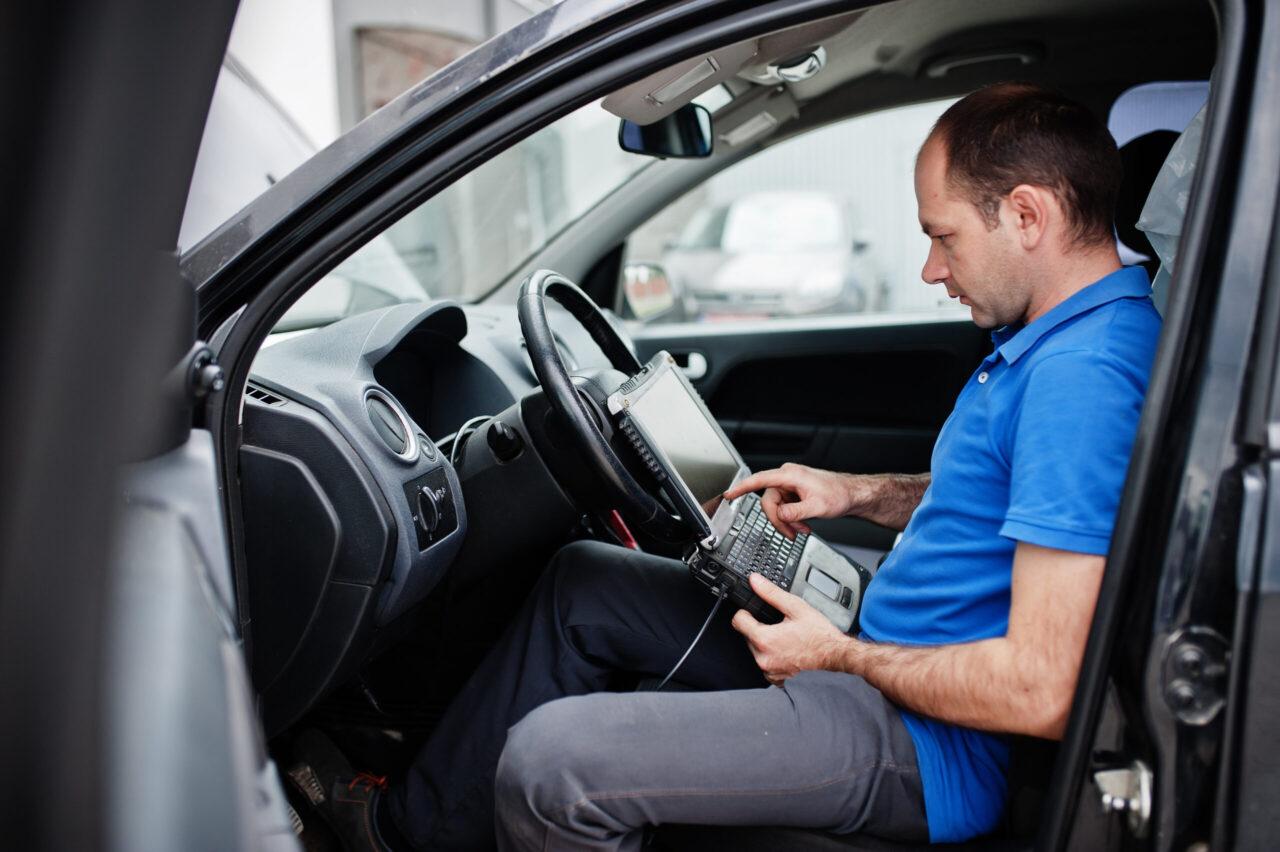
Considering the differences between the Chinese and European car parcs, do your AI systems use global models or are they adapted and trained specifically for different regional markets?
AI is a project that originated in China as a concept, but the first practical applications and some of the project leads are based in the US division, with others in Europe. Italy is an active part of the development. In the US, work began around mid-2025.
The LAUNCH approach is to combine a global base with a progressive adaptation to individual regional markets. The strength of an international platform like LAUNCH is being able to count on a very large data pool, coming from tools used all over the world. This makes it possible to identify correlations, recurrences and common diagnostic logic across different markets, brands and vehicle types.
At the same time, we are aware that the Chinese and European vehicle parcs differ in important ways. The most popular brands, engines, electronic platforms, regulations, technical procedures and even the way workshops approach certain jobs all vary. For this reason, AI cannot be thought of as a single model applied indiscriminately to all markets. For Europe, the work will be precisely to adapt the system to the needs of our market, integrating technical information, procedures, wiring diagrams and case studies consistent with European vehicles. The global model provides the basis and power of the ecosystem, while regional adaptation allows for increased accuracy, relevance and reliability of the diagnostic suggestion.
Where are your cloud systems and the infrastructure managing diagnostic data hosted? Do you use servers and data centres located in Europe for the European market? How do you deal with issues related to cybersecurity, compliance and data protection?
LAUNCH has a globally distributed cloud infrastructure, with servers and platforms present in different areas of the world. The main hubs are located in Europe, Asia and America, precisely to efficiently support an international installed base and diagnostic services used daily in very different markets. For the European market, the issue is not only technological, but also regulatory. The development of new AI capabilities must take into account Europe’s specific needs in terms of cybersecurity, data protection, access management and GDPR compliance.
It is important to distinguish between technical diagnostic data and personal data. The goal of LAUNCH AI platforms is not to collect personal information from the end user, but to leverage technical data related to the interaction between the instrument and the vehicle: DTCs detected, systems queried, diagnostic parameters, functions used, procedures performed and repair cases. Of course, this data must also be managed according to security, control and traceability criteria. For this reason, LAUNCH works on architectures that provide for the protection of communications, account security, authorised access management and data processing consistent with the regulations applicable in the different markets.
In practical terms, how much time can a workshop really save today thanks to the AI functions integrated into LAUNCH systems? Do you have KPIs or concrete cases that demonstrate a reduction in diagnosis times or an improvement in the “first-time fix”?
The time savings for the workshop do not come from a single function, but from AI’s ability to reduce the intermediate steps between diagnosing the problem and identifying the right verification path. Today, in many cases, the technician has to read DTCs, interpret them, search for technical information, consult wiring diagrams, identify the components involved, verify procedures and then decide which tests to perform. The goal of LAUNCH’s AI functions is to shorten this process by connecting all this information more quickly and intelligently.
Pilot tests are ongoing; if we had to estimate, time savings could range from 40 to 80% in the most favourable cases, where the solution is already known.
The greatest advantage can be gained above all in complex faults, intermittent issues or situations where multiple vehicle systems generate interconnected fault codes. In these scenarios, AI can help prioritise checks, avoid unnecessary tests and focus first on the most likely components or causes. When it comes to official KPIs, such as percentage reductions in diagnosis times or increases in first-time fix rates, we prefer to communicate only centrally validated data. However, the direction is clear: to measure the value of AI not only in terms of technology, but above all in terms of real efficiency for the workshop. Our goal is to reduce the time spent searching for information, improve the quality of the diagnostic path and increase the likelihood of arriving at the correct solution right on the first attempt.

How does AI support remote assistance sessions via SmartLink? Is the system able to pre-emptively ‘triage’ the problem before the remote expert technician even takes control of the instrument in the workshop?
SmartLink is already one of the most important platforms in the LAUNCH ecosystem, because it connects the workshop to an expert technician remotely and to manage complex diagnoses even when they require specific technologies, authorisations or procedures that are not always available directly in the workshop. Within our platform there are already functions that help technicians speed up work procedures and reduce customer waiting times. The system is able to collect and organise the key information from the diagnostic session, so as to provide the remote technician with a more complete picture before and during the intervention.
This enables an initial form of technical triage: identification of the vehicle, DTCs detected, systems involved, functions performed, symptoms reported by the workshop and information useful for the evaluation of the case. In this way, the technician can start the session with already structured data, reducing the time needed to reconstruct the problem and focusing more quickly on verifying the fault. Another important aspect is the possibility of collecting information useful for comparing original/OEM diagnostics with LAUNCH diagnostics. This makes it possible to continuously improve the quality of diagnostic coverage, check for any operational differences and make the support process increasingly precise and effective.
AI, therefore, does not replace the remote technician, but increases their efficiency: it prepares the case better, organises information, reduces downtime and helps to offer the workshop faster, more structured and professional support.
Is LAUNCH’s artificial intelligence designed to interface with other management software (DMS) or parts catalogues? Is there a function that, once the fault has been identified through AI, directly suggests the necessary components or generates accurate quotes?
LAUNCH artificial intelligence is designed to work within an open and integrable ecosystem, not as an isolated function within the diagnostic tool. The platform is already set up to communicate via API with external systems, including car maker portals, spare parts portals and other compatible technical platforms. This is a very important aspect, because it allows the diagnosis to be linked not only to the data read from the vehicle, but also to external information that is essential to complete the repair process.
The goal is to build an increasingly integrated flow: starting from DTCs, symptoms and data collected during diagnosis, the system can link this information to technical procedures, wiring diagrams, component tests, manufacturer documentation and, where available, also to information related to spare parts. As far as quotes and necessary components are concerned, it is important to distinguish between technical support and the commercial process. AI can help identify the components potentially involved and guide the technician towards the necessary checks. On the other hand, generating accurate quotes or integrating with price lists, parts availability and part numbers depends on the connected systems, the available data and the active integrations with the various partners.
That said, the direction is clear: to make diagnosis less and less separate from the rest of the workshop’s work. Not only to identify the fault, but to intelligently connect diagnosis, technical information, manufacturer portals, spare parts, remote assistance and management processes.
How does AI handle ADAS diagnostics and calibration? Are there specific predictive models that help the technician understand whether a sensor is simply out of calibration or whether the problem lies in the central management software?
ADAS is one of the areas where integrating diagnostics, technical data and guided procedures can deliver significant value. When it comes to radars, cameras, sensors and driver assistance control units, the problem almost never comes down to a single, isolated data point. The technician must evaluate fault codes, system status, calibration conditions, real-time parameters, any collisions or bodywork repairs, correct sensor positioning, software updates and procedures provided by the manufacturer.
The goal of LAUNCH AI is to support this analysis by helping the technician link together the available information: current errors, vehicle conditions, ADAS procedures, calibration data, wiring diagrams and tests on the components involved. A particularly important aspect will be the ability of AI to communicate in an integrated way with the diagnostic instrumentation. This means being able to instantly retrieve information directly from the vehicle’s ADAS control unit, such as live data streams, and use it to better contextualise the problem. In this way, the system can analyse not only the fault code, but also the actual values read from the vehicle during the diagnosis.
Looking ahead, this can help to better distinguish between different scenarios: a sensor out of calibration, a power supply or communication problem, a wiring anomaly, a control unit that requires updating or a software condition to be verified. However, the final evaluation must always be confirmed through the checks provided for by the technical procedure and the manufacturer’s specifications.
With ADAS, precision is not just a matter of efficiency, but also of safety. This is why LAUNCH considers AI a tool to support the correct procedure, not a shortcut around the required technical checks.

Will AI features be included in standard update packages, or are you planning ‘Premium’ subscription models for access to more advanced predictive features?
As for the business model of AI functions, it is still premature to communicate a definitive structure for the European market. The European version will probably be presented to the public towards the end of the year and at that stage the details relating to availability, packages and access methods will also be defined. It is reasonable to think that some features may be progressively integrated into the update ecosystem and existing services, while more advanced, predictive functions or functions connected to external databases and platforms may require dedicated access models. However, on this point it is best to wait for an official announcement.
LAUNCH’s goal is to make these technologies truly usable by the workshop, not to create commercial complexity. The priority will be to offer concrete, sustainable tools proportionate to the operational value that AI can bring to daily work: reduction of diagnosis times, faster access to information, support in complex cases and greater integration between diagnosis, technical data, remote assistance and repair processes.