 Ecoeuro
From Demolition to Reuse: ECOEURO Digitizes the End-of-life Vehicle Supply Chain
ELV Manager, Autoapezzi.it and PartsCoder are three pieces of a digital ecosystem that aims to make the management of end-of-life vehicles and the valorization of used spare parts more traceable, efficient and profitable
ELV Manager, Autoapezzi.it and PartsCoder are three pieces of a digital ecosystem that aims to make the management of end-of-life vehicles and the valorization of used spare parts more traceable, efficient and profitable
The management of end-of-life vehicles is entering a phase of profound transformation. On the one hand, the recent entry into force of the European ELV regulation is pushing the supply chain towards greater traceability, transparency, reuse and responsibility; on the other hand, the progressive digitization of processes is changing the way vehicles are intercepted, managed, dismantled and turned into value. For car dismantling companies, the change does not only concern administrative or environmental obligations. The real challenge is to transform the ELV (end-of-life vehicle) from a mere item to be processed into a source of value, integrating information, processes and sales channels. In this scenario, the ability to recover a component is no longer sufficient: companies must be able to identify, catalogue, track and bring it to market in ways increasingly similar to those of the professional aftermarket.
This is precisely the direction taken by Ecoeuro, a company that has been operating in consulting and services for the End-of-Life Vehicle supply chain since 1999 and which today combines consulting activities with an ecosystem of digital tools. The suite covers everything from vehicle management to the sale of the spare part, with the stated aim of supporting car dismantlers through the digital transition and in growing their business. In particular, it includes three projects: ELV Manager, dedicated to the digital management of the end-of-life vehicle cycle; Autoapezzi.it, a platform designed to intercept ELVs and channel them to authorized treatment facilities (ATFs); and PartsCoder, developed to digitize the management and sale of used auto parts and make it more efficient. Three distinct tools, but linked by the same logic: digitizing the supply chain to increase efficiency, traceability and value-generation capacity.
📊
This content is part of SICURAUTO.it’s 6th Aftermarket Report, titled: “The Aftermarket in the Era of European Regulations: Opportunities, Constraints and New Specializations”.
FROM END-OF-LIFE VEHICLE MANAGEMENT TO THE DIGITAL REUSE FACTORY
To understand the scope of this approach, we need to start with a change of perspective. Demolition can no longer be considered just the last phase of the administrative and environmental life of a car. In fact, the end-of-life vehicle contains materials and components that can re-enter new production and commercial cycles, and their value increasingly depends on the ability of the supply chain to manage them through structured data and processes.
This theme also emerges particularly clearly in the remarks of Ferruccio Miotto, CEO of Ecoeuro, according to whom the “used spare part, when it is correctly treated, described and traced, can become a real strategic asset and not a simple by-product of demolition. The growth of e-commerce for second-hand spare parts requires updated catalogues, standardized information, images, stock availability and integration with the different sales channels“.
From this perspective, digitization becomes much more than a tool to speed up some operations: it becomes a possible industrial infrastructure of reuse, capable of linking the vehicle’s entry into the supply chain with the subsequent valorization of its components. It is on this vision that three important solutions developed by Ecoeuro are built.

ELV MANAGER: DIGITIZING THE END-OF-LIFE VEHICLE CYCLE
The first piece of the ecosystem is ELV Manager, the digital suite designed by Ecoeuro to manage the end-of-life vehicle through the different stages of the process, from intake to subsequent valorization.
The goal is to overcome fragmented information management and to connect, within a single digital environment, the activities that accompany the ELV along its journey. According to the description provided by Ecoeuro, each phase is connected, tracked and optimized through the integration of digital tools, official databases and technologies such as artificial intelligence and blockchain.
The logic is particularly relevant for a sector in which the amount of information to be managed is set to increase: vehicle identification, dismantling and depollution activities, management of materials and recoverable components require increasingly structured processes. Digitizing these activities means having organized and usable data throughout the process, reducing manual operations and improving control.
ELV Manager was also designed with a vision that goes beyond mere internal efficiency. In fact, the objectives include maximizing the reuse of used spare parts, recycling residual materials, simplifying logistics to authorized treatment facilities and making digital tools more accessible, even to small dismantling centres. The project is therefore part of a vision in which digitization, sustainability and legality become elements of the same process.
This approach is also mirrored in the development of Systema Ecoeuro, the company’s long-standing management software, recently updated to interface with the Single Register of End-of-Life Vehicles and with RENTRI (Italy’s national waste traceability register), and to handle deregistration from the PRA (Italian Public Vehicle Register) directly.
The next step, however, is just as important: before you can even extract value from a spare part, you need to be able to intercept the vehicle and bring it correctly into the supply chain. This is where Autoapezzi.it comes in.
AUTOAPEZZI.IT: BRINGING SCRAP VEHICLES INTO THE SUPPLY CHAIN DIGITALLY
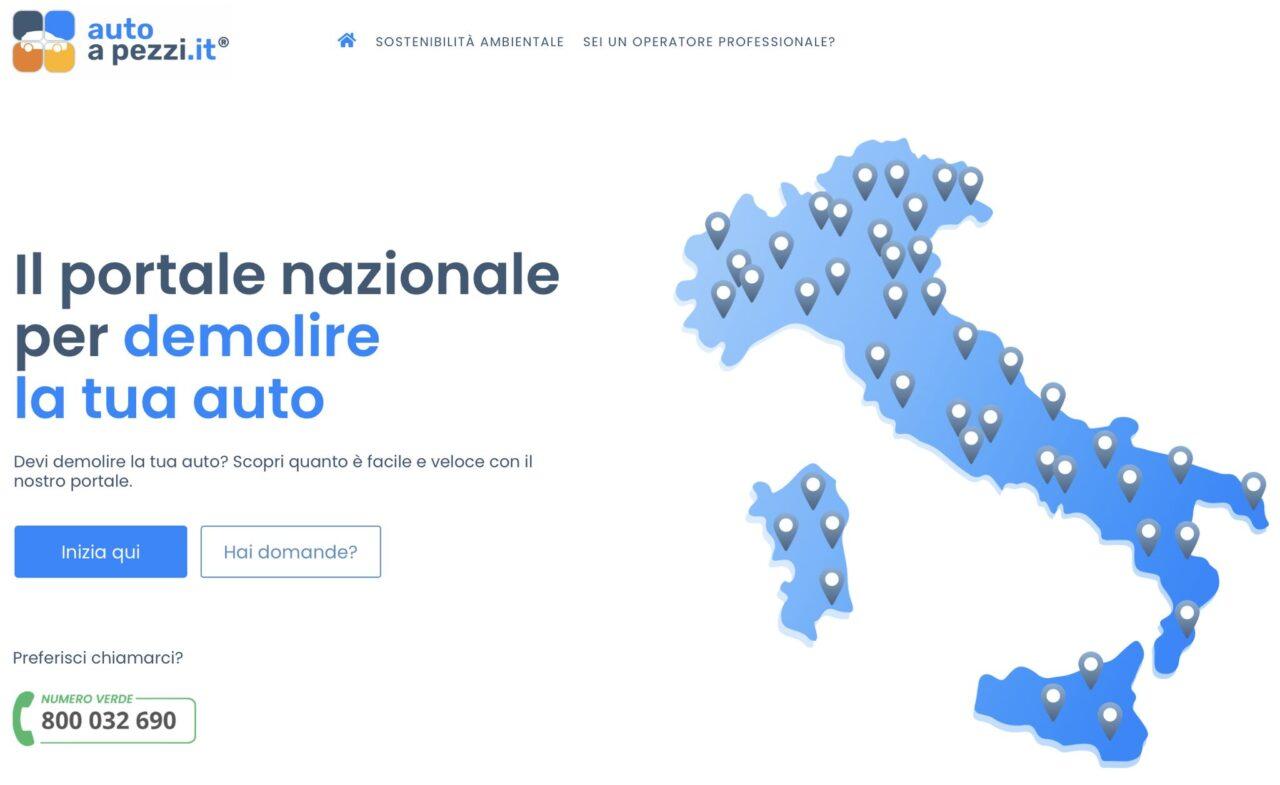
While ELV Manager handles the vehicle once it has entered the demolition process, Autoapezzi.it acts even earlier, at the point when the end-of-life vehicle is intercepted and directed to an authorized treatment facility.
In fact, the platform was created as a digital meeting point between demand for scrapping and the network of car dismantlers. Citizens, insurance companies, roadside assistance companies and public bodies can use a single system to manage requests, while operators in the car dismantling supply chain can register and access the available opportunities.
The paradigm shift is significant. In the traditional model, a scrapping request may involve phone calls, emails, paperwork and multiple contacts; Autoapezzi.it instead aims to centralize the flow in a digital platform, transforming what may seem like a simple administrative procedure into an organized and traceable process. Requests are collected and managed through dedicated dashboards, while jobs are assigned to dismantlers according to stated criteria of fairness, location and cost-effectiveness. The platform’s roadmap also includes a gradual expansion of features, additional procurement channels (including online auctions) and, in the future, the trading of deregistered vehicles between dismantlers.
The platform thus also takes on a strategic role for the network of facilities. But the most interesting issue, from a circular economy perspective, is what happens after the vehicle has been intercepted. Bringing an end-of-life vehicle into an organized supply chain means increasing the possibility that depollution, dismantling and recovery operations will be carried out within a professional circuit, with the consequent availability of components that can be reused and materials that can be recycled.
This is where Autoapezzi.it connects directly to the third piece of the Ecoeuro ecosystem: if digital technology makes it possible to intercept more vehicles and better manage their journey, what is then needed is a tool capable of turning recovered spare parts into a structured commercial offer.
PARTSCODER: WHEN USED SPARE PARTS BECOME A DIGITAL PRODUCT
While Autoapezzi.it works on the flow of vehicles into the supply chain, the next step concerns the ability to extract value from what is recovered from the vehicle. This is where PartsCoder, the platform developed by Ecoeuro to digitize the entire used car parts management process, comes in.
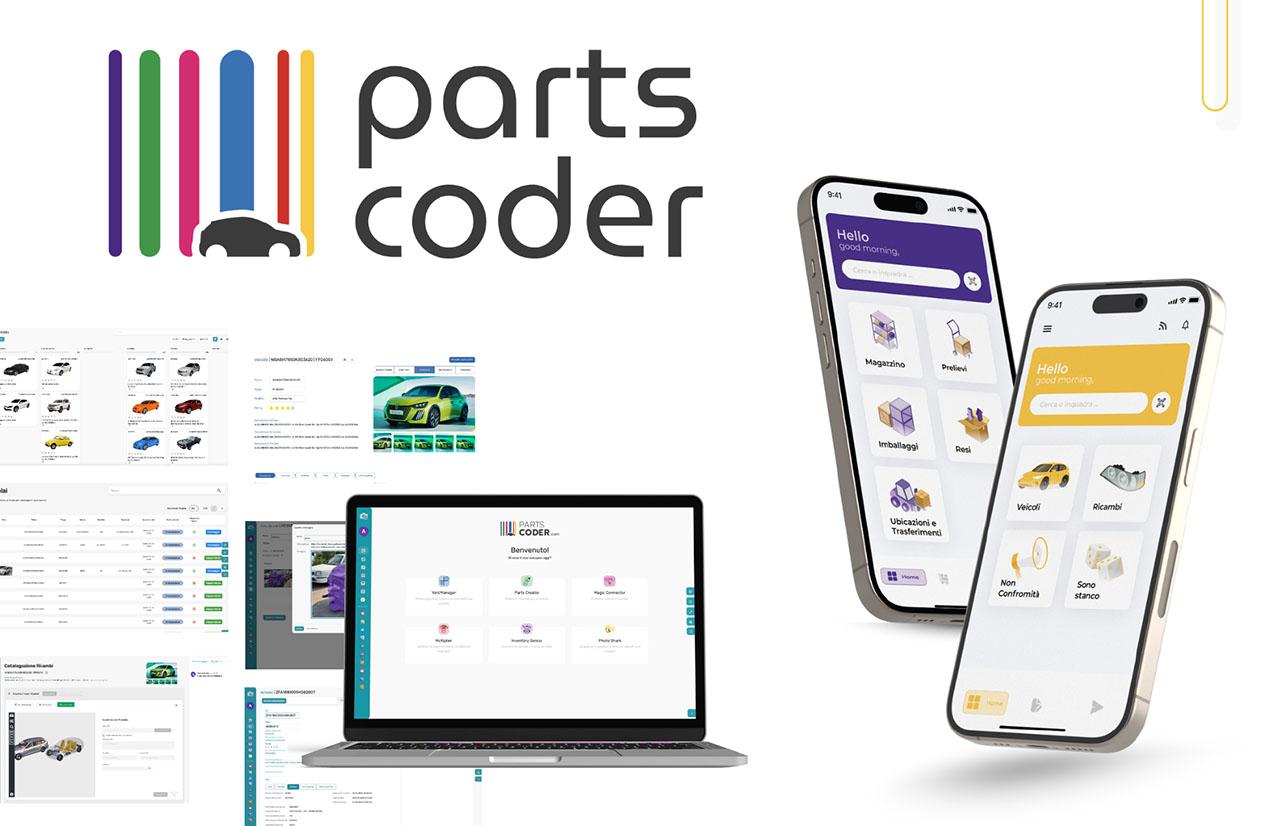
The goal is not simply to put more spare parts online, but to industrialize the process that takes the dismantled component through to its sale. Cataloguing, technical information, images, availability, inventory, orders and sales are brought together within an integrated ecosystem, designed specifically for the needs of car dismantlers.
In fact, PartsCoder brings together a series of applications dedicated to the different operational phases. Yard Manager supports vehicle management from qualification at intake through to crushing; Parts Creator allows you to catalogue spare parts by associating technical, commercial and logistical information; Multiplier manages coding according to the different standards used in the market; Inventory Genius handles inventory management, while Magic Connector synchronizes spare parts across the various sales channels and Photo Shark simplifies image collection.
It is precisely this integration that makes the project interesting from an aftermarket perspective. A used spare part, in fact, has a commercial value that also depends on the quality of the information that accompanies it. In order to be sold professionally, it is not enough to know that a certain component is available: it is necessary to identify it correctly, describe it, document its condition, make it searchable and match it to a specific vehicle type.
PartsCoder therefore tackles one of the main obstacles to the growth of the professional second-hand market: the cost and complexity of cataloguing. According to Ecoeuro, automating and simplifying these activities makes it economically viable to sell even lower-value components, thus expanding the share of recoverable and reusable spare parts.
Added to this is the possibility of connecting the warehouse to marketplaces, B2B portals and other online sales channels, synchronizing availability, prices and product listings (see recent integration with eBay). The spare part recovered from the ELV can thus move beyond being mere physical stock in the warehouse and become a product accessible to a wider audience of potential buyers.
It is an important step because it shifts the issue of used spare parts from the mere availability of the component to its actual ability to enter aftermarket channels. And it is precisely here that the connection between the three tools emerges: the vehicle is intercepted through Autoapezzi.it, managed along the process with ELV Manager and what can be reused is transformed by PartsCoder into a digital commercial offer.
ARTIFICIAL INTELLIGENCE AND LCA: ECOEURO’S NEW PROJECTS
The three projects therefore outline a path that goes far beyond the simple creation of new software. Autoapezzi.it, ELV Manager and PartsCoder operate at different stages of the same process, linking the procurement of vehicles, the management of demolition activities and the subsequent valorization of components.
It is a logic that also reflects the evolution of Ecoeuro’s business model. Alongside digital platforms, the company has in fact developed consultancy, training and integration services with other operators in the supply chain, positioning itself as a partner to support car dismantling companies in a transformation that is not only technological. The new e-Connect membership, for example, integrates software, environmental and regulatory consultancy, information on calls for funding and grants and opportunities related to vehicle flows from the corporate world.
The direction outlined by Ecoeuro also includes the possibility of using artificial intelligence tools to make some processes even more automated: from computer vision to analyse vehicles and recognize components and damage, to language models for spare part searches and predictive tools for pricing and cataloguing. These developments are presented as part of an ongoing journey.
At the same time, Ecoeuro is also working on measuring the environmental impact of reuse, through an industry-wide LCA study aimed at comparing the environmental benefits of the recovery and reuse of used spare parts with those of the production of new components. This is a particularly interesting step because it shifts the discussion from the simple possibility of recovering a component to the need to quantify the environmental value generated by its reuse.
Ultimately, the real challenge of the ELV sector’s digital transformation is not just about replacing paper with software. It is about connecting information, operators and markets, making more efficient a process in which every vehicle can simultaneously represent an environmental problem, a source of raw materials and a reservoir of spare parts.
For the car dismantling sector, it means progressively moving from a logic based on end-of-life management to one in which data becomes the tool to extract more value from the vehicle, increase traceability and make reuse an increasingly structural component of the aftermarket.