Meccanico effettua diagnosi elettronica
CEI 78-24 Specification: How Work on Electric and Hybrid Vehicles Is Changing for Workshops
Published in November 2026, the new CEI 78-24 Technical Specification introduces a dedicated framework for managing electrical risk on electrified vehicles. And those already qualified as PES-PAV under the previous CEI 11-27 will be eligible for shorter training courses
Published in November 2026, the new CEI 78-24 Technical Specification introduces a dedicated framework for managing electrical risk on electrified vehicles. And those already qualified as PES-PAV under the previous CEI 11-27 will be eligible for shorter training courses
Electrical risk management in workshops and body shops operating on electric and hybrid vehicles is about to enter a new phase. After years in which the automotive sector has mainly referred to CEI 11-27, a standard originally developed for electrical installations, CEI has recently published the CEI 78-24 Technical Specification, the first document developed expressly for activities on electrified vehicles. Back in October 2024 – as part of the 4th Aftermarket Report – we previewed some of the content then under development; now that the final version has been published, the sector can begin to get a clearer picture of the new framework for service networks, body shops and independent workshops. The goal is not only to define specific training courses for those who work on electrified vehicles, but also to provide companies with a structured organizational model to manage electrical risk in compliance with the obligations laid down by Italian Legislative Decree 81/08.
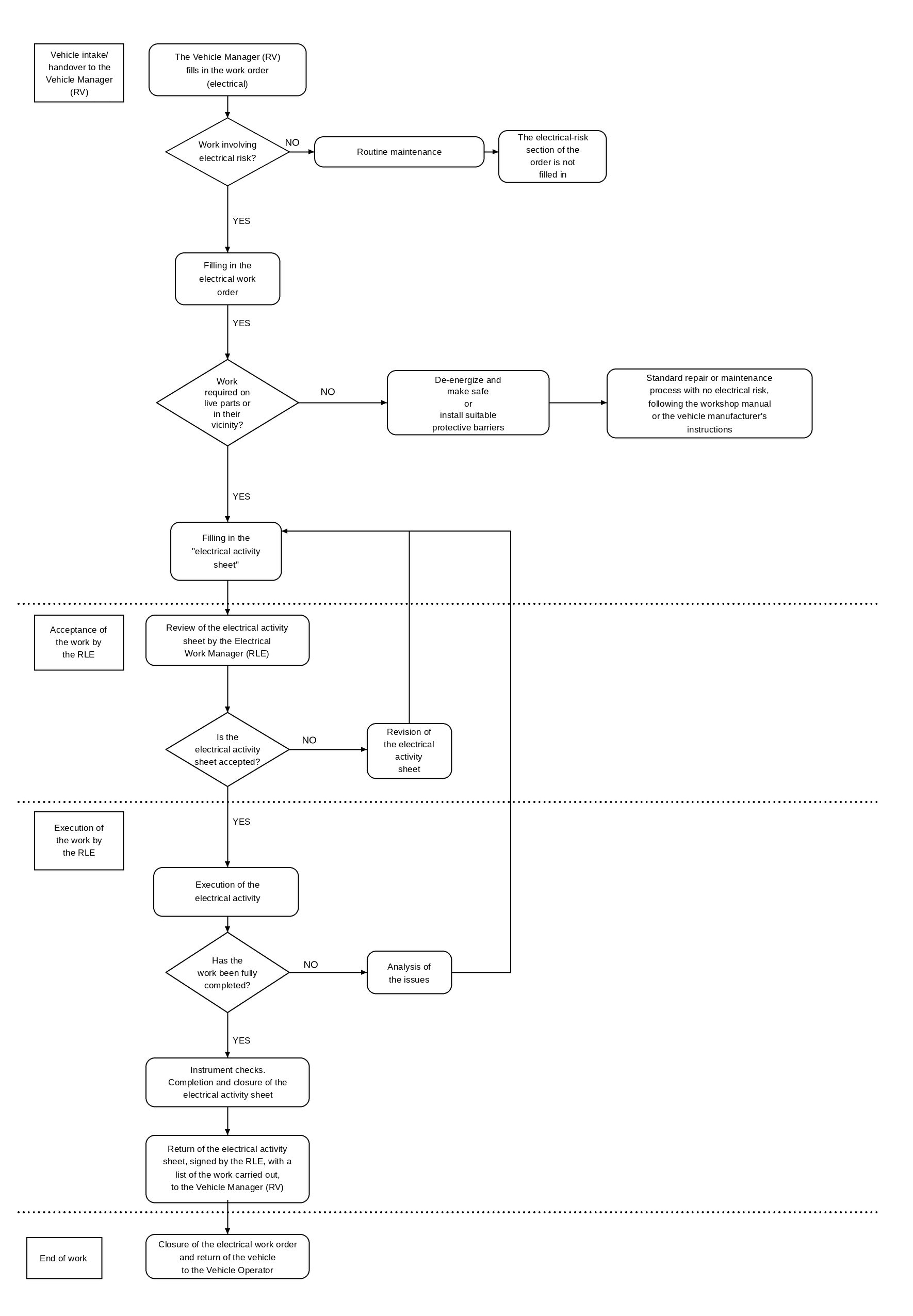
But what will actually change for those who work on electric and hybrid vehicles every day? Will training already completed under CEI 11-27 need to be updated? What new professional roles are introduced, and how do they fit in with those already provided for by existing regulations? Among the most interesting aspects is the introduction of a flowchart that guides the entire work process: from vehicle intake to electrical risk assessment, and from the assignment of operational responsibilities to job completion. A tool designed to help workshops and body shops integrate electrical risk management into existing company procedures. To explore these and other issues in depth, SICURAUTO.it obtained a series of clarifications directly from CEI that shed light on the operational impact of the new CEI 78-24 Technical Specification on the automotive repair sector. The Specification can be purchased at this link from CEI’s My Norma catalogue.
📊
This content is part of SICURAUTO.it’s 6th Aftermarket Report, titled: “The Aftermarket in the Era of European Regulations: Opportunities, Constraints and New Specializations”.
What is the CEI 78-24 Technical Specification and what role does it play with respect to CEI 11-27? Does the Specification distinguish between operator certification levels as in the past (e.g. 1A-2A and 1B-2B)?
The CEI 78-24 Technical Specification “Electrical risk management on electric and hybrid vehicles – Part 1: activities on vehicles” is a standards document drawn up by CEI to help companies and employers working with electric and hybrid vehicles structure the training and professional skills of their employees, including in order to meet the obligations of Legislative Decree 81/08 as amended regarding electrical risk. The roles defined in the Technical Specification are similar to those identified by CEI 11-27, although each has its own name and acronym. The Technical Specification sets out two levels of training, one basic and one advanced, as we will see later in the article.
To date, the automotive industry has “borrowed” the concepts of CEI 11-27, originally developed for fixed electrical installations. What were the specific technical and safety requirements that made it necessary to create CEI 78-24 dedicated exclusively to electric and hybrid vehicles?
The creation of the technical specification was necessary because it became clear that the theoretical and practical training required for operators working on electric and hybrid vehicles needed to be specialized and partly different from the training required for those working on electrical installations to which CEI 11-27 applies.
Given that CEI 11-27 has recently been updated, how do the two documents fit together?
CEI experts have continuously updated the contents of CEI 78-24 in order to keep them aligned with the changes introduced in the 2025 edition of CEI 11-27: it inherits many definitions, concepts, working methods and procedures from it, adapting them to the specific context of electric and hybrid vehicles.
What are the main changes in the procedures for making the vehicle safe? Are there substantial changes regarding the nomenclature of the parties involved, the safety distance or the use of Personal Protective Equipment (PPE), etc. specific to the workshop environment?
CEI 78-24 introduces new roles (and related acronyms) modelled on those in CEI 11-27; to help readers understand them, the following table compares the roles in the two standards.
| Role under CEI 11-27 ed. 2025 | Role under CEI 78-24 |
|---|---|
| Installation Operator (GI) Person who has overall responsibility for an electrical installation, ensuring its safe operation by defining rules and the organization or structures. |
Vehicle Operator (GV) A person (natural or legal) who is responsible for ensuring the safety of the vehicle. * Notes: This party has no active role in this Technical Specification. |
| Installation Manager (RI) Person designated to safely operate the electrical installation during electrical work. Work Planning Manager (GL) |
Vehicle Manager (RV) Person responsible for vehicle intake and for identifying the type of work to be carried out on the vehicle, with particular reference to electrical risk. |
| Electrical Work Manager (RLE) Person designated by the GL who is tasked with managing activities and ensuring safety while electrical work is carried out at the workplace. |
Electrical Work Manager (RLE) Person designated by the Vehicle Manager to take responsibility for the operational management of the work at the workplace when an electrical hazard is present. |
| Worker (LAV) Person who carries out the work activity within the organization. |
Worker (LAV) Person who carries out the work activity within the organization. |
| Notes: The PEC, PAV and PES roles defined in the CEI 11-27 standard are also identified in this Technical Specification, with characteristics specific to work involving electrical risk on electric and hybrid vehicles. | |
A flowchart has also been prepared to summarize the different work situations and the resulting work procedures to be followed in compliance with the Technical Specification. The flowchart (updated after the publication of the CEI 78-24 Technical Specification in November 2026, ed.) can be useful to the employer in drafting a working document which, by following the process outlined, fits into the company’s existing organization.
Does CEI 78-24 differentiate the training requirements between those who work on electrical components and those who only work on the body of an EV?
CEI 78-24 provides for two theoretical/practical training levels:
- level 1 (basic theoretical): intended for professionals who have organizational responsibilities and/or carry out work on electric or hybrid vehicles, so that they can understand and correctly apply the instructions provided by the vehicle manufacturer and the employer. For this level, the minimum training duration is 12 hours.
- level 2 (theoretical and practical, advanced): completes level 1 training and is intended for specialized professionals who can perform all types of work on electric or hybrid vehicles. For this level, the minimum duration of training is 8 hours.
In addition to the usual insulating gloves and CAT III/IV multimeters, does the specification introduce guidance on diagnostic tools or equipment for the safe storage of vehicles with potentially unstable batteries (e.g. fire blankets, dedicated containers)?
CEI 78-24 provides the fundamental concepts and requirements relating to the management of electrical risk during work activities on electric and hybrid vehicles. It does not deal with risks other than electrical risk (e.g. mechanical risk, fire risk, chemical risk, etc.).
Following final publication, is there a “grace period” for workshop owners to bring staff training into line? Is periodic refresher training required, with different intervals from those in the past?
CEI 78-24 requires training to be refreshed at least every five years, with refresher courses lasting no less than four hours. It applies from its date of publication and at present no “grace periods” are envisaged.

CEI 11-27 placed strong emphasis on formal appointment by the Employer. Does CEI 78-24 introduce new roles or specific responsibilities for the workshop owner in the assessment of electrical risk on vehicles (e.g. management of damaged or post-accident batteries)?
CEI 78-24 is a standards document whose application is not mandatory, unlike that of laws, decrees, etc.: it therefore cannot introduce new obligations or responsibilities for the employer, but it certainly represents a benchmark for what constitutes “good engineering practice” in the sector. In the event of injuries or accidents in the workshop, its adoption may be taken into account in insurance claims or legal proceedings.
Will those already qualified as PES-PAV under the “old CEI 11-27” have their qualification automatically recognized, or will they need to take specific supplementary modules based on CEI 78-24?
CEI 78-24 sets out the “minimum” aspects and topics that the training must cover in order to obtain the “PES” or “PAV” designation for electric and hybrid vehicles; since this training is specific to electric and hybrid vehicles, there can be no automatic recognition for those who have already obtained the corresponding designation under CEI 11-27. However, the basic training level (level 1) has points in common with the 1A training programme of CEI 11-27 (e.g. basic principles of electrical engineering, the legislative/regulatory framework for the safety of work involving electrical risk, and the PPE and equipment needed to perform electrical work safely); for this reason, a reduction in training duration is envisaged (from the minimum of 12 hours to 8 hours) for trainees who have already completed the theoretical training required by CEI 11-27.