 6° Aftermarket Report - Deep Dive dati AlixPartners
The Automotive Industry Loses Sight of the Customer and Becomes the Most Disrupted Sector
Automotive is once again confirmed in 2026 as the most disrupted sector of all, but when it comes to the car as a product, customers seem to have clearer ideas than companies
Automotive is once again confirmed in 2026 as the most disrupted sector of all, but when it comes to the car as a product, customers seem to have clearer ideas than companies
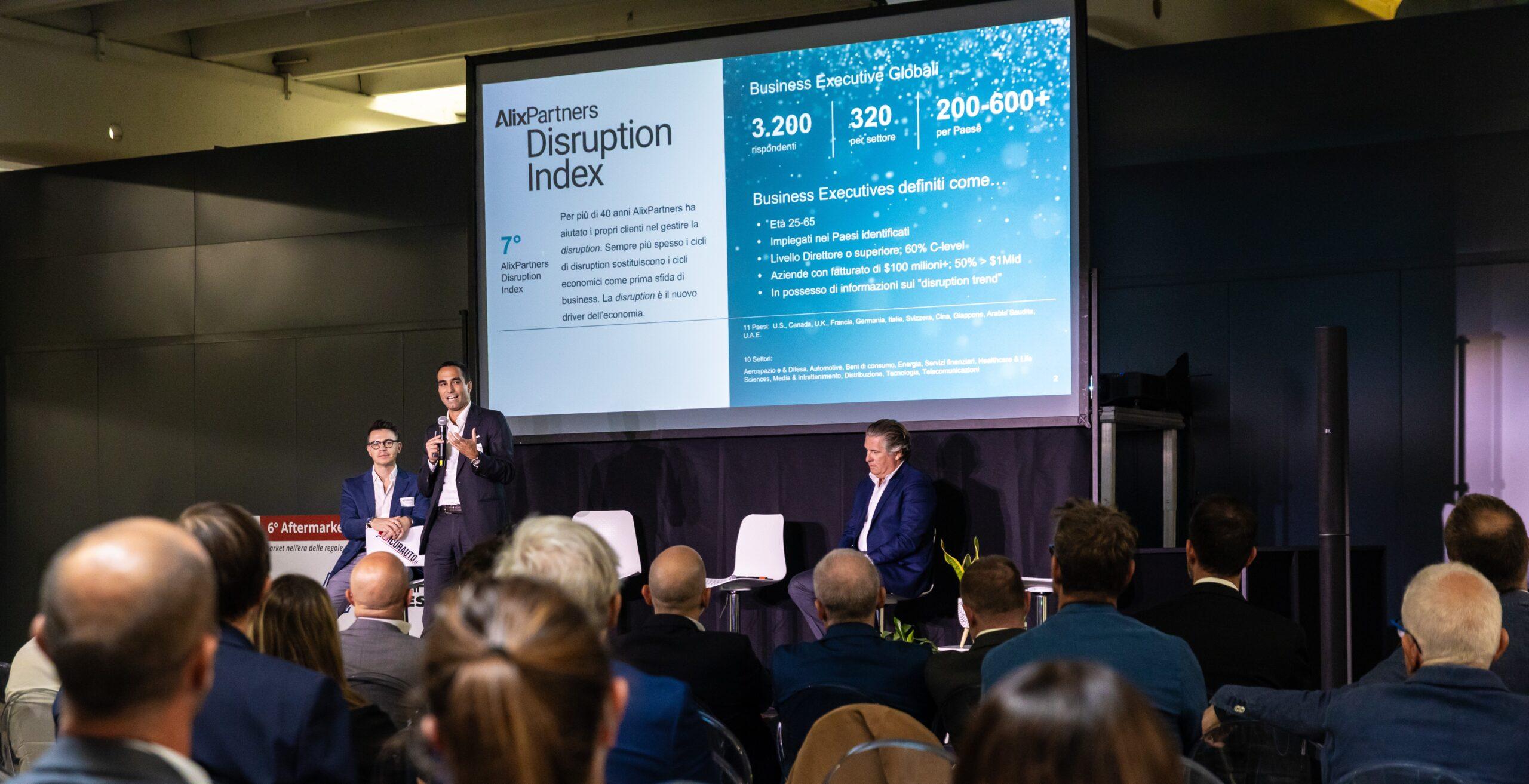
The automotive sector is confirmed as the most exposed to disruption. This emerges from the 2026 AlixPartners Disruption Index, now in its seventh edition, which ranks automotive first. At the same time, consumer surveys show that customers have increasingly clear ideas about what they expect from the car as a product, and that these expectations do not always match the direction taken by the industry. These and other insights were discussed by Gianluca Di Loreto, Partner & Managing Director of AlixPartners, during the presentation of SICURAUTO.it’s 6th Aftermarket Report, held on 1 October 2026. Let’s take a look at what emerged.
📊
This content is part of SICURAUTO.it’s 6th Aftermarket Report, titled: “The Aftermarket in the Era of European Regulations: Opportunities, Constraints and New Specializations”.
AN INDEX INVOLVING 3,200 EXECUTIVES
The AlixPartners Disruption Index is based on a survey conducted among business executives from all over the world. It covers 3,200 respondents, 320 for each of the 10 sectors analysed, with a sample of between 200 and over 600 respondents per country. The research involved the United States, Canada, the United Kingdom, France, Germany, Italy, Switzerland, China, Japan, Saudi Arabia and the United Arab Emirates.
Respondents are aged between 25 and 65, hold director-level positions or above, and 60% are C-level. They also work for companies with revenues of at least $100 million, exceeding $1 billion in 50% of cases. According to AlixPartners, disruption cycles are increasingly replacing economic cycles as the primary business challenge.
THE CAR AT THE TOP OF A RANKING THAT NO ONE WANTS TO WIN
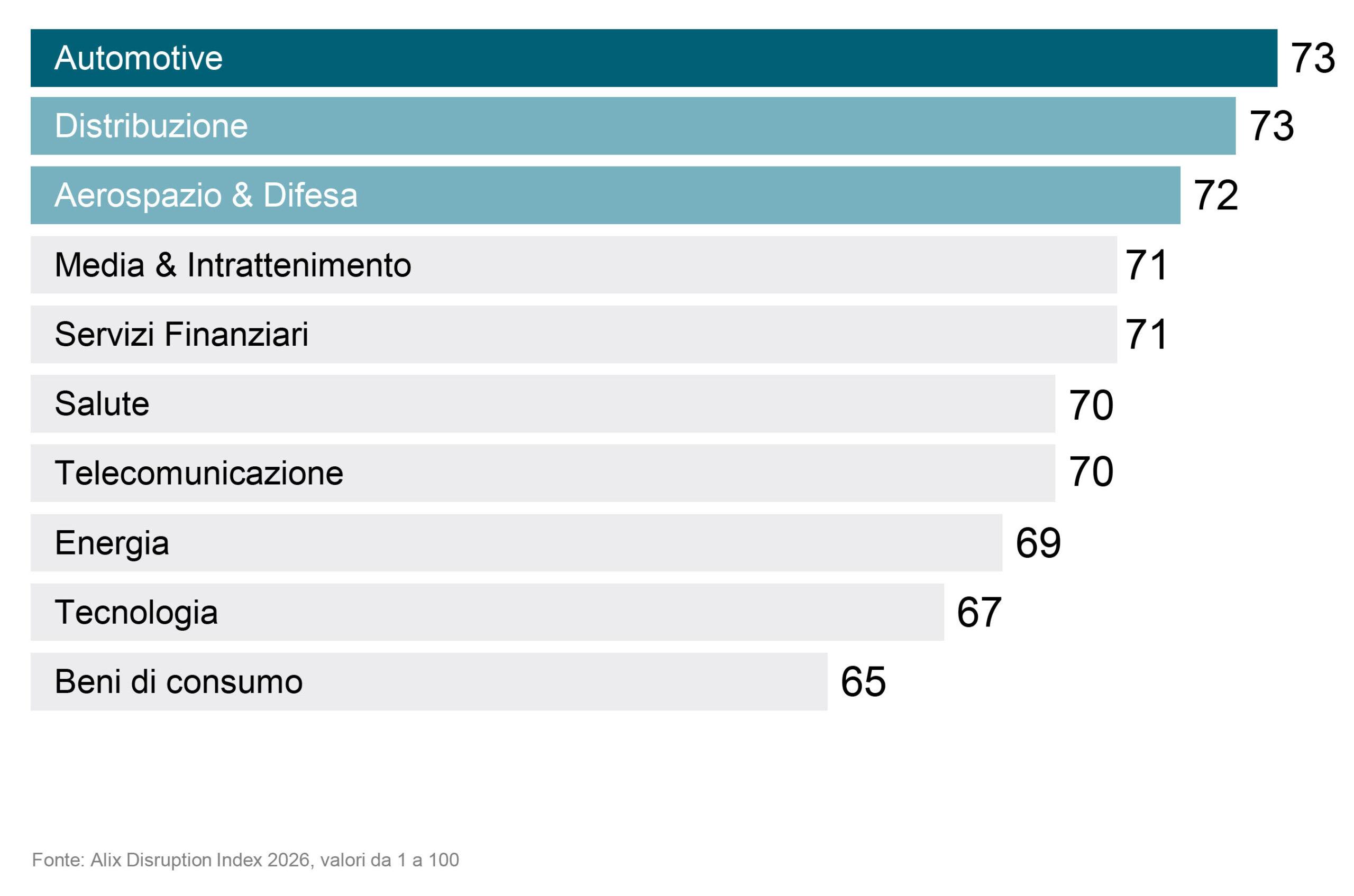
In the 2026 AlixPartners Disruption Index, automotive scores 73 points on a scale of 1 to 100, tied with distribution. It is followed by aerospace and defence (72), media and entertainment, and financial services (71), healthcare and telecommunications (70), energy (69), technology (67) and consumer goods (65).
According to the survey, this result reflects a context shaped by numerous trends, both local and global, which, combined with regulatory and technological developments, have upended the sector. Today, automotive business leaders face countless drivers of change, all at the same time.
The impact extends to every segment of the automotive industry. Fleets and shared mobility record the highest score (81), followed by dealers and services (both 79), spare parts (78), OEMs (77) and suppliers (75). In all cases, these are very high scores, above those recorded in other sectors. In addition, 77% of executives believe they need more support.
THE SECTOR’S ILLS: RESISTANCE, STRATEGY AND RESOURCES
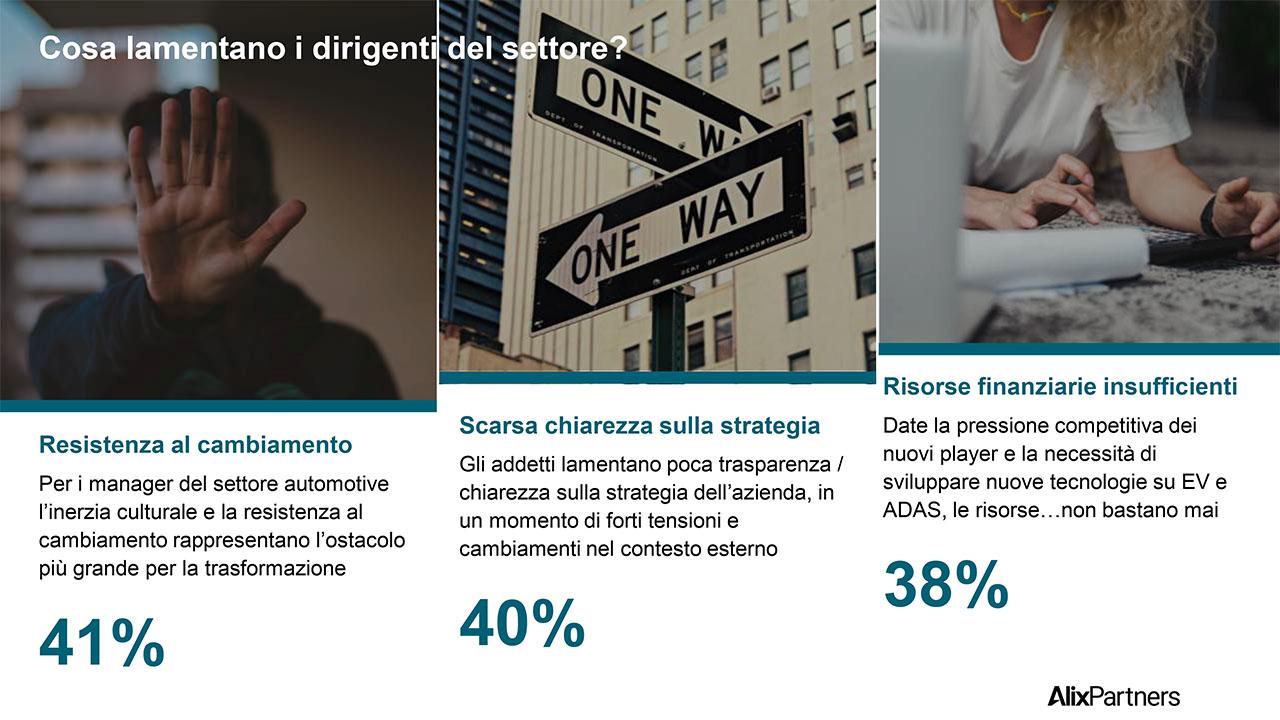
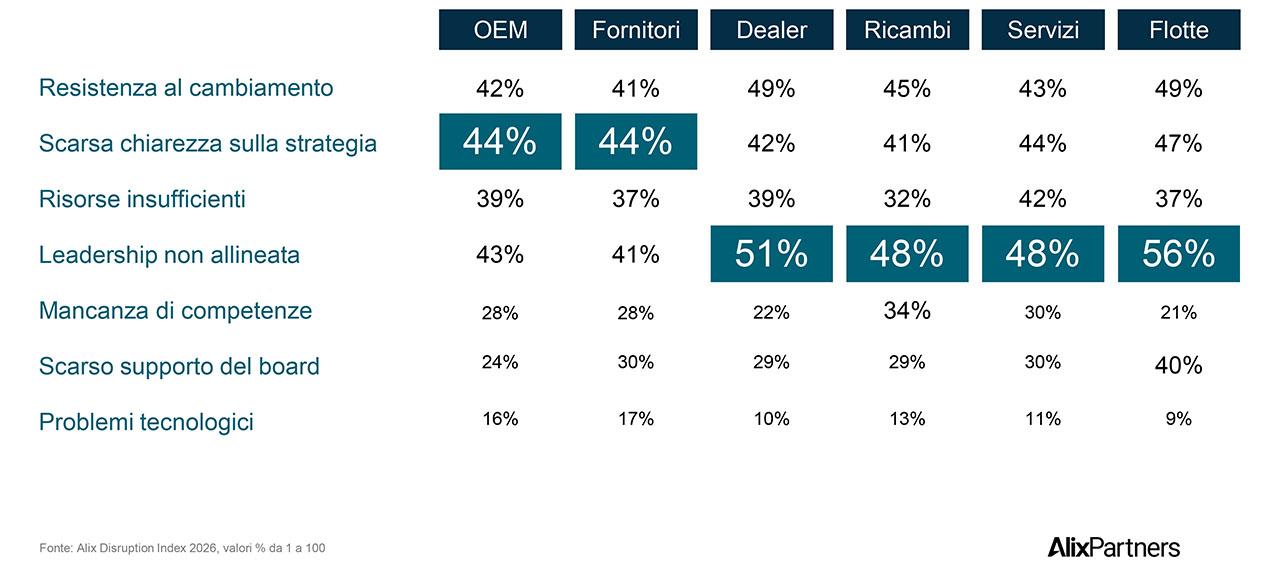
Among the obstacles cited by the automotive executives surveyed, the first is resistance to change (41%), i.e. cultural inertia. This is followed by a lack of clarity on corporate strategy (40%), at a time characterised by strong tensions and changes in the external environment. In third place are insufficient financial resources (38%), in a sector under pressure from new players and called upon to develop new technologies, in particular EVs and ADAS.
The picture varies from segment to segment. Carmakers and suppliers mainly cite a lack of strategic clarity (44% for both). In the other segments, however, misaligned leadership weighs most heavily: 51% for dealers, 48% for spare parts and services, 56% for fleets. Fleets also report a lack of board support (40%). Technological problems are mentioned less frequently, with figures ranging from 9% to 17%.
THE CUSTOMER AND THE VALUE OF THE BRAND
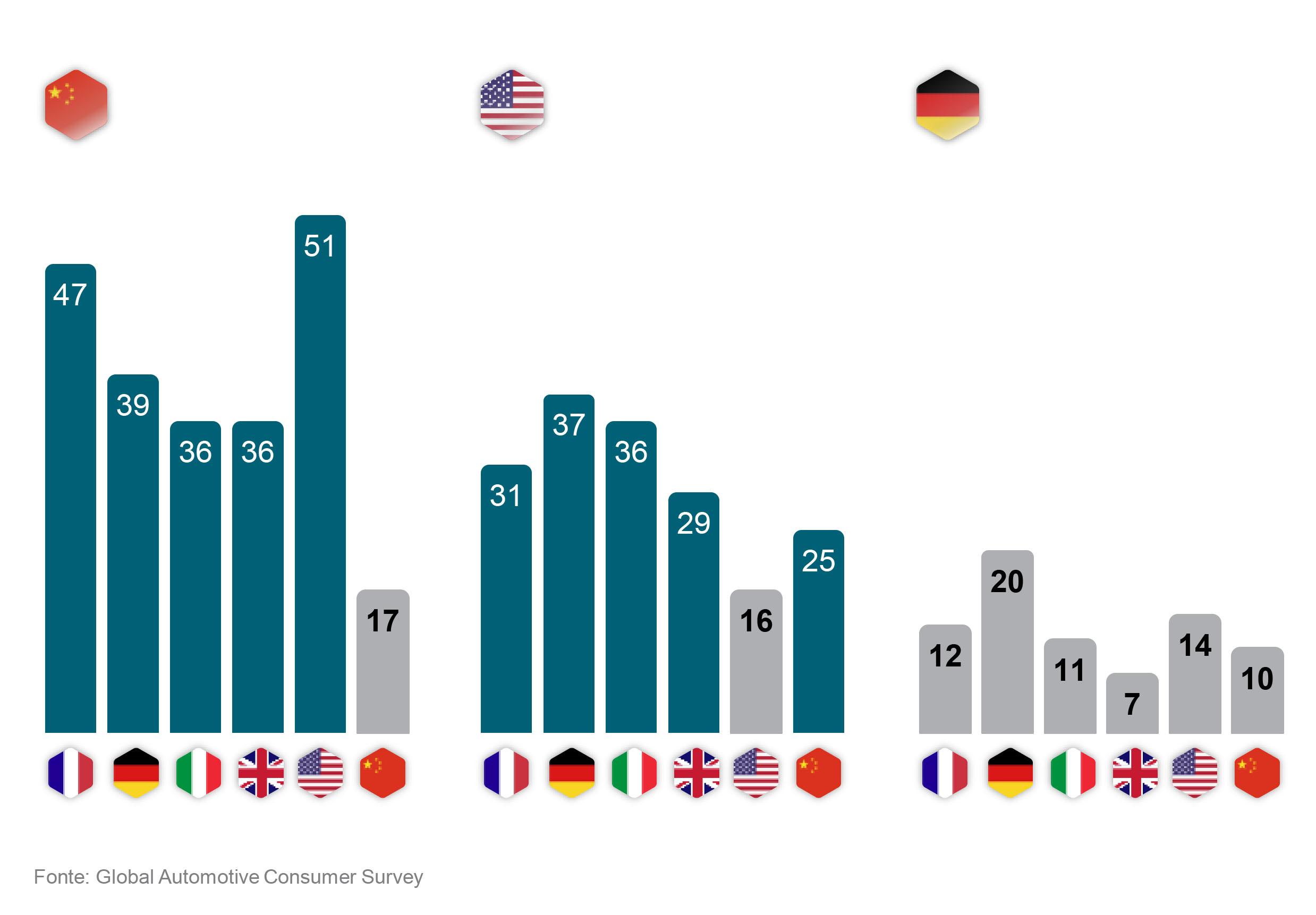
From the consumer’s point of view, the brand, or rather the values a brand represents, still carries significant weight, despite the progressive “commoditisation” of the car. Brand origins are, in fact, associated with very specific values, such as quality. According to the Global Automotive Consumer Survey, Chinese brands are among those that customers say they avoid most often: they are rejected by 47% of French, 39% of German, 36% of Italian and British, and 51% of American consumers, compared with 17% of the same category of consumers in China. German brands, on the other hand, are avoided by a much smaller share, between 7% and 20% depending on the country. “German quality” therefore remains a key element in the positioning of Western brands.
THE LIMITS OF TECHNOLOGY
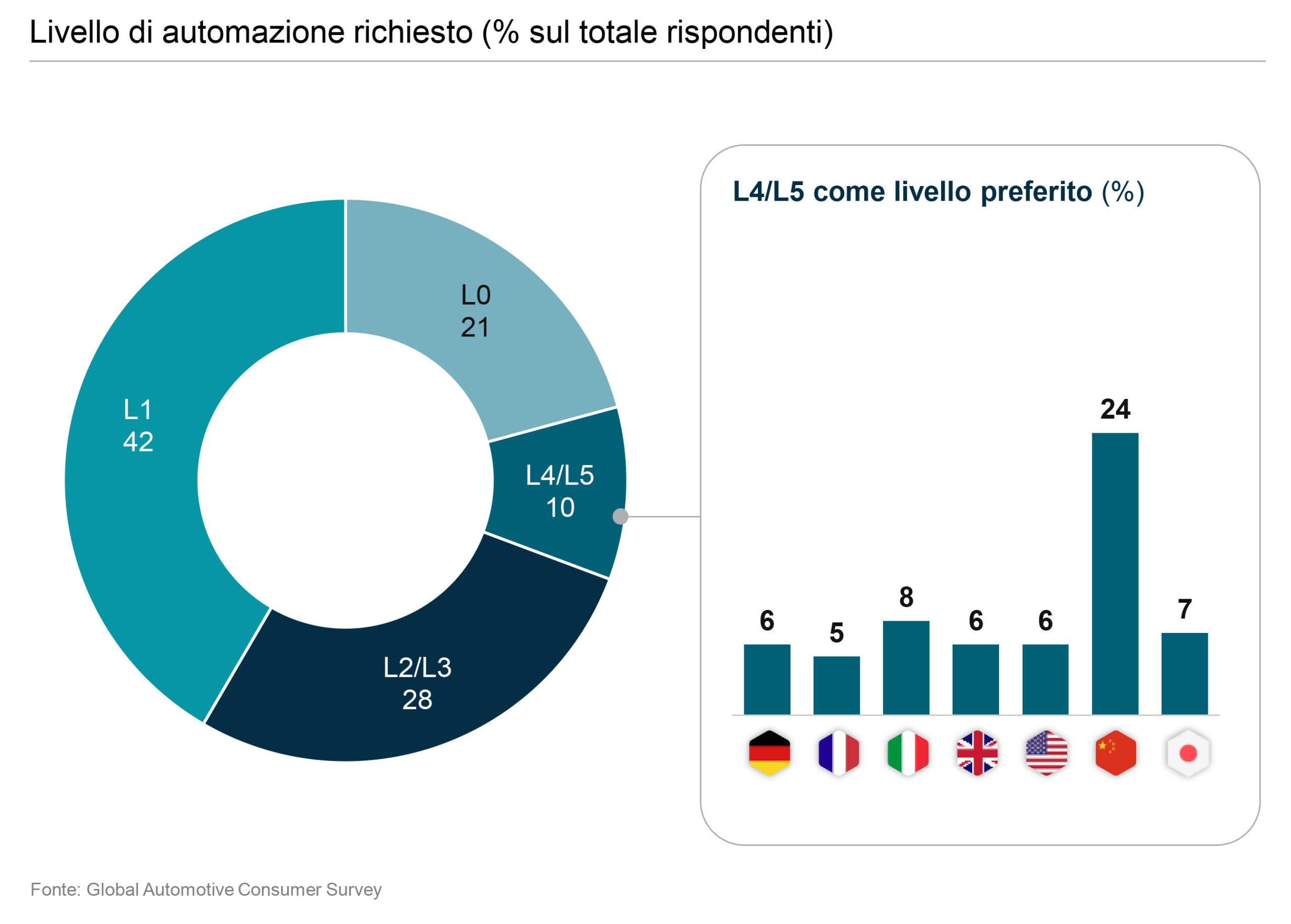
As far as technology is concerned, 42% of consumers consider L1 automation sufficient, while 28% opt for L2 and L3 and 21% for L0. Only 10% consider L4 or L5 adequate. The figure is broadly consistent worldwide, with the exception of China, where the highest levels are preferred by 24% of the sample, compared with between 5% and 8% in other countries. According to AlixPartners’ research, however, this preference in China is driven less by safety concerns than by the search for greater comfort.
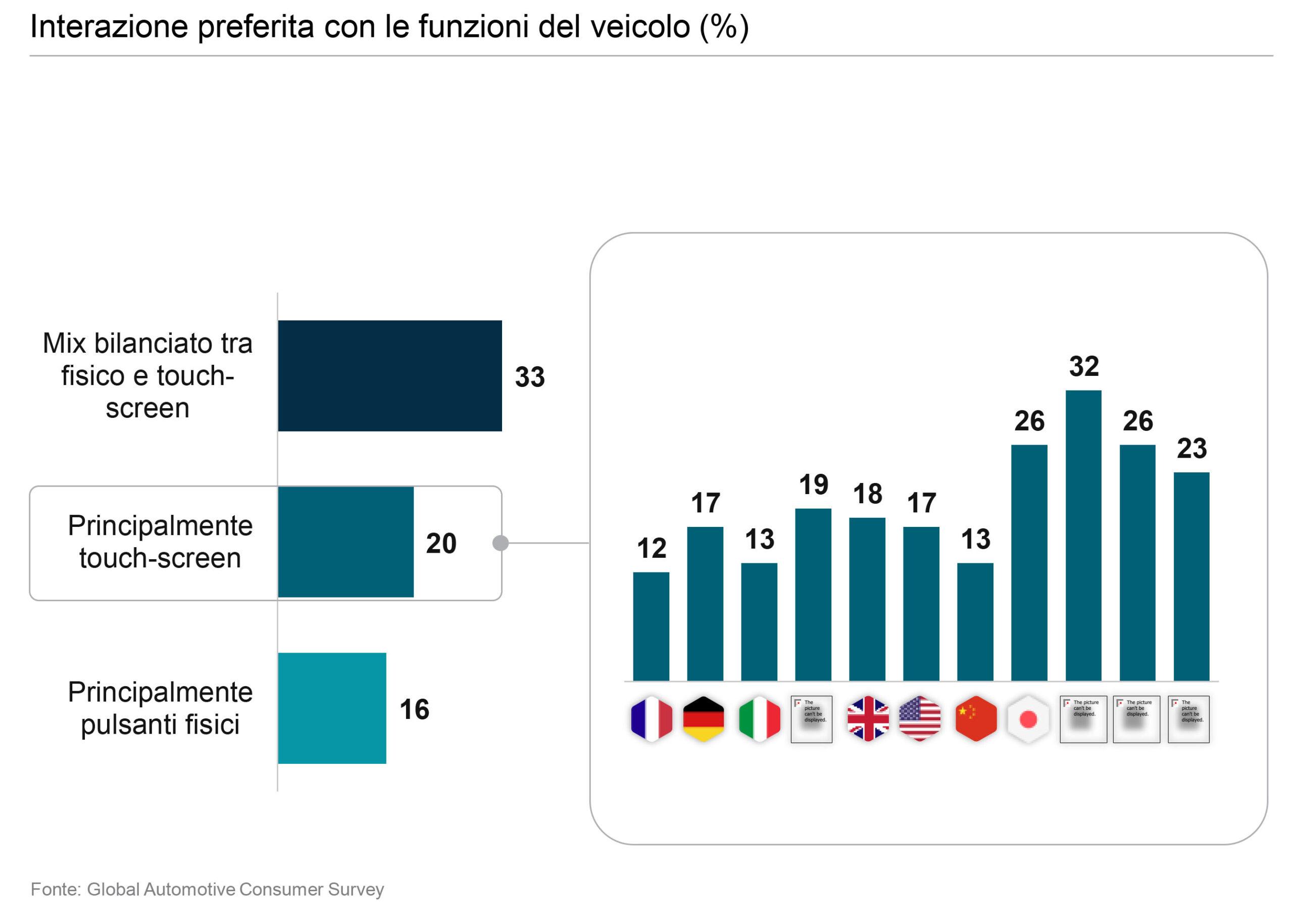
Some limits also emerge on the digital front. 33% of consumers prefer a balanced mix of physical controls and touchscreens, while 20% mainly prefer touchscreens and 16% physical buttons. For 57% of respondents, the navigation system remains the main on-board technology.
Subscription-enabled features also meet some resistance. 48% of consumers say these have no impact on their interest in the vehicle, while 38% say they increase it and 15% say, conversely, that they reduce it. The only generally accepted subscription models relate to safety, particularly ADAS, and connectivity. Only in Germany and the United States do comfort-related features, such as heated seats, prevail instead.
POWERTRAINS: COMBUSTION ENGINES STILL THE PREFERRED CHOICE
When asked about their next purchase, 48% of respondents worldwide choose a car with an internal combustion engine (ICE), 20% a plug-in hybrid, 17% a hybrid and 15% an electric car (BEV or REEV). Overall, almost two out of three consumers lean towards a combustion engine, either pure or hybrid.
The market appears increasingly regionalised. In the United States, ICE reaches 76%, in Germany and France 58% and in Italy 42%, where 30% are looking at plug-in hybrids. In China, electric cars account for 43% of preferences, but around 60% still choose a combustion or hybrid powertrain.
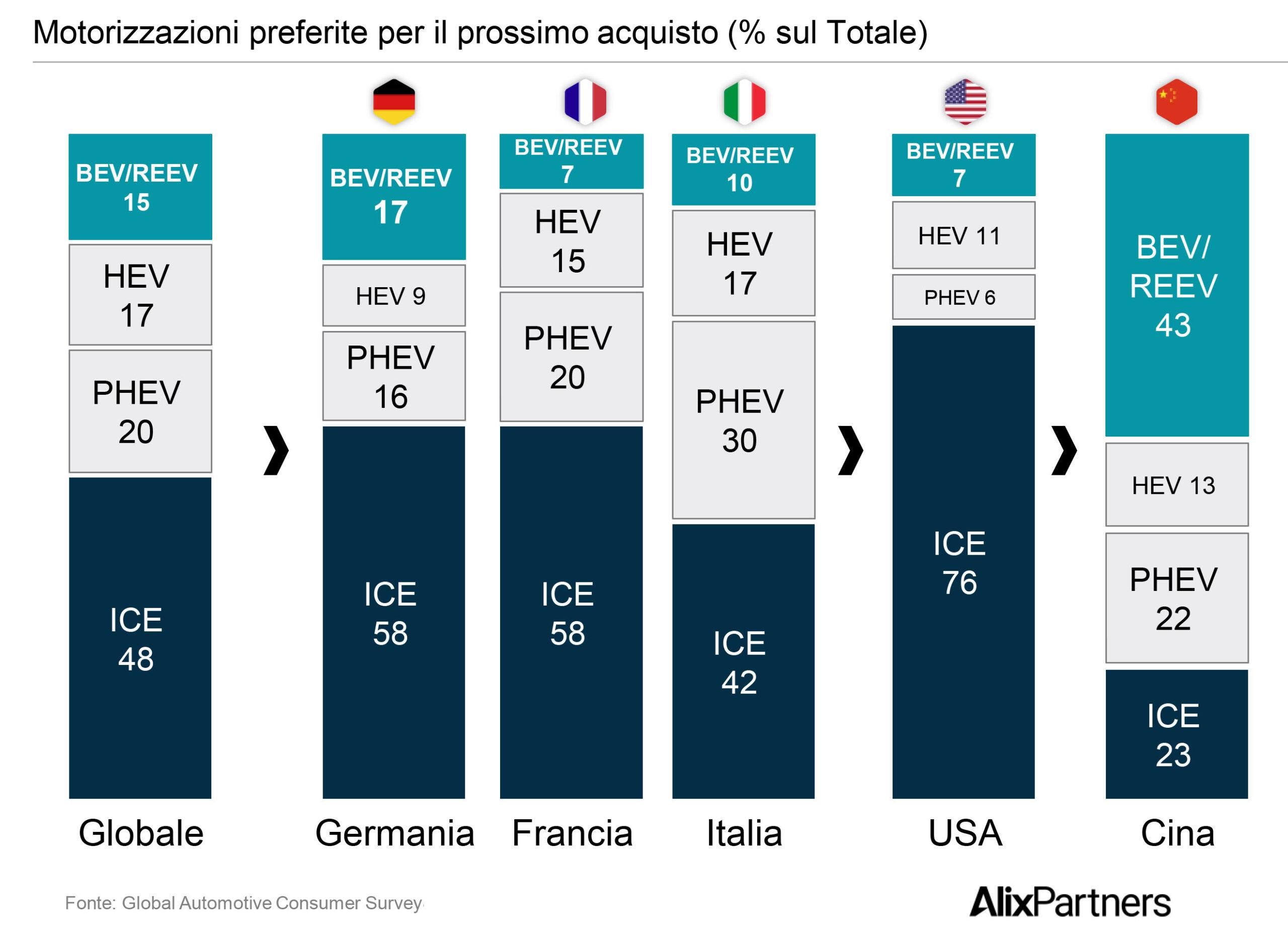
The main reason for not choosing a BEV is its excessive cost, cited by 37% of the global sample. The share rises to 56% in France, 47% in Italy, 46% in the United States and 40% in Germany, while in China it is just 8%. The figure shows that the green transition cannot be purely technological, but must also involve the industrial dimension, starting with the final price of vehicles. In other words, it is not enough to introduce new technologies or support their uptake through regulation: for the transition to be sustainable from a market perspective as well, it must take into account the entire industrial value chain and the ability to offer affordable products to consumers.
CUSTOMERS KNOW WHAT THEY WANT. BUT DOES THE INDUSTRY?
In conclusion, the data outline a sector under pressure on several fronts, with struggling companies that also find it hard to communicate a clear strategy, while customers seem to have more defined and consistent preferences.
For those who work in the supply chain, including the aftermarket, the message is clear: the ability to deal with change depends less on the indiscriminate adoption of new technologies and more on the ability to understand what the market really wants. The regionalisation of preferences also makes one-size-fits-all global responses increasingly ineffective.
Companies that manage to combine consistent leadership, a clear strategy and products in line with customer expectations will be best positioned at a time when, as the ranking itself shows, being at the top also means being more exposed to change.