 Auto in discarica
Paper and Digital FIR in 2026: What Changes, Operating Rules and Penalties
From paper FIR to digital FIR: with the support of the COBAT Academy we take stock of obligations, operating procedures and responsibilities for operators in the supply chain
From paper FIR to digital FIR: with the support of the COBAT Academy we take stock of obligations, operating procedures and responsibilities for operators in the supply chain
For years, the Waste Identification Form (FIR – Formulario di Identificazione dei Rifiuti) has been a paper document familiar to workshops, body shops, vehicle dismantlers and all operators who manage special waste in the automotive aftermarket. With the start of the digitization envisaged by RENTRI, however, the change goes beyond the format of the document: operating methods, data management, controls and, in some cases, even the level of responsibility required of the various parties involved in the supply chain are all changing.
A few days after the restart of the digitization process, after the postponements and technical adjustments that have affected the system in recent months, there are still many practical doubts among operators: who is obliged to use the digital FIR? What happens in the event of connection problems? Is it possible to continue to use paper? And what actually changes in practice for workshops, collection centers and vehicle dismantlers? To shed light on these issues, we put a series of questions to the experts of the Cobat Academy, the training, consulting and business coaching platform developed by Haiki Cobat (a division of Haiki+), exploring not only the regulatory aspects, but also the operational implications that companies and professionals face in day-to-day waste management.
📊
This content is part of SICURAUTO.it’s 6th Aftermarket Report, titled: “The Aftermarket in the Era of European Regulations: Opportunities, Constraints and New Specializations”.
What exactly is the digital FIR and in what regulatory context does it fit (RENTRI, digitization of registers, etc.)?
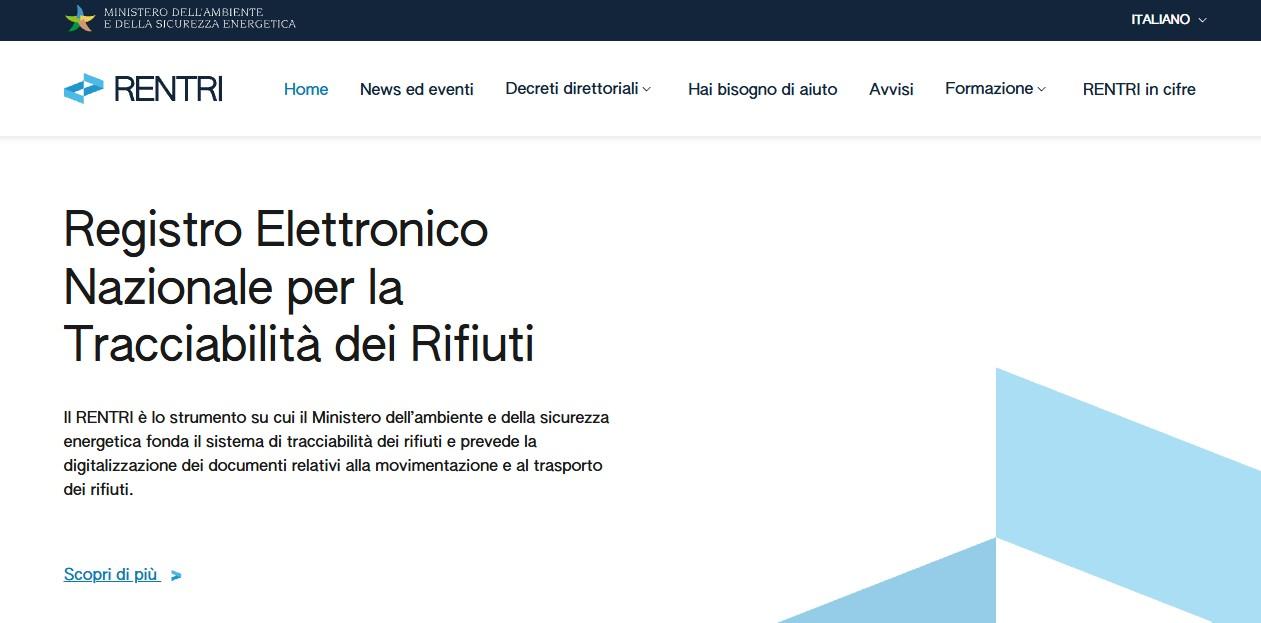
The Waste Identification Form (FIR) is the document that accompanies each transport of “special” waste and guarantees its traceability. In its digital version (xFIR), the FIR is issued, transmitted and stored in electronic format through the RENTRI system, managed by the Ministry of the Environment.
The RENTRI (National Electronic Register for Waste Traceability) was established by Legislative Decree 116/2020 (transposition of EU Directive 2018/851) and operationally regulated by Ministerial Decree No. 59 of 4 April 2023. Its purpose is to digitize and centralize the traceability of special waste on a national scale, progressively replacing paper loading and unloading registers and paper FIRs.
Does the digital FIR require a Qualified Electronic Signature or SPID/CIE?
To access the RENTRI portal and operate with the xFIR, at least one initial authentication via SPID (Public Digital Identity System), CIE (Electronic Identity Card) or CNS (National Service Card) is required; after that, users can rely on apps installed on their devices or on interoperable applications provided by various software companies. A Qualified Electronic Signature (QES) is not required.
What are the key dates from which the obligations and any sanctions related to the digital FIR will be triggered?
The system provides for obligations that vary depending on the company and the waste that is managed. With some exceptions, the focus is currently on production activities and waste management operators, which have been brought into RENTRI in successive phases since the end of 2024. Other activities, such as services and commerce, also fall under RENTRI when they produce hazardous waste. Certain categories remain excluded, such as non-business entities like freelancers or private citizens. Of course, traceability, as before RENTRI, does not apply to municipal waste and the so-called “assimilated” waste, i.e. waste from production activities that is comparable to municipal waste in quality and quantity: a typical example is waste paper and cardboard from offices.

Will the transition be gradual or is there a clear “switch date”?
As mentioned, the basic idea is to introduce obligations gradually, giving priority to professional operators, production and craft activities and, in general, to hazardous waste. An important step towards digitization was set for mid-February: from that date, the “priority” entities were due to manage the waste supply chain in a fully digital way; unfortunately, the system could not cope with the peak workload, highlighting the need to strengthen it adequately. We are therefore in a transitional phase, where digitization is in fact optional: the relaunch was rescheduled for mid-September.
Are there differences in application based on company size or type of aftermarket operator?
Yes, as mentioned, the legislation is based on three parameters to set the obligations: the role in the waste supply chain (i.e. producer or waste management operator), the type of activity (production and craft businesses, as opposed to trade or services) and company size. At the moment, trade and service activities remain outside the scope of RENTRI if they do not produce hazardous waste, and any production/craft activities with fewer than ten employees, again provided they do not produce hazardous waste. All others must use RENTRI. Similar criteria apply to the digitization obligations: those required to be in RENTRI will need to get organized in good time ahead of September.
What are the real operational differences between paper and digital FIR throughout the supply chain?
The digital FIR can be issued by the carrier in the same way as the paper one, and if necessary, a “courtesy copy” can be produced, in PDF or printed format, essentially identical to the old paper FIR.
However, it is a digital document, which resides within the RENTRI system and which, over time, should interact with a series of databases, reducing the possibility of errors and improving traceability. The system also introduces new obligations, such as downloading the copy signed by the recipient and then sending it to RENTRI, which must be handled carefully to avoid mistakes.
What changes in terms of responsibility between producer, transporter and recipient?
The framework of responsibilities is similar to before, but digitization seems to have brought greater awareness to some, especially waste producers. Many are beginning to understand the importance of properly managing temporary storage, transport safety, and correctly carrying out the classification and characterization of waste.

Does the digital FIR really reduce errors or introduce new potential critical issues? If so, which ones?
The digital FIR significantly reduces the errors typical of paper (illegible data, lost copies, discrepancies between copies). However, it introduces new types of critical issues:
- Data entry errors: incorrect EWC codes, inaccurate quantities — the system can help with validation checks, but responsibility remains with the operator: in many cases RENTRI merely “takes note” and cannot know whether the waste, for example, has been correctly identified and characterized;
- Connectivity problems: if there is no internet connection at the time of collection, the emergency procedures provided for by the Regulation must be followed (see further details below);
- Insufficient training: the most likely mistake in the first months will be the incorrect use of digital tools by operators who are not adequately trained.
How is waste management changing for workshops and vehicle dismantlers?
For workshops, the main change concerns the digitization of the document flow: goodbye to paper FIRs, and access to the RENTRI portal (or to the integrated management software) every time a special waste collection is handled (waste oils, filters, batteries, tires, etc.). For dismantling centers, the impact is greater both in terms of volume of operations and the need to integrate RENTRI with the management systems already in use for the traceability of end-of-life vehicles (ELVs).
Which internal processes will need to be changed (data collection, document management, archiving)?
The main processes to be adapted are:
- Data collection: waste identification, EWC code, estimated quantities — must be entered into the system before or at the time of collection. The data must be updated promptly: with paper, entries could also be made late, for example in the waste register; with digital, every operation is tracked;
- Document management and archiving: elimination of the physical archiving of paper FIRs (3-year retention obligation); RENTRI requires compliant digital preservation, as with electronic invoices;
- Staff training: those who manage waste in the company must be trained on the use of the RENTRI portal or the integrated management system.
What happens if the company lacks an internet connection when the load is about to leave? Are there “emergency” procedures provided for by the Regulation?
Directorial Decree 55/2026 provides for emergency procedures: in the event of proven technical difficulties in using the digital FIR (e.g. lack of connectivity), the paper FIR may be used. The procedures differ depending on whether the problem is with the system or with the individual operator, and must be read very carefully: “improper” use could be sanctioned.
In fact, if the problem is due to a malfunction of the system as happened in February, the procedure provides for a notice to be published on the RENTRI website: from that moment, and for 24 hours after the resolution of the technical problem, the use of paper forms is allowed, given the proven emergency. Conversely, if an operator is unable to use the digital forms due to issues on its own side, it will have to prove that the non-use depends on “reasons beyond the control of the operators and not resulting from poor maintenance or negligence” and produce what is essentially a self-declaration by the legal representative, to be sent promptly via PEC (certified email).
Does the digital FIR require new roles or skills in the company?
Not necessarily new roles, but certainly new skills. In small workshops, the owner or administrative manager must be able to use the RENTRI portal or the management software. In larger organizations (dismantling centers, recyclers), it may be appropriate to designate a “RENTRI contact person” and evaluate API integration with the company management system to automate flows. The learning curve is manageable, but it must be planned in advance.
In addition, the obligations relating to submission for digital preservation must also be considered: under the Digital Administration Code (so-called CAD – Legislative Decree no. 82 of 7 March 2005), these involve certain specific roles: Preservation Manager, Preservation Submission Manager, Preservation Service Manager. These are not necessarily new roles, and the obligations do not differ much from electronic invoicing, but it is important to establish who does what.
For typical aftermarket streams such as waste oils and batteries, does the digital FIR really improve operational efficiency, or does it simply move complexity to other levels (IT, error handling, operator support)?
For these high-frequency and well-standardized flows, the digital FIR brings concrete benefits: pre-filling of recurring data (same carrier, same plant, same EWC codes), reduction of completion time, absence of clerical errors, and the fourth copy of the FIR, which arrives quickly and can be downloaded from RENTRI.
The complexity shifts, as you rightly suggest, to IT management (system updates, credential management, technical assistance) and to the management of system errors. However, there is reason to hope that, once fully up and running, the overall balance will be positive.
How does the digital FIR integrate with the electronic Loading and Unloading Register? Will it really be the end of “manual” bureaucracy for repairers?
The digital FIR is not yet fully integrated: many operators are still using paper, so here too the benefits will come in the medium to long term.
Is it true that the choice of format (paper vs digital) depends exclusively on the producer of the waste (e.g. the workshop or the demolition center)?
Yes, that is correct, with a few exceptions, because private citizens who scrap a vehicle, or freelancers, are excluded from those required to use the digital FIR. In those cases, the question of choice does not arise, and the usual paper FIR is used.
Outside of these exemptions, the choice of format (paper or digital) is determined by the entity producing the waste (initial producer), since it is the producer who issues the FIR. Once the producer issues an xFIR, the entire process of that transport must take place digitally: the transporter must accept it digitally and the consignee must close it digitally.
It is not possible to “go back to paper” once the FIR has been issued in xFIR format, except for the malfunctions described above. Obviously, the choice must be made within the obligations that the RENTRI provides for depending on the type of company, size and waste type: operators remain bound by the duty of ordinary diligence, as per general legal principles, and can, indeed must, refuse an improper request.

If a workshop decides to issue an xFIR (digital FIR), can the carrier and the destination plant refuse or “go back to paper”? How does this force the entire supply chain into technological synchronization?
Once the xFIR has been issued by the producer, the transporter is required to accept and digitally sign it, barring occasional malfunctions and problems. If the transporter does not have the tools to manage the xFIR, it technically cannot lawfully collect that load of waste.
This creates an effect of mandatory technological synchronization along the supply chain: a producer that adopts the digital FIR ahead of its mandatory deadline effectively “drags” its partners (transporters, plants) towards digitization. It is advisable for workshops to coordinate with their usual collectors, taking advantage of the transition to digital underway between now and September, rather than leaving it until the last minute.
How should a transporter operate if it collects waste from a “digital” and a “paper” company on the same day?
The transporter will have to manage both formats in parallel: for xFIR collections it will need to log into the RENTRI portal (or app) and sign digitally; for paper FIR collections it will proceed as usual. There is no incompatibility, but it requires dual management which, in the transitional phases, can be operationally burdensome. Larger carriers are already adopting apps and management systems integrated with RENTRI to manage both flows smoothly.
Why is the distinction between paper and digital not only formal? How do time stamping and real-time traceability change the concept of “waste producer responsibility”?
The difference is substantial for several reasons:
- Time stamping: every action on the xFIR (issuance, acceptance, confirmation) is recorded with a certified timestamp, which is impossible to alter retroactively. In the paper version, the date and time of compilation could not be verified with certainty;
- Real-time traceability: the control authorities (ARPA, NOE) can check the status of each active FIR at any time, identifying delays or anomalies without having to request physical documents. This will be even more true in 20247, when the vehicles carrying the waste will be “geolocated”;
- Enhanced waste producer liability: the producer can no longer claim to have delivered the waste “in good faith” without having evidence of the completion of the cycle. Failure to receive the xFIR closure from the recipient is an immediate and documented alarm bell;
The recipient (plant) is now obliged to return the complete copy of the digital FIR within a few working days. What are the consequences for the producer (the workshop) if this deadline is not respected in the xFIR system and how can they protect their rights?
The recipient must complete their part of the xFIR within 2 business days of the arrival of the waste.
In the event of non-compliance:
- The producer (e.g. the workshop) has documentary evidence of the recipient’s non-compliance in the RENTRI system, with a certified timestamp of its own issuance and of collection by the transporter;
- The producer can report the non-compliance to the competent authorities, in line with current procedures;
- For the purposes of producer liability, proof of delivery to the carrier and failure to close for reasons attributable to the consignee constitutes grounds for exemption from liability.
Practical recommendation: Regularly monitor the RENTRI dashboard to verify the closure status of your xFIRs and promptly send a reminder to the recipient in case of delay, keeping a record of that reminder.