 Cristian Gullino ERP Italia
From Spare Parts to Hazardous Waste: How Lithium Battery Management Is Changing in the Aftermarket
With new European rules, recycling targets and extended producer responsibility, the aftermarket supply chain will face challenges that go far beyond simple battery replacement
With new European rules, recycling targets and extended producer responsibility, the aftermarket supply chain will face challenges that go far beyond simple battery replacement
For years, the debate on lithium batteries has focused mainly on range, performance, costs and the spread of electric mobility. Today, however, the real challenge is shifting to their entire life cycle. Collection, traceability, safety, second life, raw material recovery and end-of-life management are becoming increasingly central issues for the European automotive industry, with tangible implications for the aftermarket too. This shift is set to accelerate in the coming years with the progressive application of the Battery Regulation (EU) 2023/1542, which is gradually introducing a series of obligations set to reshape the entire supply chain, from the Battery Passport scheduled for 2027 to the new recovery targets for strategic materials such as lithium, nickel, cobalt and copper.
Another of the lesser-known but potentially most impactful changes is the reclassification of end-of-life lithium-ion batteries as hazardous waste, scheduled at European level from 9 December 2026, with possible consequences for collection, transport, storage and treatment activities. The implications do not only concern carmakers and battery manufacturers.
Workshops, vehicle dismantlers, distributors, logistics operators and those involved in end-of-life management will be called upon to deal with increasingly complex responsibilities. To understand how this scenario is evolving, SICURAUTO.it spoke with Cristian Gullino, head of the Operations and Business Innovation unit of ERP ITALIA, a company active in the management of Extended Producer Responsibility (EPR) systems and part of the European Recycling Platform network.
Other strategic issues for the future of the aftermarket also emerge from the interview: the still incomplete maturity of the European recycling chain, the value of critical raw materials contained in batteries, the second life market and the growing role of data in the management of the entire life cycle of batteries, an aspect destined to take on increasing importance with the introduction of the Battery Passport, which is covered in a dedicated in-depth feature produced with EV Clinic.
📊
This content is part of SICURAUTO.it’s 6th Aftermarket Report, titled: “The Aftermarket in the Era of European Regulations: Opportunities, Constraints and New Specializations”.
Battery Regulation (EU) 2023/1542: what are the key pillars of this legislation and how is its implementation differentiating Europe from non-EU markets (such as the US or China) in terms of the circular economy?
The Battery Regulation represents one of Europe’s most advanced attempts to translate the Circular Economy Action Plan into concrete industrial legislation. Its pillars are an approach covering the entire life cycle, a reduced environmental footprint, traceability, supply chain security and, of course, a renewed emphasis on the central role of extended producer responsibility, with new (and perhaps challenging) collection and recycling targets, together with the gradual introduction of recycled content in products newly placed on the market.
The difference compared with other markets is that Europe does not look at batteries only as a strategic product for electric mobility and storage, but as a value chain to be made transparent, circular and above all, resilient. It is a shift from a linear to a circular economy: it is not enough to put batteries on the market, you need to know how they are produced, what materials they contain, what impacts they generate and how those materials can be fed back into the production cycle.
In this sense, the EU is trying to compete not only on production capacity, where other markets are very strong, but also on setting the standard for sustainable batteries.
How is the management of lithium batteries from the automotive sector evolving in Europe today and how mature do you think the supply chain is compared to the volumes expected in the coming years? What are the main infrastructural or organisational gaps that are of greatest concern today?
The European supply chain is evolving rapidly, but I would not call it fully mature yet. Today we are in a phase of industrialisation of recycling technologies, processes and techniques developed in the last 20 years of research and development, conducted both by the core industry (recyclers) and by other “interest groups” (the chemical industry, research centres, especially those in northern Europe, naturally close to the automotive and processing industries): it is widely accepted that, especially in the last 6 years (starting from the COVID shock), what could previously be considered recycling “laboratories” are growing into full-scale plants, thus increasing storage, disassembly and treatment capacities (chemical/physical), with the consequent creation of spoke-and-hub models (i.e. initial collection, inspection and dismantling centres upstream of recycling, material recovery or second life operations).
Fraunhofer ISI estimates that, in the second quarter of 2025, Europe could count on about 270 kton/year of spoke/pre-treatment capacity, and around 290 kton/year of refining (actual recycling) capacity. To date, however, the sector is still entirely dependent on the availability of “waste”, i.e. end-of-life batteries: large volumes of end-of-life automotive batteries will arrive mainly after 2030. Indeed, the volume of end-of-life EV batteries available is still very low – about 150 kton in 2025 – and even this is intercepted by the carmakers themselves, who are already setting up advanced supply chains for refurbishment and second life. In the short term, therefore, the main feedstock is often production scrap rather than post-consumer EV batteries.
So the question is not only ‘will we have enough capacity?’ – where, based on the above estimates and projections to 2030, the outlook seems fairly rosy (Fraunhofer again estimates 500 kton/year by 2030) – but ‘how much capacity will really be operational, authorised, financed and connected to real flows?’
The three most worrying gaps are: safe and specialised logistics, effective refining capacity and data quality. Without these elements, we risk having formal compliance, but not a true European circular value chain. Further risks actually stem from the “low” industrial output of “new” European batteries, which already tends to continuously drain “raw materials” out of the recycling loop: currently, the players capable of extracting value from the black mass produced in Europe are all based in East Asia (China and South Korea), which, thanks to their very large production capacity, know how to extract value from our “waste”. So the risk is also that building a supply chain capable of producing black mass is not that “complicated” – what we also need is a supply chain capable of keeping the value of refining in Europe.
The impression is that the market is accelerating faster than the supply chain’s ability to manage traceability, logistics, diagnostics and end-of-life management of batteries. Is this a correct reading, or is the European system better prepared than it is perceived to be?
Europe is very advanced on the regulatory front (just think of Regulation (EU) 2023/1542), and is developing industrial capacity as mentioned earlier, but the market is moving faster than the ability to standardise all operational steps, such as traceability, logistics, diagnosis, classification, second life and treatment. The numbers show that the announced recycling capacity is growing, in some cases even faster than the volumes expected in the short term.
But the real question is how much of this capacity will actually be operational, authorised, financed and integrated with real flows. The risk is not just a lack of plants: it is a lack of clear data, procedures and responsibilities throughout the chain, especially in view of the next “major” regulatory milestones, such as the change in the European Waste Codes (EWC) assigned to end-of-life batteries and components (such as scraps deriving from pre-treatments, treatments or simply from the production process). From 9 December 2026, in fact, all lithium-ion batteries will become hazardous waste. This change will have very significant impacts, both on the logistics of moving waste within a country and on the export of these batteries to treatment and refining centres located, for example, outside our borders.
What are the main differences between the various European countries today in the management of end-of-life automotive batteries, both from a local regulatory and operational point of view?
The Battery Regulation creates a common framework, but the concrete management of automotive batteries at the end of their life still remains very different from country to country. The differences lie not so much in the regulatory objectives – which are set at European level by a regulation that overcomes the difficulties experienced to date with the previous directive – as in operational capacity: availability of plants, speed of permitting, maturity of EPR systems, presence of the automotive industry, specialised logistics and refining capacity.
Germany and some Central European countries benefit from their proximity to OEMs and production chains. Belgium, the Netherlands and some Nordic countries can play an important role as logistics or metallurgical hubs. In short, these are the countries that have helped build an already highly functional – and also less costly – “environmental and circular system”.
Italy has significant industrial and logistics expertise, but it needs to strengthen its lithium battery-specific capabilities, especially with regard to pre-treatment, scrapping and refining (and of course traceability). To date, apart from a few facilities currently being launched (e.g. the S.E.Val group, RAEEMAN, Spirit, all of which are mainly concentrated in Northern Italy), in fact, it is still far more cost-effective to export either whole batteries or the shredded material (the Black Mass, i.e. the cathode + anode fraction separated from structural materials such as outer casings, separator plastics and anode and cathode current collectors) to countries that have developed slightly more advanced – though not yet final – treatment processes.
This, from my point of view, clearly means losing significant economic value (consider that the treatment cost in Italy for an end-of-life battery can reach €4,000/ton, while in other countries it is less than half for the same operations). This is due not only to “proximity” to the sites where the waste is generated, as mentioned before, but also to the way the relevant environmental regulations are applied, which very often allows waste recycling plants to be opened quickly (for example: 6 months to obtain a permit for waste treatment in Romania or Poland, compared to 18 in Italy).
The real challenge will therefore be to avoid operational fragmentation: common European rules, but twenty-seven systems that are too different in practice.

The digital battery passport is one of the most eagerly awaited innovations. Can you explain to us concretely what information it will contain and, above all, what will be the level of accessibility for independent aftermarket operators compared with authorised networks?
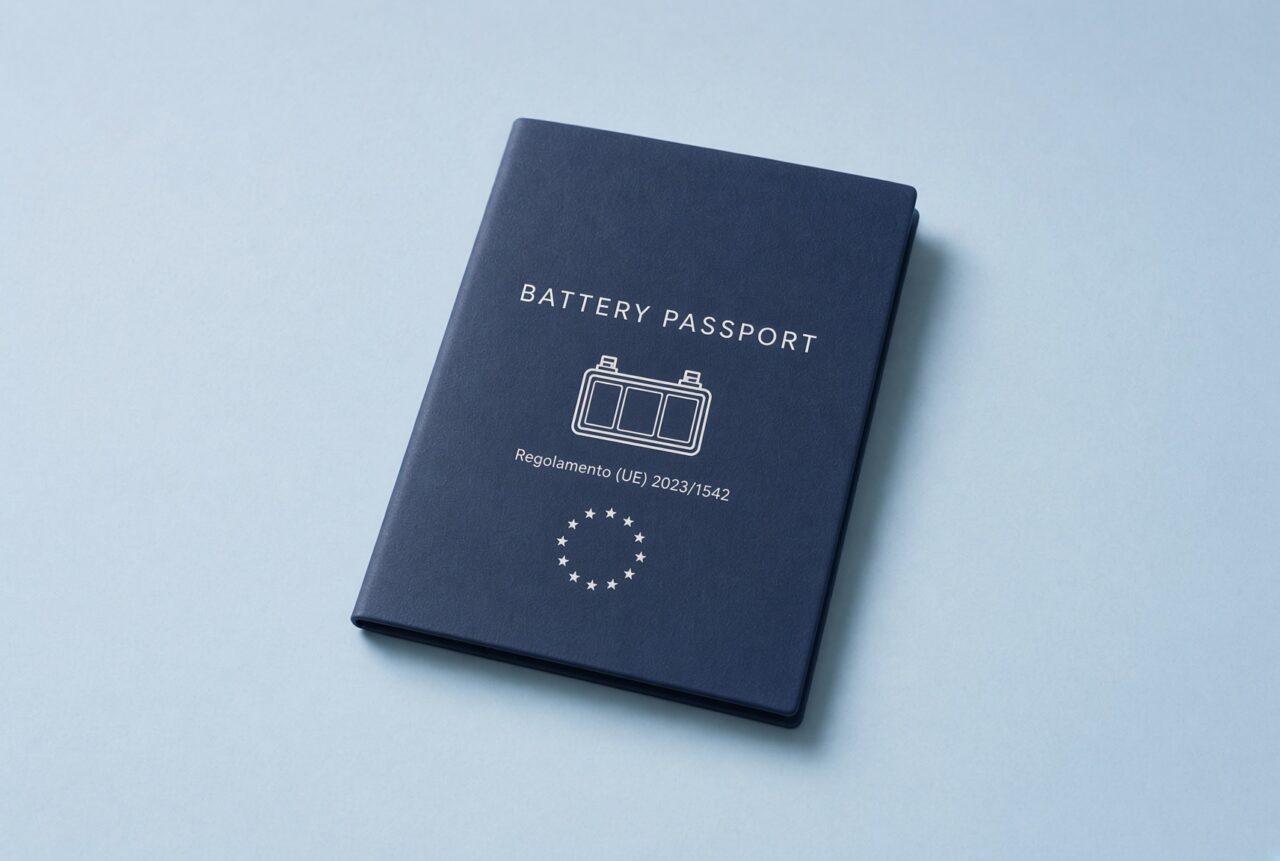
The Battery Passport will be mandatory from 18 February 2027 for EV batteries, LMT (light means of transport) batteries and industrial batteries above 2 kWh, accessible via a unique identifier or QR code. According to the Regulation, it must contain information on battery identification, manufacturer, category, composition, carbon footprint, recycled content, performance, durability, safety, state of health and information useful for end-of-life management.
The important point is that not all data will be public: the Regulation provides for differentiated levels of access. Some will be accessible to the public, some to operators with “legitimate interest“, and some to supervisory authorities.
Independent aftermarket operators will therefore be able to access some relevant data, but not necessarily the full body of technical information held by the manufacturer. This means that the Battery Passport will be a very important tool, but it should not be confused with full and direct access to proprietary vehicle or battery systems, such as BMS and OEM diagnostics. According to the Battery Pass guidance, Annex XIII includes about 80 mandatory data attributes for EV batteries, but with access levels varying according to the type of data and who is requesting it.
Which of these data will really make a difference in diagnosis, repair, residual value assessment and end-of-life management?
From my point of view, the really decisive data will be those that allow the battery to be technically qualified: State of Health, residual capacity, history of use, number of cycles, any abnormal events, chemistry, configuration, disassembly instructions and safety information. This data can help decide whether a battery is reusable, repairable, destined for second life or to be sent directly for recycling. However, the Battery Passport alone won’t solve everything: it doesn’t equate to full access to the BMS, nor does it eliminate the need for physical checks and specific tests.
Preliminary activities such as structured visual inspection, verification of damage, deformation, signs of thermal events, casing integrity and condition of the connections will remain fundamental (we cover these aspects in more detail in this in-depth feature with EVSAFE – Ed.). Technical references such as UN 38.3 also remain useful as a basis for safety and qualification, although they do not replace operational diagnostics on each individual pack. The practical point is that, without simple and interoperable access to dynamic data, many operators will still have to proceed with disassembly, dedicated tests and slower procedures.
Is there a risk that the management of data related to batteries and the Battery Passport could create new competitive asymmetries between manufacturers and the independent supply chain, effectively limiting the competitiveness of independent operators?
Yes, the risk exists, especially if the Battery Passport becomes formally accessible but difficult for independent operators to use in practice. The crux is not only “having the data”, but being able to read, interpret, update and integrate it into the operational systems of workshops, dismantlers, second-life operators, plants and compliance schemes.
If some information effectively remains accessible only through OEM tools, proprietary BMS or non-interoperable platforms, a competitive advantage can be created for authorised networks. The independent supply chain risks finding itself with partial access: sufficient for document compliance, but not always for diagnosis, repair and industrial evaluation of the residual value.
This is particularly critical because an EV battery cannot be assessed on static data alone: dynamic, historical and reliable data is needed. The Regulation introduces a differentiated access model, but the market will have to show that it can make it genuinely interoperable.
Otherwise, the risk is that data will become a new barrier to entry: no longer just technological or regulatory, but informational. To avoid this, we need common standards, genuinely usable APIs, clear criteria of “legitimate interest“ and tools that are also accessible to independent operators.
What are the main practical challenges today in the collection, identification and traceability of lithium batteries from electrified vehicles?
The first practical challenge is identification: it is often not easy to determine the model, make, chemistry, configuration and actual condition of the battery. The process is still very “analogue”: nameplates, available documentation, operator experience, comparison with technical manuals or databases that are not always accessible. This slows down classification and makes the choice between reuse, repair, second life or final treatment more complex. In collection, the main issue is safety: packaging, state of charge, visible damage, origin of the battery and “history” of the pack are not always known.
Importantly, there is still no public, uniform and consolidated database at European level on cases of fire, re-ignition or self-ignition of HV batteries post-accident. This makes it difficult to transform individual incidents into robust statistics, but it does not reduce the operational relevance of the risk.
The point is not to argue that electric vehicles catch fire more frequently than traditional vehicles; the issue is different: when a lithium battery is damaged, unstable or incorrectly characterised, management becomes much more complex (we cover this important issue in the in-depth feature produced with EMME Antincendio – Ed.). Thermal runaway, residual energy, unknown state of charge, invisible internal damage and possible re-ignition require much more cautious procedures during collection, transport and storage.

How prepared are independent aftermarket operators – workshops, vehicle dismantlers, parts retailers and service networks – today to deal with the management of HV batteries and the new regulatory obligations related to them? What are the most critical gaps in terms of skills, equipment or procedures today?
The preparedness of independent operators has improved considerably in recent years, especially among the more structured operators. Specialised workshops, authorised car dismantlers, more advanced parts retailers and independent service networks are now much more aware of the risks associated with HV batteries than in the past. Car dismantlers, in particular, have developed important practical expertise, because they are among the first to have to deal hands-on with crashed vehicles, damaged battery packs, making them safe, storing them and ensuring traceability.
I would therefore not speak of a supply chain that is unprepared in an absolute sense; rather, I would speak of a supply chain with very different levels of maturity. The problem is the gap between structured, trained and equipped operators, and smaller operators who may not yet have adequate procedures, spaces, devices and skills. The main gaps concern specific HV training, access to technical data, isolation and diagnostic equipment, PPE, areas dedicated to storage, emergency procedures and protocols to distinguish between batteries that are reusable, repairable, damaged or destined for treatment. The issue is not only to know that a high-voltage battery is risky, but to know how to identify, secure, classify and document it correctly.
From your vantage point, what are the most underestimated aspects today in terms of safety, transport, storage and liability in the management of lithium batteries?
Personally, also on the basis of field operational experience, I believe that one of the most underestimated aspects is the overall condition of the battery. Often, we focus on the category of the battery, its origin or the minimum information needed for proper waste documentation: waste transfer forms, waste registers, classification and agreement on the commercial terms for collection. This information is essential, but it is not always sufficient to describe the real risk profile of the battery.
In the case of lithium batteries, in fact, the operational risk depends above all on the real state of the pack: integrity of the casing, shocks, deformations, infiltrations, exposure to heat or water, contamination, invisible internal damage and history of use. Another critical element is the state of charge, which is not always known and which few operators are now really equipped to measure, reduce or manage in a safe and documented way. This has direct impacts on transport, packaging, temporary storage and liability in the event of an accident.
Packaging is also a central point: the safest solutions, with non-combustible materials, adequate containment and thermal risk management, have significant costs. The risk is that, in practice, emergency packaging or solutions that are not fully proportionate to the real state of the battery are used. The same applies to prevention and response systems: thermal monitoring, physical separation, safety distances, passive and active extinguishing, firewater runoff management and isolation procedures. Liability does not end when the battery is removed from the vehicle: it continues throughout the chain, from storage to transport to final treatment.

Is there a real risk today that some HV batteries could leave the official ELV management channels, creating safety, traceability or environmental management problems, also in light of the increase in independent repairs and the market for electrified used vehicles?
Yes, the risk exists and it is real, especially since HV batteries have a significant economic value as a spare part, as a component for repairs or as a basis for second-life applications. As the electrified car parc and the used vehicle market grow, the commercial pressure on expensive components such as battery packs, modules and cells will also grow.
The critical point is that an HV battery should not be treated as a normal spare part if it has not been verified, diagnosed and accompanied by reliable information on origin, state of health, safety and traceability. Today, however, there does not seem to be specific and consolidated Italian public data on the number of HV batteries that leave official channels or are sold as unverified spare parts.
This does not mean that the risk does not exist; it means that it is a risk that is difficult to measure. So much so that there are no “official” statistics or even “usable” numbers to confirm it. At ERP, we carried out some ad hoc research in 2023, by means of interviews with operators in the sector, and the phenomenon was confirmed. But the sample interviewed is obviously not significant for statistical purposes. We plan to analyse the market next year.
An important indirect indicator is the European phenomenon of so-called “missing ELVs“, i.e. vehicles that have been deregistered or left the registers without a clearly traced final destination such as authorised dismantling or documented export. In a traditional market, this phenomenon concerns components, materials and spare parts; in an electrified market, it can also affect high-value, high-risk batteries. The risk is twofold: on the one hand, safety and liability, if unverified batteries are put back on the market; on the other hand, loss of traceability and strategic materials, which should instead flow back into controlled reuse, second life or recycling chains.
How scalable is the “second life” battery market today and what obstacles are limiting its wider diffusion?
The second life market is potentially scalable, especially for stationary applications, storage, backup, recharging and grid support, but it is not yet a fully industrialised supply chain. An active ecosystem already exists in Europe: some mappings indicate about 80 European companies involved in the second life battery value chain, including repurposers, energy storage operators, OEMs, integrators and technology players.
Market estimates are very positive: a 2024 report indicates growth for the European second-life EV batteries market from around $188 million in 2023 to around $5.86 billion in 2033, with a CAGR of around 41%. However, significant obstacles remain: many batteries are not designed from the outset to be easily disassembled, tested and reconfigured into more manageable units, such as standardised modules. A critical point is the on-board electronics: BMS and proprietary systems are often not accessible to external operators, so to build a second life product it is necessary to bypass, replace or rebuild part of the electronic intelligence of the system.
This increases time, costs, responsibilities and technical complexity. On a regulatory and technical level, something is moving: in 2025, the European standard EN 18061:2025 was published, dedicated to the repair, reuse and preparation for repurposing of EV batteries and modules. In a nutshell: second life is scalable, but only if we move from case-by-case projects to batteries designed to be diagnosed, disassembled, documented and reused industrially.

The Regulation imposes specific targets for the recovery of lithium, cobalt, copper and nickel. How does ERP Italia support the supply chain in ensuring that these materials actually return to the production cycle, reducing dependence on non-EU imports?
The Battery Regulation sets very clear targets: by 31 December 2027, recovery of 90% for cobalt, copper, lead and nickel and 50% for lithium; by 31 December 2031 these targets rise to 95% for cobalt, copper, lead and nickel and 80% for lithium. The role of ERP Italia is to support the supply chain not only in document compliance, but in the construction of effective channels towards qualified plants, capable of treating batteries, producing black mass and, where possible, going as far as the refining of materials that can be reinserted into production cycles.
We operate at European level and this is an advantage, because the battery recycling supply chain cannot be viewed solely at national level: we need specialised partners, technological capabilities and connections with plants capable of recovering critical materials. Added to this is the work of the R&D department, which monitors technological evolution and participates in European innovation projects. Some examples are projects funded by the European Commission, of which we are partners or coordinators, which address these issues, and develop solutions and technologies aimed at enabling the European ecosystem.
For example:
- BATMASS aims to implement the first European Circular Battery Valley, with interregional investments in TRL6+ technologies for second life, recycling, remanufacturing and black mass.
- RENOVATE aims to develop circular solutions for the battery value chain, with the aim of recycling and reusing 100% of components, fractions and side streams, reducing the use of virgin raw materials.
- AUTOMAT, coordinated by ERP Italia, works on automated disassembly, sorting, digital traceability and material recovery for EoL batteries and devices with integrated batteries.
The logic is simple: it is not enough to collect batteries: you have to qualify them, route them to the right processes and make sure that material value is not lost along the chain.
Is the economic value of the raw materials contained in batteries already sufficient today to support an efficient recovery and recycling model? Or is the system still heavily dependent on regulatory obligations and extended producer responsibility?
The answer, today, is unfortunately no: the value of raw materials is important, but it is still not enough on its own to support an efficient, stable and widespread model of recovery and recycling. Battery recycling has an enormous strategic value, but its profitability depends on very unstable variables: lithium, nickel and cobalt prices, battery chemistry, metal content, energy costs, logistics, safety, authorisations, feedstock quality and plant scale.
As mentioned before, Fraunhofer ISI estimates that in 2025 Europe had about 270 kton/year of spoke/pre-treatment capacity and 290 kton/year of hub/refining capacity, with announced capacities potentially exceeding demand in the short term. However, this does not mean that the market is economically self-sufficient: several projects have been postponed or cancelled and the announced capacity does not always coincide with truly operational capacity, financed and fuelled by stable flows.
The problem is even more evident with chemistries of lower intrinsic value, such as LFP, where the absence of cobalt and nickel reduces the economic incentive to recycle while the environmental and regulatory need remains strong. T&E estimates that recycling could cover about 14% of the lithium, 16% of nickel, 17% of manganese and 25% of cobalt needed by European EV batteries by 2030: so, the potential is real, but it requires strong policies and obligations.
Today, therefore, the value of the material is a fundamental component of the equation, but it is not enough. Without EPR, regulatory obligations and qualified supply chains, the market would tend to recycle only the richest and simplest flows, leaving the more complex, less profitable or costlier-to-manage flows uncovered.
Looking ahead to the next 3-5 years, what do you think will be the main mistake that the aftermarket supply chain should avoid in the management of lithium batteries? What change are many operators still underestimating?
In the next 3-5 years, the main mistake that the aftermarket supply chain should avoid is to consider the management of lithium batteries only as a technical issue: disassembly, diagnosis, safety, spare parts or potential resale value. These aspects are fundamental, but the most profound change concerns the responsibility model behind the battery, i.e. the Extended Producer Responsibility system. The battery is not just any component: it is a product for which whoever places it on the market retains specific obligations relating to the organisation, collection, treatment, traceability and financing of its end of life.
In Italy, there is already a reference structure, with the CDCNPA (National Coordination Centre for Batteries and Accumulators), which coordinates the collection of waste batteries and accumulators and their delivery for treatment, recycling and disposal through collective and individual systems. With the new Battery Regulation, however, this model becomes even more relevant and more complex, because collection is no longer just an environmental compliance obligation, but a central element of the circular supply chain.
The risk for the aftermarket will be to underestimate the fact that the obligations are not limited to end-of-life financing, but also concern the correct organisation of collection channels and the routing of batteries to authorised operators and qualified supply chains. This applies in particular to distributors, body shops, service operators, car dismantlers, spare parts dealers and all parties who come into contact with end-of-life, damaged or replaced batteries.
If these operators do not fit correctly into the EPR model, the risk is twofold: on the one hand, structural gaps are created in collection, traceability and safety; on the other hand, economic gaps are created, because end-of-life costs risk not being properly forecast, allocated and financed.