 Arval Premium Center
Rental and Aftermarket: A Transformation Involving the Entire Supply Chain, According to Arval
The growth of pay-per-use mobility is bringing increasingly high-tech vehicles onto the market and creating new demands for repair and service professionals
The growth of pay-per-use mobility is bringing increasingly high-tech vehicles onto the market and creating new demands for repair and service professionals
The way motorists choose to use a vehicle is changing and, with it, so is the aftermarket. The growth of rental and pay-per-use mobility solutions is bringing onto the market a growing number of new, technologically advanced vehicles, as well as used vehicles with a very low average age. This trend is also gradually reshaping the vehicle parc and creating new needs for those involved in maintenance, repair and servicing.
For aftermarket professionals, this evolution means dealing with electrified vehicles equipped with new technologies, but also with customers who want increasingly short downtime, integrated services and efficient management of repair work. This change therefore affects not only vehicles, but also the skills, organisation and processes of the entire aftermarket supply chain.
What are the concrete effects of this transformation? And how is the service and repair model evolving as a result? We discussed this with ARVAL, which, managing a fleet of over 300,000 vehicles and more than a million service and maintenance events every year, can offer a first-hand perspective on current trends and new needs that are emerging across the supply chain.
📊
This content is part of SICURAUTO.it’s 6th Aftermarket Report, titled: “The Aftermarket in the Era of European Regulations: Opportunities, Constraints and New Specializations”.
How is the automotive market changing with the growth of rental and pay-per-use mobility solutions?
Rental continues to hold a prominent position in the automotive market. Overall, short- and long-term rental accounts for 33.1% of total national registrations, according to data released by Aniasa, the Confindustria association representing the pay-per-use mobility sector (Dataforce analysis of Ministry of Infrastructure and Transport and ACI data).
In the first half of 2026, rental’s share of registrations stood at 33.4%, up almost 4 percentage points on December 2025 (29.6%): more than one in three vehicles is a rental vehicle.
Looking at long-term rental alone, despite a slight decline compared with the first half of 2025, when registrations peaked, the January–June 2026 period maintained the positive trend of recent years. Among market segments, the share of private customers is growing, reaching 23.5% in June 2026, thus accounting for almost one in four rentals.
This greater market penetration is due to a gradual shift from the concept of vehicle ownership to that of vehicle use, but also to the development of new rental products designed to meet the needs of private individuals and businesses.
Alongside short- and long-term rental, in fact, new, more flexible or modular forms of rental have been developed for temporary mobility needs, such as Arval Flex (from 1 to 24 months, with the option of changing your mind even after just one month) or Arval Re-Lease, the re-rental offer of certified used vehicles from the Arval fleet, designed to let you enjoy all the benefits of rental at a more affordable price.
The spread of rental vehicles also results in greater market penetration of low-emission vehicles. While in the overall market in June 31% of registrations were BEVs and hybrids (plug-in and full hybrid), for Arval the figure rises to as much as 45%, bringing the share of electrified vehicles in its fleet to more than 302,000 vehicles, equal to over 30%. Partly thanks to the new fringe benefit rules, which favour low-emission cars and penalise combustion-engine ones, this trend, especially in corporate rental, is set to continue in the coming months.
Rental also means new vehicles that are placed on the market or used vehicles with a very low average age that are re-rented or sold on the second-hand market. This translates into technologically advanced vehicles, which require specific technical skills to service and repair.
What impact, then, does this transformation have on the work of aftermarket professionals?
These changes in the automotive market therefore have a major impact on vehicle repair and service professionals, who must be increasingly prepared to work on vehicles with electrified powertrains and new technologies.
At the same time, those who drive a rental car, which is often a work tool, have specific needs: reducing technical downtime, having their mobility guaranteed, including through replacement vehicles, and preferably finding all repair and maintenance services in one place, in a “one-stop shop” approach.
With over one million service and maintenance events that Arval manages every year on its fleet of over 300,000 vehicles, it is essential to work on industrialisation, sizing the network appropriately, improving how events are channelled, and further developing digitalisation and proactive services.
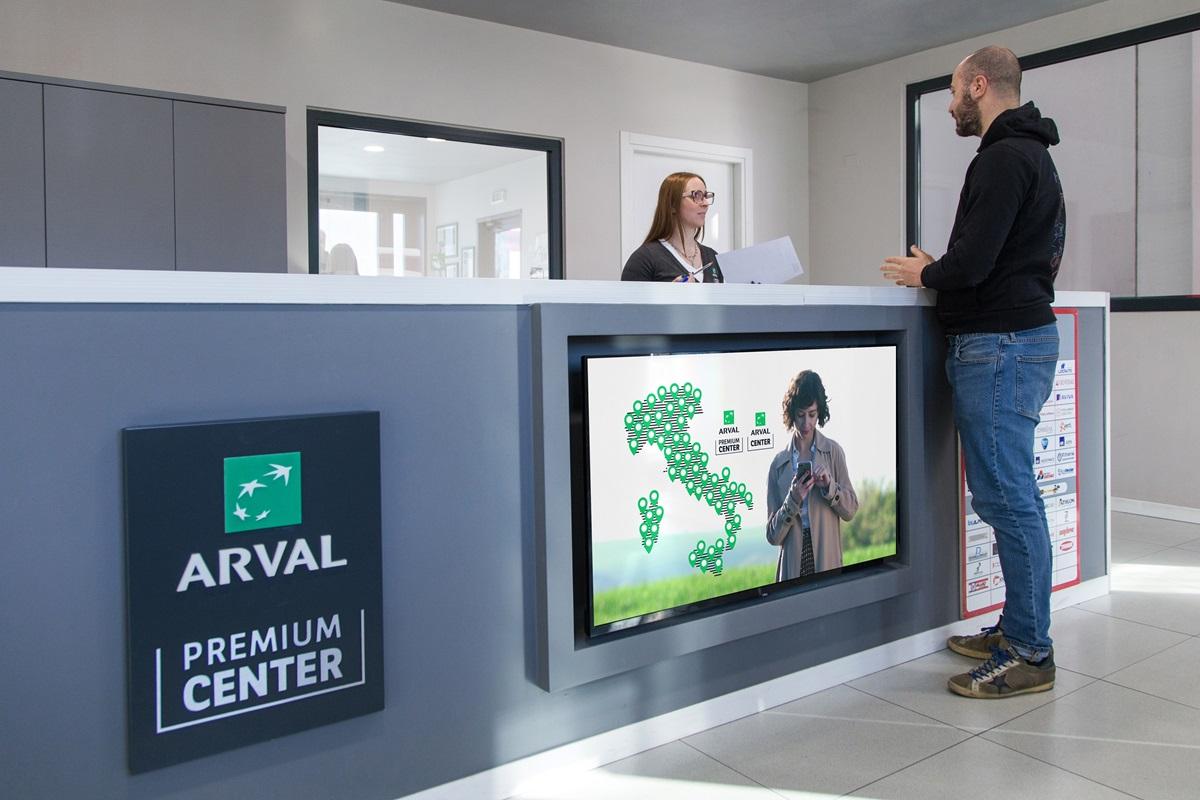
To carry out this work, Arval relies on a nationwide repair network of around 6,400 centres (IAM and OE), from which preferred facilities have been selected: the 198 Arval Premium Centres (multi-service) and around 1,650 Arval Centres (specialised in individual repair services: body shops, workshops and tyre centres), which handle most of the work.
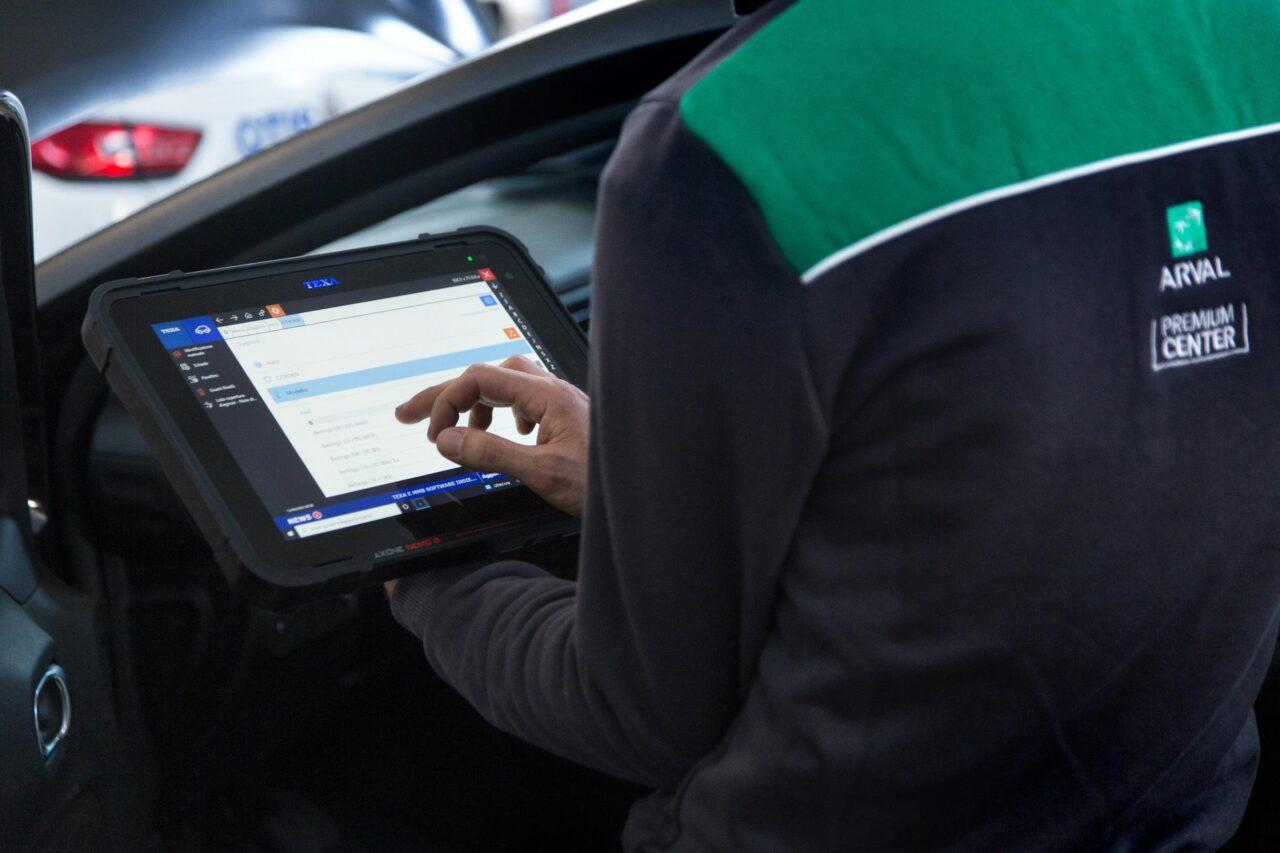
To optimise the performance of the centres and offer a high level of service to its customers and drivers, it is important to organise activities and make them more efficient. This means revisiting and renewing the set-up of operational processes and, in some cases, also investing in new infrastructure, as well as adopting innovative equipment. It is also essential to digitalise activities and invest in resources and technologies, in order to work on vehicles that require specific skills, such as electrified cars or those equipped with driver assistance systems, but also to improve efficiency and maximise volumes.
Continuous upskilling of professionals is also essential, as they must be able to work on latest-generation vehicles, electrified and equipped with the most innovative technologies. For this reason, training is fundamental, and Arval supports its network by offering a series of courses on various topics, including market and management skills, digital tools, electrification and technical skills, as well as specific sessions dedicated to SERMI certification.
In 2025, Arval Italia strengthened its ESG and sustainability ambitions. This strong commitment aims to meet regulatory and market expectations. The goal is to develop a mobility model capable of generating lasting value for businesses, people and the environment, in collaboration with its stakeholders, including the partners in its repair network.
Arval therefore promotes the use of Smart repair techniques across its body shop network, rather than replacing components. One example is the use of AIRepair, and the same approach is also applied to vehicle glazing, with particular attention to windscreens, where, for minor damage, repair is favoured over the replacement of the entire glass.
As well as having a significant impact on sustainability, this approach also brings benefits in terms of the timeliness of repair and downtime, which are reduced compared with traditional repairs.
In 2025, 46% of bodywork repairs used SMART repair techniques, while the windscreen repair rate reached 25%.
How much attention are you paying to technical downtime, which since Covid has been causing considerable problems for rental companies on the market?
Technical downtime is an issue to which Arval pays great attention, with constant monitoring in place to reduce downtime and ensure mobility for its customers and drivers.
Ensuring the availability of spare parts is one of the key factors to consider. For mechanical repairs, Arval relies on the networks it works with for parts procurement, whereas for bodywork it uses a centralised system.
In this area, Arval is working along three main lines:
- The use of a range of selected suppliers, whose performance is closely monitored, alongside scouting activities that may open up new opportunities
- A constant dialogue with manufacturers to jointly identify areas for improvement in the spare parts procurement process and in the sources used by Arval
- Greater flexibility in the search for spare parts when parts are delayed, also by turning to large international players, to increase supply capacity.