 Test emissioni pneumatici Euro 7
From Braking to Emissions: Euro 7 Rewrites the Rules and Tests of Braking Systems
Emissions from brake wear become a parameter to be measured, validated and reduced. Euro 7 marks a paradigm shift that involves the entire supply chain, from the development of braking systems through to aftermarket spare parts
Emissions from brake wear become a parameter to be measured, validated and reduced. Euro 7 marks a paradigm shift that involves the entire supply chain, from the development of braking systems through to aftermarket spare parts
With the entry into force of the Euro 7 standard, the automotive industry is facing one of the most significant transformations in recent decades in terms of emissions. For the first time, in fact, the European legislator has extended its field of action beyond exhaust gases, introducing specific requirements also for particulate matter generated by the wear of braking systems, while work continues to define standards relating to tyres. This new requirement means that vehicle manufacturers and component suppliers must not only develop increasingly high-performance materials, but also have tools capable of accurately measuring and validating these new emissions.
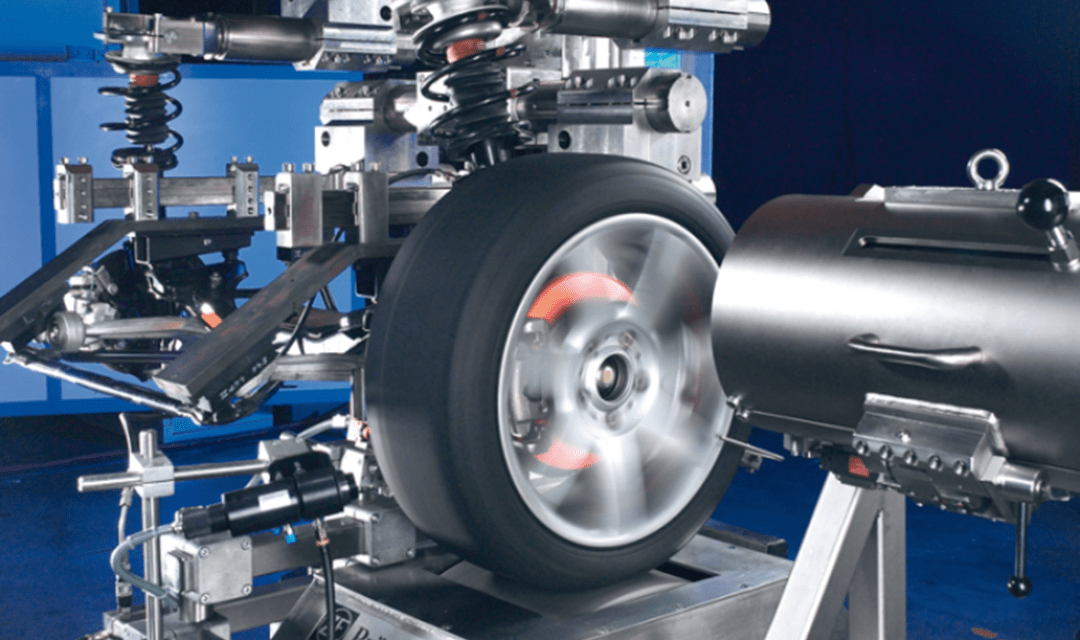
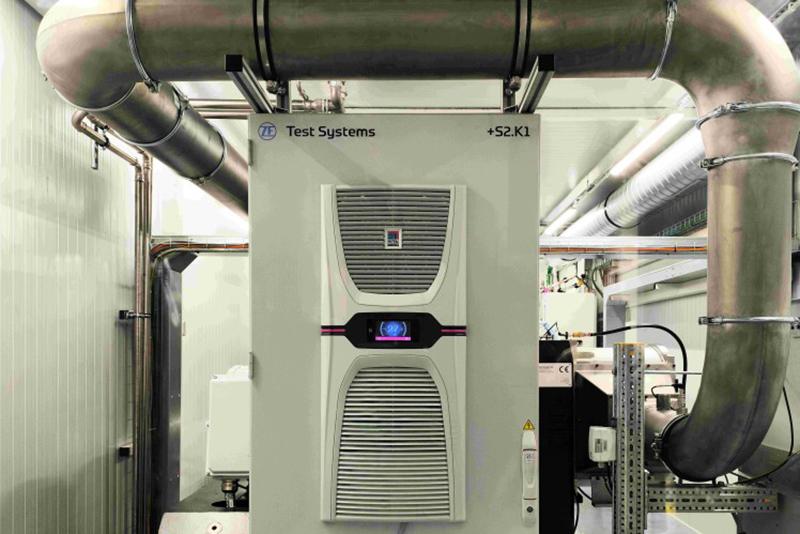
This is where ZF dustIN (Dust Investigator) comes in, the new dynamometer developed by the ZF Test Systems division and adopted by ZF Aftermarket at its Friction Competence Center in Spain for the validation of TRW braking systems. Designed in-house in collaboration with specialist AIP, dustIN has been conceived to perform tests compliant with the UN GTR No. 24 standard, realistically simulating driving conditions and measuring the particulate matter produced during braking, including the PM10 and PM2.5 fractions, under strictly controlled environmental conditions. Thanks to its modular architecture, the platform is also designed to adapt to future regulatory developments and R&D needs.
ZF’s investment is a concrete example of how the industry is anticipating a transformation that will affect the entire supply chain. More than just a test bench, dustIN reflects the emergence of a new culture of brake system design and validation, in which the ability to accurately and repeatably measure wear emissions becomes as strategic as the performance, safety or durability of components. This in-depth study, carried out as part of the 6th Aftermarket Report of SICURAUTO.it, examines how Euro 7 is rewriting the rules of the development of braking systems and what repercussions this evolution may have, in the medium term, on the independent aftermarket too, which in the coming years will be called upon to keep pace with the technological and regulatory evolution of braking systems.
📊
This content is part of SICURAUTO.it’s 6th Aftermarket Report, titled: “The Aftermarket in the Era of European Regulations: Opportunities, Constraints and New Specializations”.
EURO 7 BRINGS BRAKE EMISSIONS TO THE HEART OF THE LEGISLATION
For more than thirty years, European vehicle emissions regulations have focused almost exclusively on what came out of the exhaust pipe. From the first Euro standards to the current Euro 6/6e, the main objective has been to progressively reduce the pollutants produced by combustion – from nitrogen oxides (NOx) to particulate matter (PM), as well as carbon monoxide (CO) and hydrocarbons (HC) – helping to significantly improve air quality in urban areas.
However, the technological evolution of engines and the growing uptake of electrified vehicles have profoundly changed this scenario. While exhaust emissions continue to decrease thanks to increasingly efficient engines and sophisticated after-treatment systems, growing attention is being paid to so-called non-exhaust emissions, generated by brake wear and contact between tyres and road surfaces.
According to numerous scientific studies and assessments by the European Commission, these emissions now represent an increasingly significant share of particulate matter dispersed in the environment, especially in urban environments characterised by frequent acceleration and braking. It is precisely this awareness that has prompted the legislator to take an unprecedented step. This is a change destined to have much wider effects than it may appear at first glance.
Whereas until recently a braking system was assessed mainly in terms of safety, performance, comfort, durability and noise, today a new design parameter has been added: the amount of particulate matter released during its normal operation. A variable that involves the entire braking system: friction materials, discs, calipers, regenerative braking strategies.
A challenge that makes new development and validation platforms indispensable, such as the dustIN dynamometer from ZF Test Systems, which is designed to accurately measure brake wear emissions to meet the requirements introduced by Euro 7.
MEASURING PARTICULATE MATTER IS NOT SO SIMPLE: THE NEW CHALLENGE OF TESTING
In contrast to exhaust emissions, which have been measured for decades through established and internationally harmonised procedures, particulate matter generated by brake wear poses completely new challenges from the point of view of measurement and validation. The amount of particles released during braking depends on numerous factors, including friction materials, operating temperature, braking pressure, vehicle speed, environmental conditions and even the level of regenerative braking available on electrified vehicles.
To obtain reliable results that can be compared between different laboratories, it is therefore not enough to install a dedicated sensor. Real-world vehicle operating conditions must be reproduced with extreme fidelity, while simultaneously controlling parameters such as temperature, humidity, airflow, simulated inertia and braking mode. This is precisely the philosophy behind the UN GTR No. 24, the global technical regulation developed within the framework of the United Nations Particle Measurement Programme (PMP), which defines the test methodologies and requirements for the measurement of brake wear emissions.
The new ZF dustIN dynamometer is now able to perform standardised test cycles such as the WLTP Brake and the California Brake Dynamometer Cycle (CBDC), realistically simulating the behaviour of the vehicle through inertia and equivalent mass simulation systems. The tests are carried out inside chambers under strictly controlled environmental conditions, where airflow is also optimised using computational fluid dynamics (CFD) simulations to ensure that the particulate matter produced during each braking event is collected and measured with the highest accuracy.
The goal is not only to quantify the overall mass of particulate matter, but also to characterise its most relevant size fractions, such as PM10 and PM2.5, which are now considered among the most significant indicators for air quality. For this reason, the repeatability and reproducibility of measurements play a decisive role: obtaining consistent results regardless of the laboratory in which the tests are carried out is the indispensable prerequisite for a standard such as Euro 7 to be applied uniformly by manufacturers, suppliers and certification bodies.
DUSTIN: ZF’S ANSWER TO THE NEW ERA OF VALIDATION
The introduction of new regulatory requirements has prompted major automotive component suppliers to invest not only in the development of innovative friction materials, but also in the infrastructure needed to validate them according to increasingly rigorous methodologies. This is the context for ZF dustIN (Dust Investigator), the platform developed by the ZF Test Systems division and adopted by ZF Aftermarket at its Friction Competence Center in Spain for the development and validation of TRW braking systems.
Unlike a traditional dynamometer, dustIN was created with a precise goal: to reproduce the real operating conditions of a braking system in the laboratory, precisely measuring the particulate matter generated during each braking phase. The system was designed in-house by ZF in collaboration with the technology partner AIP, which specialises in particulate measurement technologies, combining the Group’s know-how in test bench design with measuring instruments derived from experience gained in exhaust emission control.
As mentioned, the platform complies with the requirements of the UN GTR No. 24, but has been designed with a modular architecture that allows it to be updated as legislation evolves. In addition to the configuration intended for type-approval tests, dustIN can be supplied in versions dedicated to research and development, characterised by higher performance, extended temperature ranges and more advanced simulation capabilities. The bench is also able to perform the main international test cycles, including WLTP Brake and California Brake Dynamometer Cycle (CBDC), simulating the inertia of the vehicle and also taking into account the contribution of regenerative braking, now a key factor in electrified vehicles.
One of the most innovative aspects concerns the control of test conditions. Inside the test chamber, parameters such as temperature, humidity and airflow are kept constant, while an enclosure designed using computational fluid dynamics (CFD) simulations ensures that the emitted particulate matter is conveyed uniformly to the measuring instruments. This makes it possible to analyse both the overall mass of emissions and the most significant size fractions, such as PM10 and PM2.5, ensuring high levels of repeatability and reproducibility of the measurements, already verified through inter-laboratory programmes conducted in Europe and China.
ZF’s investment goes beyond simply developing a new testing infrastructure. Through its participation in the working groups of the Particle Measurement Programme (PMP) and in the activities of CLEPA, the Group also contributes to the definition of future international measurement methodologies. A strategic choice that allows the know-how gained in Original Equipment (OE) to be quickly transferred to the development of aftermarket parts, reducing validation times and preparing the TRW brand for a regulatory environment that is set to evolve in the coming years.
FROM OE TO AFTERMARKET: HOW DEVELOPMENT, VALIDATION AND SPARE PARTS WILL CHANGE
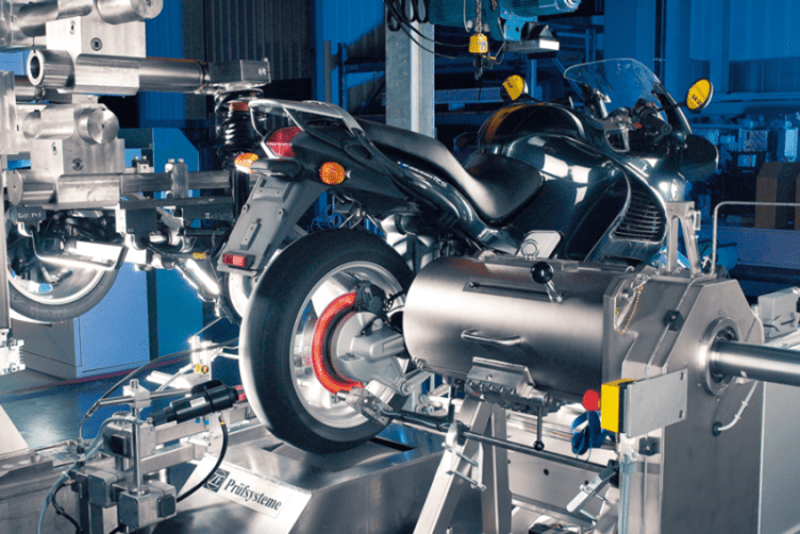
Although the requirements introduced by Euro 7 currently apply to the type approval of new vehicles, the investments that the main manufacturers and suppliers are making in the research, testing and validation of braking systems are set to have an impact well beyond Original Equipment. As often happens in the automotive sector, the technologies developed to meet the latest regulations are gradually transferred to the spare parts market, helping to raise the quality standards of the entire supply chain.
For aftermarket component manufacturers, this means facing growing scrutiny not only of traditional braking system performance – safety, durability, comfort and noise – but also of the characterisation of wear emissions. The introduction of the new limits will not only lead to the development of new test procedures, but will also accelerate research into friction compounds, disc surface treatments and new materials capable of reducing particulate release without compromising performance, durability and braking comfort.
For distributors, parts retailers and workshops, this transformation could also result in a progressive change in the value attributed to braking components. Whereas in the past product comparisons focused mainly on price, durability and performance, in the coming years manufacturers’ investment in research, development, testing and validation in line with the criteria introduced by Euro 7 could also carry increasing weight.
The question that the sector should ask itself is as simple as it is strategic: when a Euro 7 vehicle comes into the workshop for disc and pad replacement, will it be sufficient to install an equivalent aftermarket spare part or will it be necessary to use components developed and validated to the same emission requirements as Euro 7 type approval? Today, the regulatory framework does not yet provide a definitive answer, but it is an issue that the entire aftermarket supply chain – from manufacturers to distributors, through to fleets and workshops – will inevitably have to deal with.